
Choose Kruger when
You want a large public park, self drive freedom, varied rest camps, strong wildlife diversity and a classic South African safari with many route options.
South Africa safari
Use this country-level guide to choose a safari region, operating style, trip length, season and budget before comparing specific camps, lodges or tours. South Africa can support self drive Kruger trips, guided private reserve stays, malaria conscious routes and wider itineraries with Cape Town, the Garden Route or the coast.
Safari planning atlas
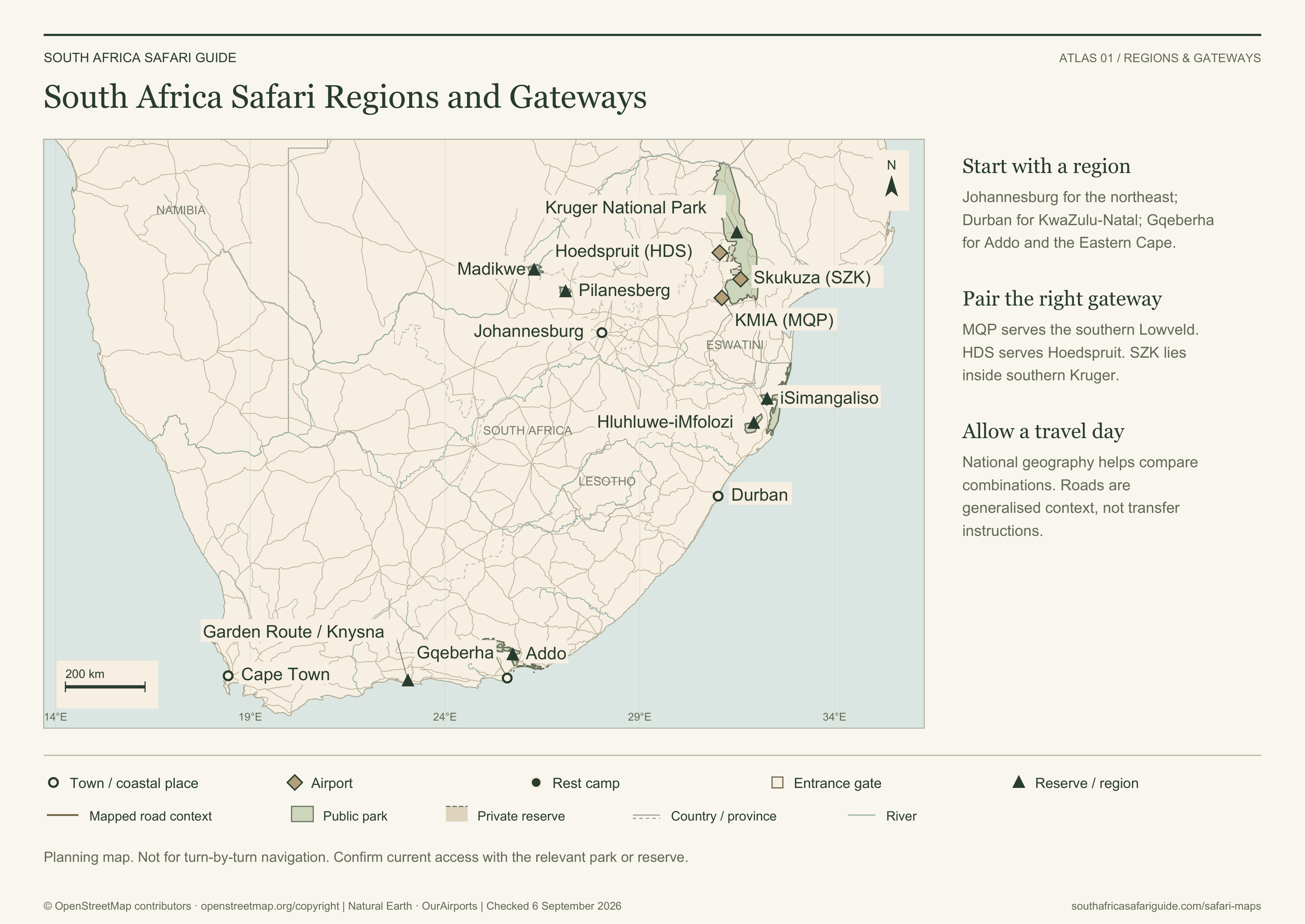
A national orientation map connecting the main arrival cities with South Africa's major safari regions.
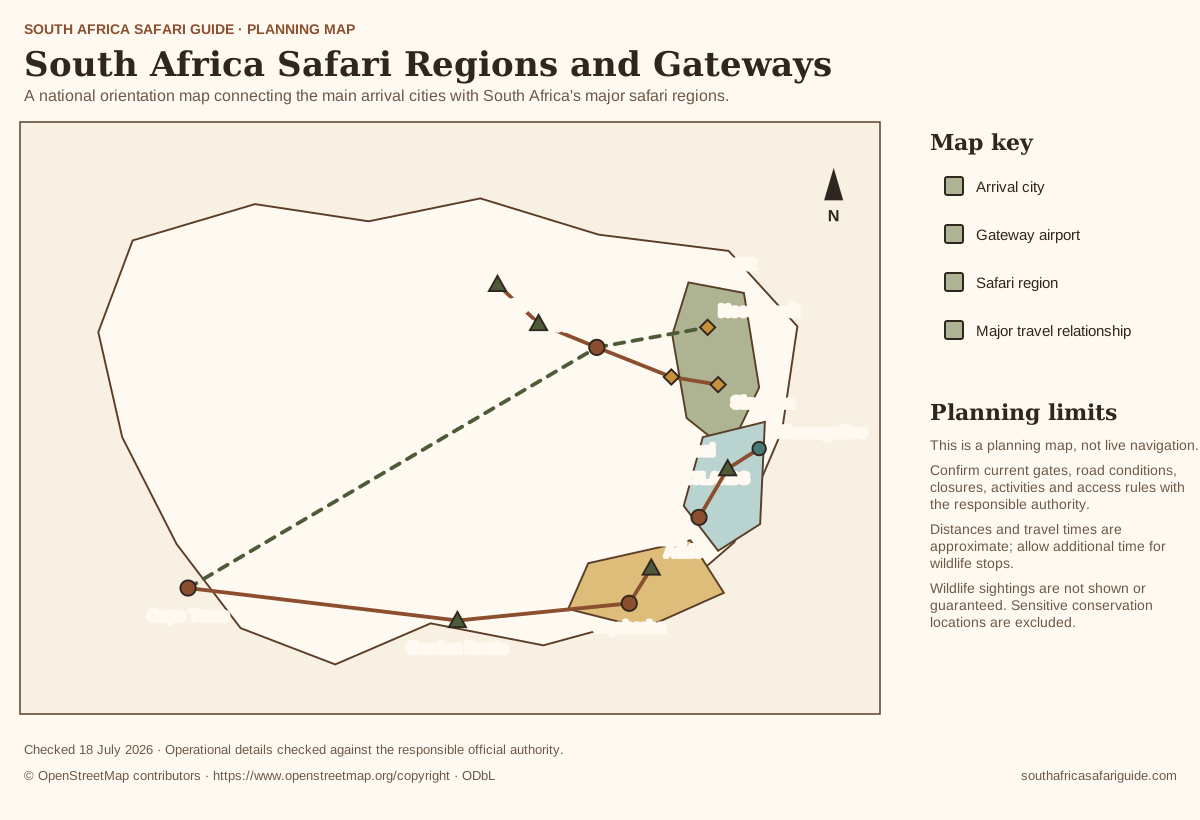
Geography: © OpenStreetMap contributors (ODbL); Natural Earth and OurAirports (public domain). Download source data.
Geographic sources checked . Generalised planning context; confirm current access before travelling.
Destination fit
A South African safari is not one single style of trip. It can be independent and practical, polished and lodge led, conservation focused, family paced, honeymoon quiet or woven into a wider holiday with beaches, wine estates, mountains and cities. That variety is the main reason first time visitors often start here.
Kruger National Park anchors the classic safari image because it is vast, publicly accessible and biologically rich. Greater Kruger and neighbouring private reserves add a different rhythm through guided drives, lodge hospitality, smaller guest numbers and, in some reserves, traversing agreements that can create a more fluid wildlife viewing experience.
Other regions matter too. Pilanesberg, Madikwe and many Eastern Cape reserves are often considered by travellers weighing malaria risk, family logistics or a route that avoids the far north east. Addo Elephant National Park pairs naturally with coastal and Garden Route travel, while KwaZulu Natal combines wildlife, wetlands and beach time.
How safaris differ
The right safari style depends on budget, confidence, wildlife priorities, comfort level and how much structure you want in each day.
Best for independent travellers who enjoy setting their own pace. You control routes and rest stops, but you also accept that finding wildlife takes patience and that sightings are never scheduled.
Useful for first time visitors who want interpretation, route planning and wildlife context without paying for a fully inclusive private lodge.
Usually built around early and late game drives, lodge meals, guiding teams and a quieter guest rhythm. It can be ideal for special occasions or wildlife focused travellers.
Families and some health sensitive travellers often compare areas outside the main lowveld malaria risk zones. A travel health professional should still guide personal decisions.
A strong option when a safari is part of a broader South Africa trip. Build in transfer time so the safari does not become a rushed add on.
Public park accommodation, shared activities and careful transport choices can keep the trip grounded without removing meaningful wildlife time.
Choose carefully
No single safari region is best for everyone. Use these prompts to narrow the field before comparing camps, lodges or tour formats.
You want a large public park, self drive freedom, varied rest camps, strong wildlife diversity and a classic South African safari with many route options.
You value guiding, lodge comfort, fewer planning chores, a slower hosted rhythm and game drives designed around interpretation rather than simply covering distance.
You are comparing family travel, medical considerations or peace of mind. Confirm current health guidance and remember that malaria free does not mean risk free travel overall.
You want safari time to sit naturally within a Garden Route, coastal or Cape focused itinerary and you do not need Kruger to be the centre of the trip.
You want South Africa's full range including wildlife, Cape Town, vineyards, coast, food, history and landscapes. Keep the safari portion long enough to feel unhurried.
The itinerary promises specific wildlife, hides excluded costs, ignores transfer time or treats every region as interchangeable.
Free printable guide
Get a free printable checklist for choosing the trip shape, checking a deposit, building the cost and preparing the essentials.
Trip shape
A three night safari can be meaningful when logistics are simple and the destination is well chosen. Four to six nights gives more breathing room, especially if you want both public park exploration and private reserve guiding. Longer trips work well when safari is combined with Cape Town, the Winelands, the Garden Route or KwaZulu Natal coast.
Cost depends less on a single published price and more on the trip structure. Consider international flights, domestic flights, car hire, transfers, conservation fees, accommodation, meal inclusions, guided drives and season. Private lodges may look expensive upfront because they often bundle more inclusions, while self drive trips split costs across many separate decisions.
For families, the practical questions are age policies, drive length, malaria considerations, room configuration, pool and rest time, and whether the child will enjoy sitting quietly in a vehicle. Honeymoon and special occasion trips usually benefit from fewer moves, private decks, scenic transfers and a lodge rhythm that leaves space between drives.
Booking options
Use organised-tour results only after choosing the safari region, preferred trip length, travel style, accommodation level and realistic total budget.
Some links are paid links. We may earn a commission at no extra cost to you.
Compare rental options only after deciding which airports, safari regions and road-trip stages require a vehicle. Check deposit, insurance, mileage, fuel policy, border restrictions and one-way charges before confirming.
Some links are paid links. We may earn a commission at no extra cost to you.
LODGE-LED SAFARI OPTIONS
Travellers who prefer guided activities, arranged transfers and lodge-based stays can compare current safari options after deciding which region, trip length and accommodation style suit the journey.
Wildlife ethic
The Big Five can be a useful shorthand, but the best safaris are not a race through a checklist. Impala alarm calls, fresh tracks, vultures circling, elephant feeding signs and bird behaviour often tell a richer story than a single dramatic sighting.
Good safari behaviour means keeping distance, staying quiet at sensitive sightings, never feeding wildlife, respecting park rules and avoiding live location sharing for vulnerable species such as rhinos. The most rewarding safari is one where the animal's behaviour remains natural.
Official resources
Fees, gate hours, health guidance, notices and availability can change. Use these official resources for the latest operational information.
Next steps