
Scientific name
Loxodonta africana
South Africa wildlife
African elephant (Loxodonta africana) is part of the South African safari story, but a good sighting depends on habitat, season, patience and respectful behaviour rather than promises.
Field notes
Loxodonta africana
Large mammal
Often visible through the day, especially near water in warmer periods, but movement and mood change with heat, calves and road pressure.
Woodland, savanna, riverine belts, floodplains and waterholes where food and water drive seasonal movement.
Grasses, leaves, bark, fruit, roots and branches, changing with rainfall and local plant availability.
Large round footprints, dung piles, stripped bark, broken branches and dust bathing areas are common signs.
Identification
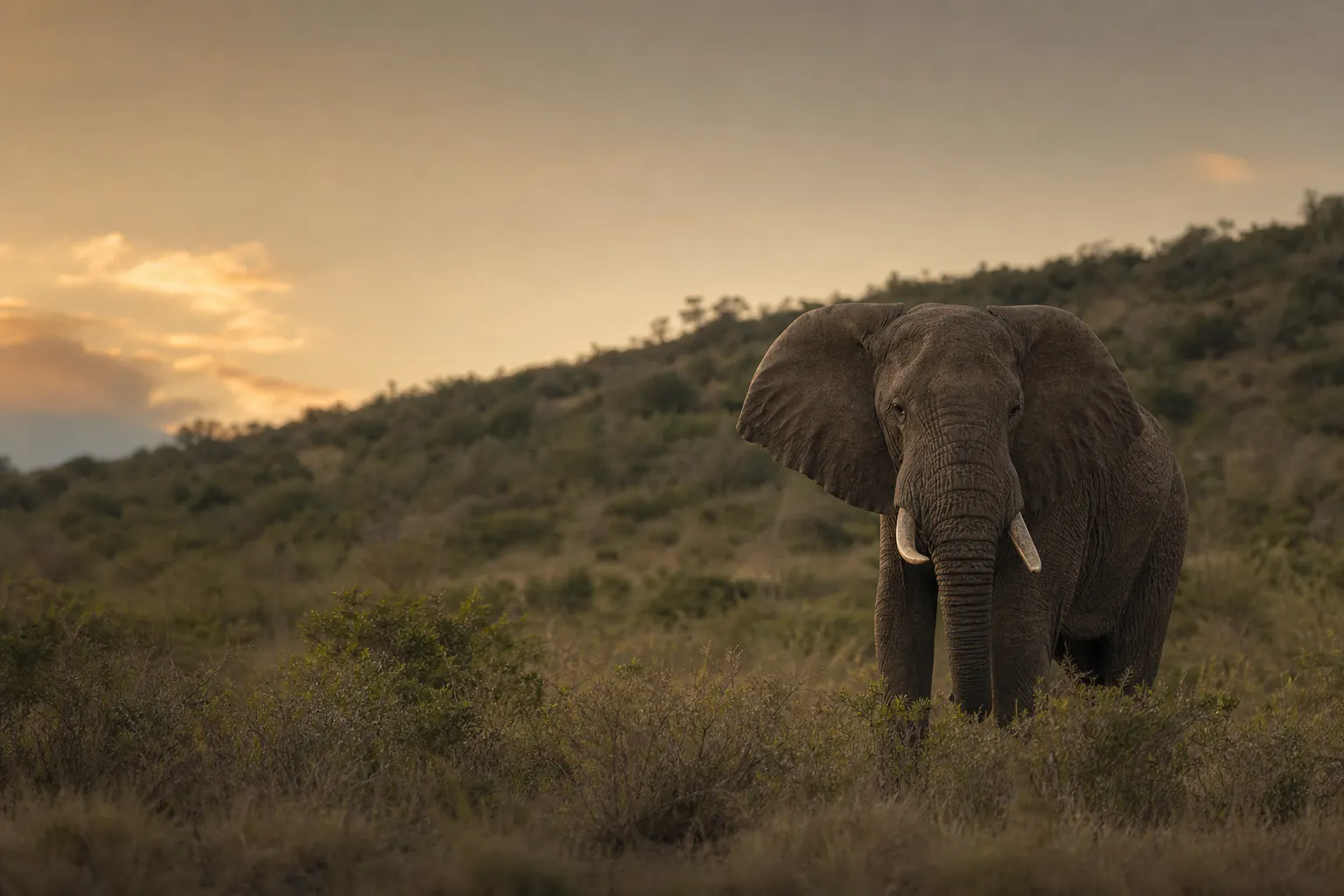
Huge size, broad ears, a flexible trunk, tusks where present and steady feeding that can reshape trees and water edges. Identification is strongest when you combine body shape, movement, habitat and behaviour instead of relying on a single feature.
No South African safari mammal is similar in size, but distant rhino can confuse first timers until ears, trunk and body shape are clear. When in doubt, slow down and compare the animal with its surroundings, group size and posture before naming it.
Loxodonta africana is the African savanna elephant. It is distinct from the African forest elephant, Loxodonta cyclotis.
Big Five planning
Read this as a planning page as much as an animal guide. The goal is to recognise behaviour, give the sighting space and understand why guides may slow down, hold back or leave before a crowd builds.
Huge size, broad ears, a flexible trunk, tusks where present and steady feeding that can reshape trees and water edges.
Strong sightings often depend on vehicle spacing, quiet voices and allowing the animal to choose its own movement.
Elephant conservation involves habitat, water, population management and human wildlife conflict; check official area context before simplifying the story.
Use this animal as a reason to choose good guiding and enough time in the field, not as a promised item on a checklist.
Species focus
These notes are deliberately specific, because the best sightings usually come from watching small details well.
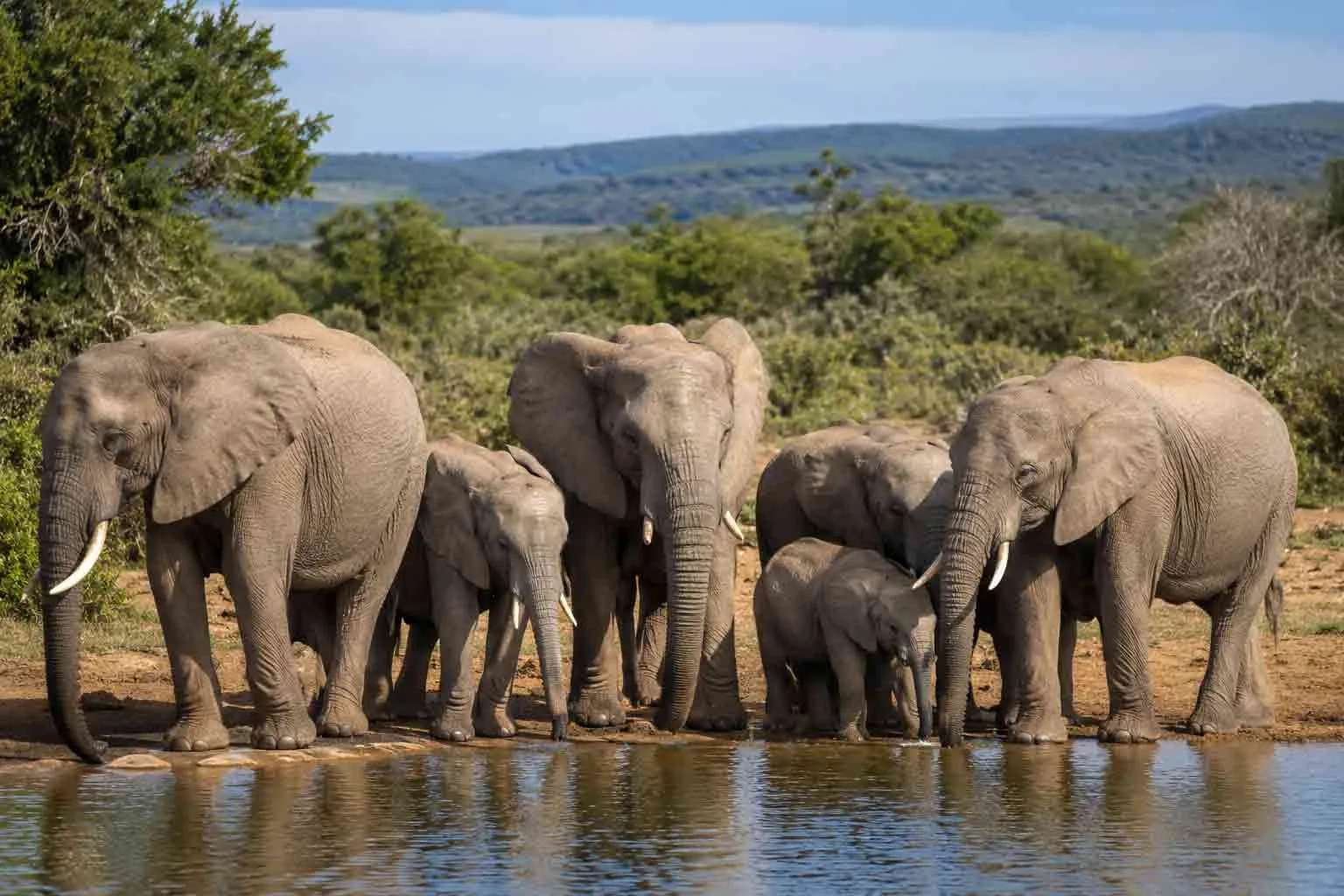
Watch how calves, young bulls and older females use body position. The best response is to leave the herd room to choose its line.
Feeding signs, broken branches, dung and paths show how elephants influence woodland, seeds and water access.
Ears, trunk position, head height and group tightening can all show that a vehicle should wait or reverse.
Behaviour and habitat
Elephants feed for long periods, move between water and browse, communicate through touch and low sound, and show strong social awareness.
Grasses, leaves, bark, fruit, roots and branches, changing with rainfall and local plant availability.
Family herds are usually led by experienced females, while mature bulls may be alone or in loose male groups.
Woodland, savanna, riverine belts, floodplains and waterholes where food and water drive seasonal movement. Kruger and Addo are major elephant contexts, with sightings also common in many private reserves and KwaZulu Natal reserves.
Fieldcraft
Good guides read the wider scene before the animal appears. Visitors can learn the same habit at a gentle level.
Large round footprints, dung piles, stripped bark, broken branches and dust bathing areas are common signs.
Rumbles, trumpets and subtle body language matter. Ear position, head height and trunk posture can signal comfort or stress.
Kruger and Addo are major elephant contexts, with sightings also common in many private reserves and KwaZulu Natal reserves.
Responsible safari
Give elephants generous space, never cut through a herd and reverse calmly if an animal shows discomfort.
Use side light for texture, include family interaction and keep enough distance that natural behaviour continues.
Look for the moment before the obvious photograph, such as a change in posture, a contact call, a shift in shade or the way other animals react.
Do not feed, call, chase, crowd or block animals. A calm sighting is better than a forced photograph.
When comparing tours, ask about guide conduct, vehicle etiquette and time spent interpreting behaviour rather than chasing checklists.
Verification
IUCN Red List 2021 African elephant reassessment
2026-07-17
Loxodonta africana is the African savanna elephant. It is distinct from the African forest elephant, Loxodonta cyclotis.
Conservation context
Elephant conservation involves habitat, water, population management and human wildlife conflict; check official area context before simplifying the story.
Global IUCN status shown as Endangered for African savanna elephant. The IUCN announced African savanna elephant as Endangered after separating it from African forest elephant. South African context is shaped by protected area management, water, habitat pressure and human wildlife conflict. Source checked 2026-07-17.
For common species, responsible travel still matters because visitor behaviour can change feeding, movement, stress and predator-prey interactions.
Official resources
Fees, gate hours, health guidance, notices and availability can change. Use these official resources for the latest operational information.
Next steps