
Scientific name
Panthera leo
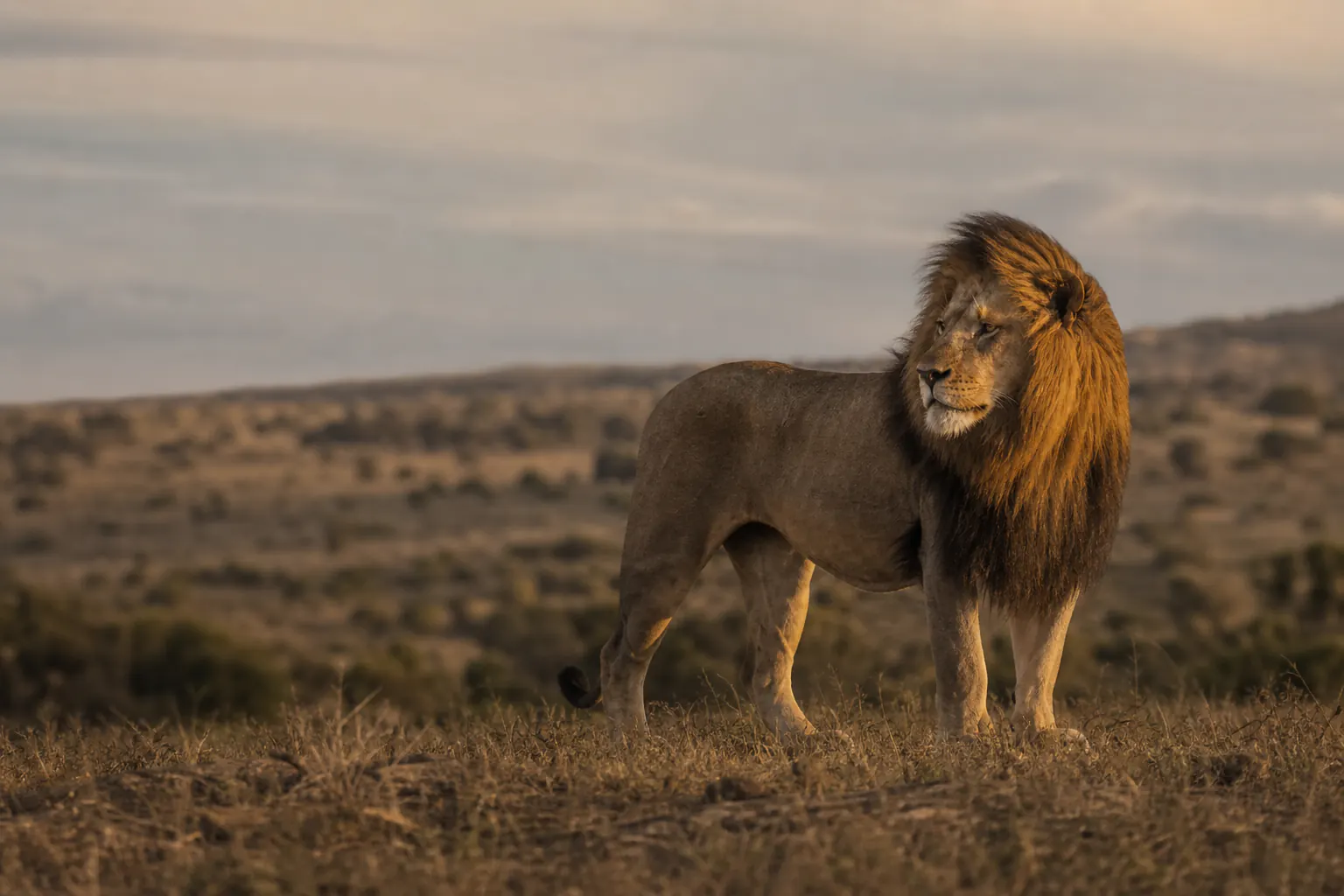
South Africa wildlife
African lion (Panthera leo) is part of the South African safari story, but a good sighting depends on habitat, season, patience and respectful behaviour rather than promises.
Field notes
Panthera leo
Large mammal
Most productive around dawn, dusk and after cool nights; midday sightings are often resting cats.
Savanna, woodland edges, river systems and open clearings where prey movement can be watched.
Mainly medium to large herbivores, with opportunities shaped by prey abundance, weakness, terrain and group coordination.
Rounded pugmarks without claw marks, drag marks near kills, flattened grass and concentrated scavenger activity can all matter.
Identification
Large tawny cats, a heavy head on mature males, black tail tufts and relaxed resting groups in shade. Identification is strongest when you combine body shape, movement, habitat and behaviour instead of relying on a single feature.
Cheetah are slimmer, spotted and more daylight oriented; leopards are solitary and patterned with rosettes. When in doubt, slow down and compare the animal with its surroundings, group size and posture before naming it.
Panthera leo remains the visitor level species name. Regional subpopulation wording should be checked before formal conservation use.
Big Five planning
Read this as a planning page as much as an animal guide. The goal is to recognise behaviour, give the sighting space and understand why guides may slow down, hold back or leave before a crowd builds.
Large tawny cats, a heavy head on mature males, black tail tufts and relaxed resting groups in shade.
Strong sightings often depend on vehicle spacing, quiet voices and allowing the animal to choose its own movement.
Lion conservation is regional and complex, so check current IUCN and South African sources for status rather than relying on old safari shorthand.
Use this animal as a reason to choose good guiding and enough time in the field, not as a promised item on a checklist.
Species focus
These notes are deliberately specific, because the best sightings usually come from watching small details well.
Mature males carry manes that vary with age and condition, while females and young animals are usually read through body size, face shape and pride context.
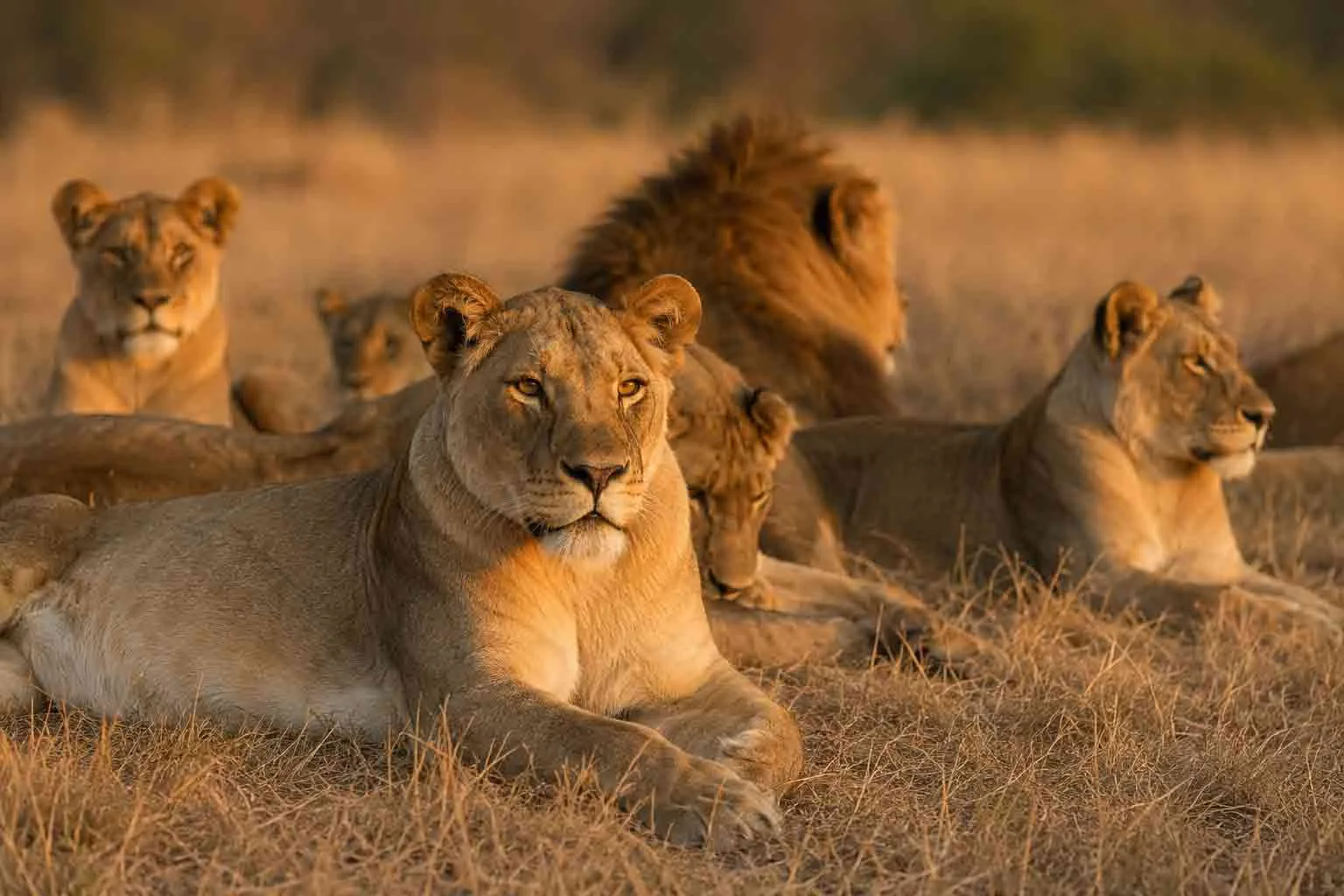
A pride may look inactive for hours, but contact calls, cub movement and shifting shade can reveal the social story.
Hold back from resting groups and never cut across a pride's path for a photograph.
Behaviour and habitat
Lions conserve energy through the heat of the day, then become more vocal and mobile in cooler hours when hunting and territorial behaviour are more likely.
Mainly medium to large herbivores, with opportunities shaped by prey abundance, weakness, terrain and group coordination.
The most social of the big cats, living in prides with related females, dependent young and changing coalitions of males.
Savanna, woodland edges, river systems and open clearings where prey movement can be watched. Kruger, Greater Kruger, Sabi Sands, Timbavati, Madikwe and several private reserves can all produce lion encounters, but no route can promise them.
Fieldcraft
Good guides read the wider scene before the animal appears. Visitors can learn the same habit at a gentle level.
Rounded pugmarks without claw marks, drag marks near kills, flattened grass and concentrated scavenger activity can all matter.
Deep territorial roaring can carry far in still air; alarm calls from antelope, baboons and birds may also point toward hidden cats.
Kruger, Greater Kruger, Sabi Sands, Timbavati, Madikwe and several private reserves can all produce lion encounters, but no route can promise them.
Responsible safari
Stay in the vehicle except at designated places, keep voices low and never pressure a sighting by moving too close.
Use early light, leave space for the animal to move into the frame and avoid crowding resting animals for eye contact.
Look for the moment before the obvious photograph, such as a change in posture, a contact call, a shift in shade or the way other animals react.
Do not feed, call, chase, crowd or block animals. A calm sighting is better than a forced photograph.
When comparing tours, ask about guide conduct, vehicle etiquette and time spent interpreting behaviour rather than chasing checklists.
Verification
IUCN Cat Specialist Group and IUCN Red List
2026-07-17
Panthera leo remains the visitor level species name. Regional subpopulation wording should be checked before formal conservation use.
Conservation context
Lion conservation is regional and complex, so check current IUCN and South African sources for status rather than relying on old safari shorthand.
Global IUCN status shown as Vulnerable. The global species is treated as Vulnerable, with regional and subpopulation differences requiring careful wording. South African lion context varies between protected wild populations, managed reserves and captive settings, which should not be mixed together. Source checked 2026-07-17.
For common species, responsible travel still matters because visitor behaviour can change feeding, movement, stress and predator-prey interactions.
Official resources
Fees, gate hours, health guidance, notices and availability can change. Use these official resources for the latest operational information.
Next steps