
Scientific name
Syncerus caffer
South Africa wildlife
Cape buffalo (Syncerus caffer) is part of the South African safari story, but a good sighting depends on habitat, season, patience and respectful behaviour rather than promises.
Field notes
Syncerus caffer
Large mammal
Often visible around water and grazing areas, especially in cooler parts of the day.
Grassland, woodland, floodplains and river edges where grazing and water meet.
Primarily grasses and other grazing, with water access important in many areas.
Rounded cloven hoofprints, churned mud and heavy paths to water can signal herd movement.
Identification
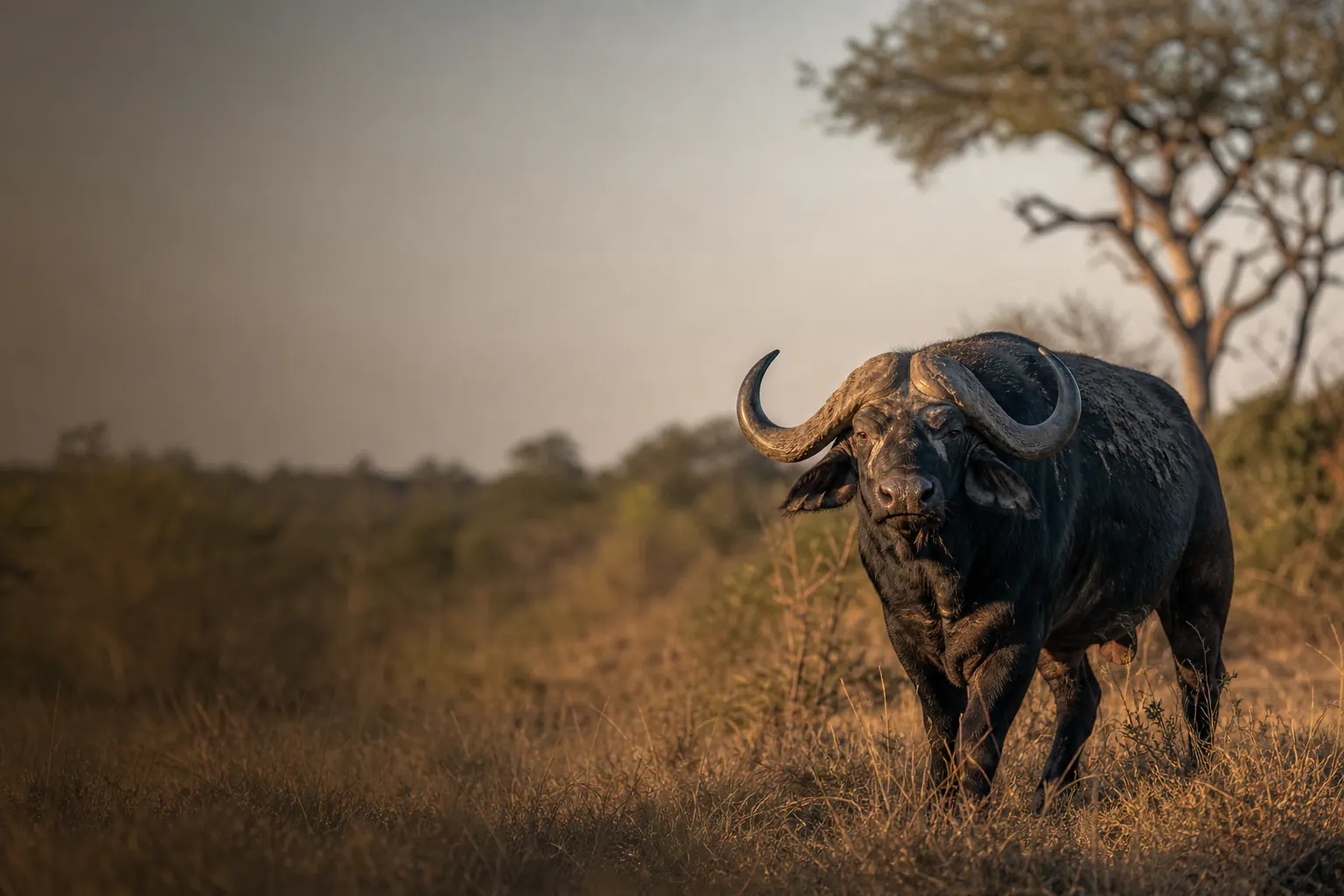
Heavy dark bovines with sweeping horns, a solid boss on mature bulls and a watchful, grounded presence. Identification is strongest when you combine body shape, movement, habitat and behaviour instead of relying on a single feature.
Domestic cattle are not present on proper game drives; distant wildebeest can look similar only until horn shape and body mass are clear. When in doubt, slow down and compare the animal with its surroundings, group size and posture before naming it.
Syncerus caffer is the accepted safari level name for Cape buffalo in this guide.
Big Five planning
Read this as a planning page as much as an animal guide. The goal is to recognise behaviour, give the sighting space and understand why guides may slow down, hold back or leave before a crowd builds.
Heavy dark bovines with sweeping horns, a solid boss on mature bulls and a watchful, grounded presence.
Strong sightings often depend on vehicle spacing, quiet voices and allowing the animal to choose its own movement.
Buffalo are important prey and grazing animals; disease and movement management can be local, so use area specific official context.
Use this animal as a reason to choose good guiding and enough time in the field, not as a promised item on a checklist.
Species focus
These notes are deliberately specific, because the best sightings usually come from watching small details well.
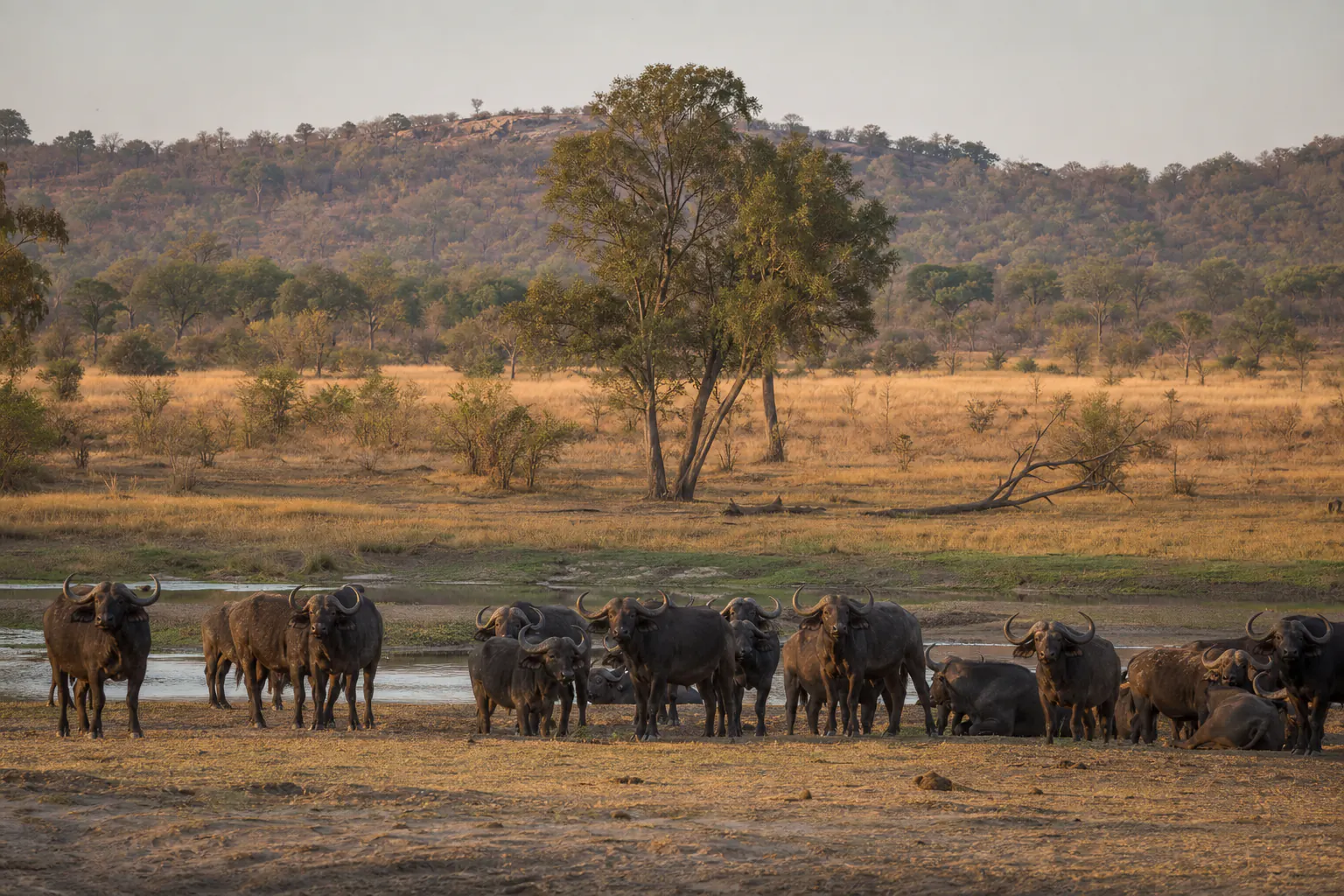
A buffalo herd can include calves, cows, bulls and oxpeckers, with older bulls sometimes separate in thicker cover.
Lions may shadow buffalo herds, so tracks, tension and herd movement can explain predator activity.
Never surprise buffalo in thickets or at water. Give lone bulls more space than their stillness suggests.
Behaviour and habitat
Buffalo gather in herds, move toward water and grazing, and can become defensive when pressured or when old bulls are surprised.
Primarily grasses and other grazing, with water access important in many areas.
Large mixed herds, bachelor groups and solitary older bulls all occur, each with different safari behaviour.
Grassland, woodland, floodplains and river edges where grazing and water meet. Kruger, Hluhluwe Imfolozi, Greater Kruger and private reserves are strong contexts for buffalo viewing.
Fieldcraft
Good guides read the wider scene before the animal appears. Visitors can learn the same habit at a gentle level.
Rounded cloven hoofprints, churned mud and heavy paths to water can signal herd movement.
Low grunts and herd sounds are common, while oxpecker and lion activity may add context.
Kruger, Hluhluwe Imfolozi, Greater Kruger and private reserves are strong contexts for buffalo viewing.
Responsible safari
Give buffalo space, especially lone bulls in thickets, and never leave a vehicle outside permitted areas.
Look for herd layers, dust, oxpeckers and horn shapes rather than forcing a close front-on view.
Look for the moment before the obvious photograph, such as a change in posture, a contact call, a shift in shade or the way other animals react.
Do not feed, call, chase, crowd or block animals. A calm sighting is better than a forced photograph.
When comparing tours, ask about guide conduct, vehicle etiquette and time spent interpreting behaviour rather than chasing checklists.
Verification
IUCN Red List and SANBI species resources
2026-07-17
Syncerus caffer is the accepted safari level name for Cape buffalo in this guide.
Conservation context
Buffalo are important prey and grazing animals; disease and movement management can be local, so use area specific official context.
A formal conservation category is not displayed here because current global, national and regional assessments can differ by source and date. Check the IUCN Red List, SANBI species status resources and BirdLife DataZone for birds before quoting a status.
For common species, responsible travel still matters because visitor behaviour can change feeding, movement, stress and predator-prey interactions.
Official resources
Fees, gate hours, health guidance, notices and availability can change. Use these official resources for the latest operational information.
Next steps