
Scientific name
Papio ursinus
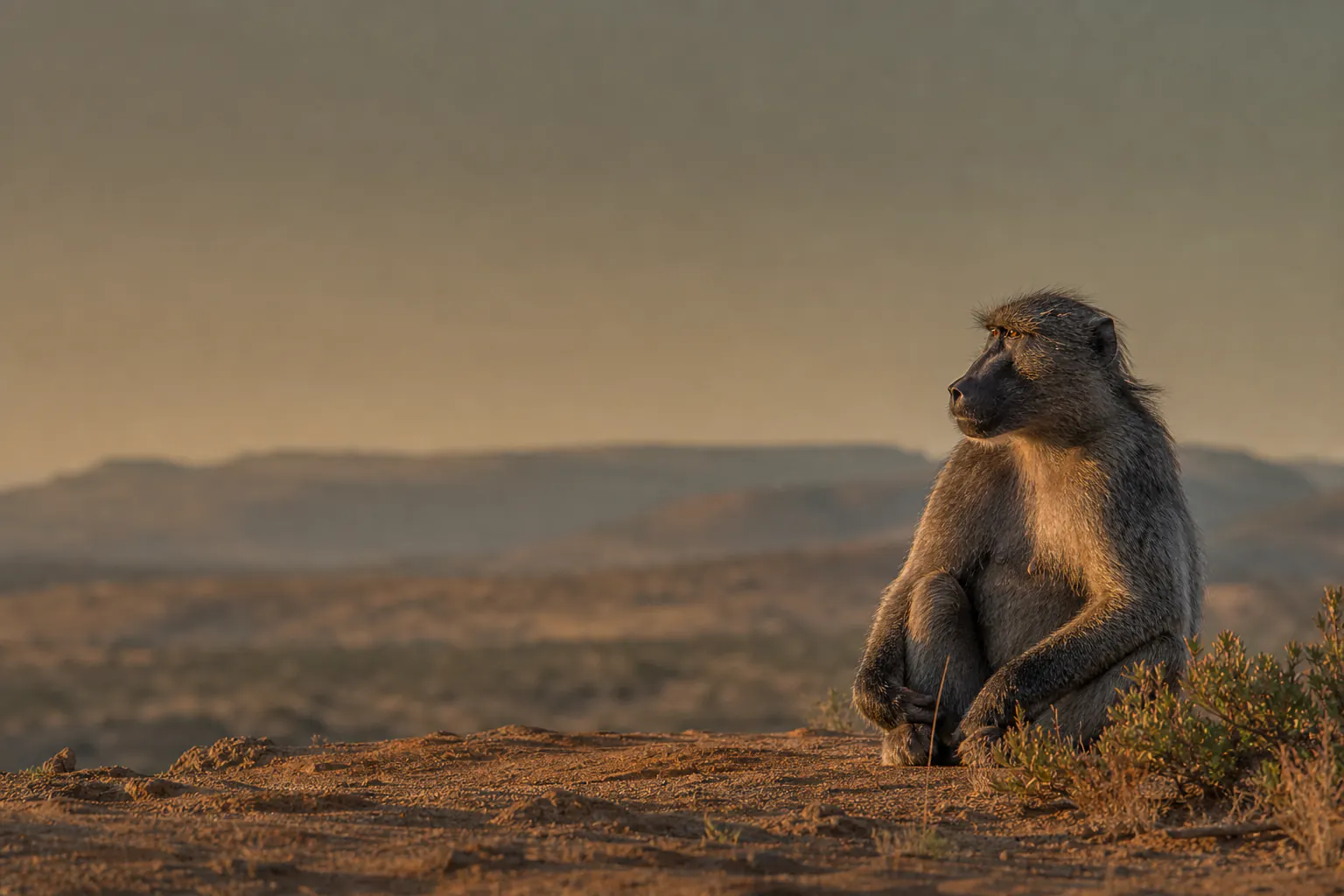
South Africa wildlife
Chacma baboon (Papio ursinus) is part of the South African safari story, but a good sighting depends on habitat, season, patience and respectful behaviour rather than promises.
Field notes
Papio ursinus
Primate
Day active, often moving early from sleeping sites to feeding areas.
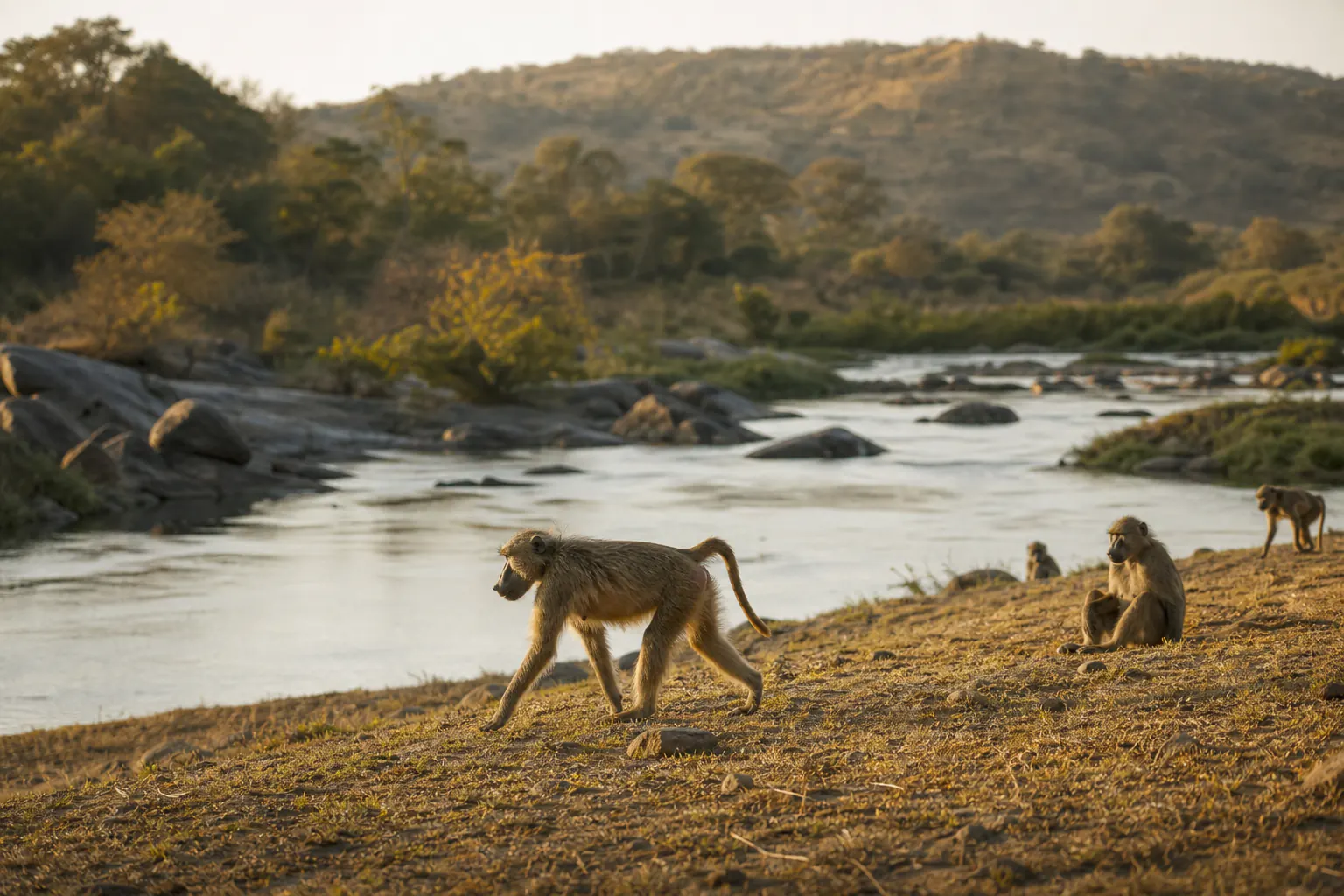
Woodland, rocky slopes, riverine areas, coastal margins and camp edges where food and sleeping sites occur.
Omnivorous, including grasses, roots, fruit, seeds, insects and occasional small animals.
Hand and foot prints, overturned stones, feeding marks and droppings can show troop movement.
Identification
Large terrestrial primates with long muzzles, strong limbs and troops that can spread across roads and trees. Identification is strongest when you combine body shape, movement, habitat and behaviour instead of relying on a single feature.
Vervet monkeys are smaller, more arboreal and dark faced with a lighter build. When in doubt, slow down and compare the animal with its surroundings, group size and posture before naming it.
Papio ursinus is used for chacma baboon.
Camp behaviour
Primate sightings are most useful when you notice social behaviour and human food risk. Camps and lodges need especially careful visitor habits.
Troops are structured and vocal, with females, young, adult males and frequent interactions.
Keep food secured, windows closed in problem areas and never challenge or feed baboons.
Barks, screams and grunts are common, and alarm calls can reveal predators or social conflict.
Feeding creates long term conflict and can lead to animals being injured, relocated or destroyed.
Species focus
These notes are deliberately specific, because the best sightings usually come from watching small details well.
Baboons learn routes, bins, doors and weak food storage quickly, which makes visitor discipline essential.
Infants and juveniles make compelling subjects, but never use food, proximity or noise to create interaction.
Give troops time to cross roads and keep lodge spaces clean so animals are not drawn into conflict.
Behaviour and habitat
Baboons forage, groom, travel and watch with strong social awareness, often using rocks, trees and roadsides.
Omnivorous, including grasses, roots, fruit, seeds, insects and occasional small animals.
Troops are structured and vocal, with females, young, adult males and frequent interactions.
Woodland, rocky slopes, riverine areas, coastal margins and camp edges where food and sleeping sites occur. Kruger, Cape regions, KwaZulu Natal and many reserves can all produce baboon encounters.
Fieldcraft
Good guides read the wider scene before the animal appears. Visitors can learn the same habit at a gentle level.
Hand and foot prints, overturned stones, feeding marks and droppings can show troop movement.
Barks, screams and grunts are common, and alarm calls can reveal predators or social conflict.
Kruger, Cape regions, KwaZulu Natal and many reserves can all produce baboon encounters.
Responsible safari
Keep food secured, windows closed in problem areas and never challenge or feed baboons.
Look for grooming, young animals and landscape context; do not reward food raiding with attention.
Look for grooming, young animals, alarm calls, food searching and whether people have accidentally trained animals to expect rewards.
Do not feed, call, chase, crowd or block animals. A calm sighting is better than a forced photograph.
When comparing tours, ask about guide conduct, vehicle etiquette and time spent interpreting behaviour rather than chasing checklists.
Verification
IUCN Red List and SANBI species resources
2026-07-17
Papio ursinus is used for chacma baboon.
Conservation context
Baboons are often harmed by poor human behaviour, so careful food control is essential around camps and roads.
A formal conservation category is not displayed here because current global, national and regional assessments can differ by source and date. Check the IUCN Red List, SANBI species status resources and BirdLife DataZone for birds before quoting a status.
For common species, responsible travel still matters because visitor behaviour can change feeding, movement, stress and predator-prey interactions.
Official resources
Fees, gate hours, health guidance, notices and availability can change. Use these official resources for the latest operational information.
Next steps