
Scientific name
Tragelaphus strepsiceros
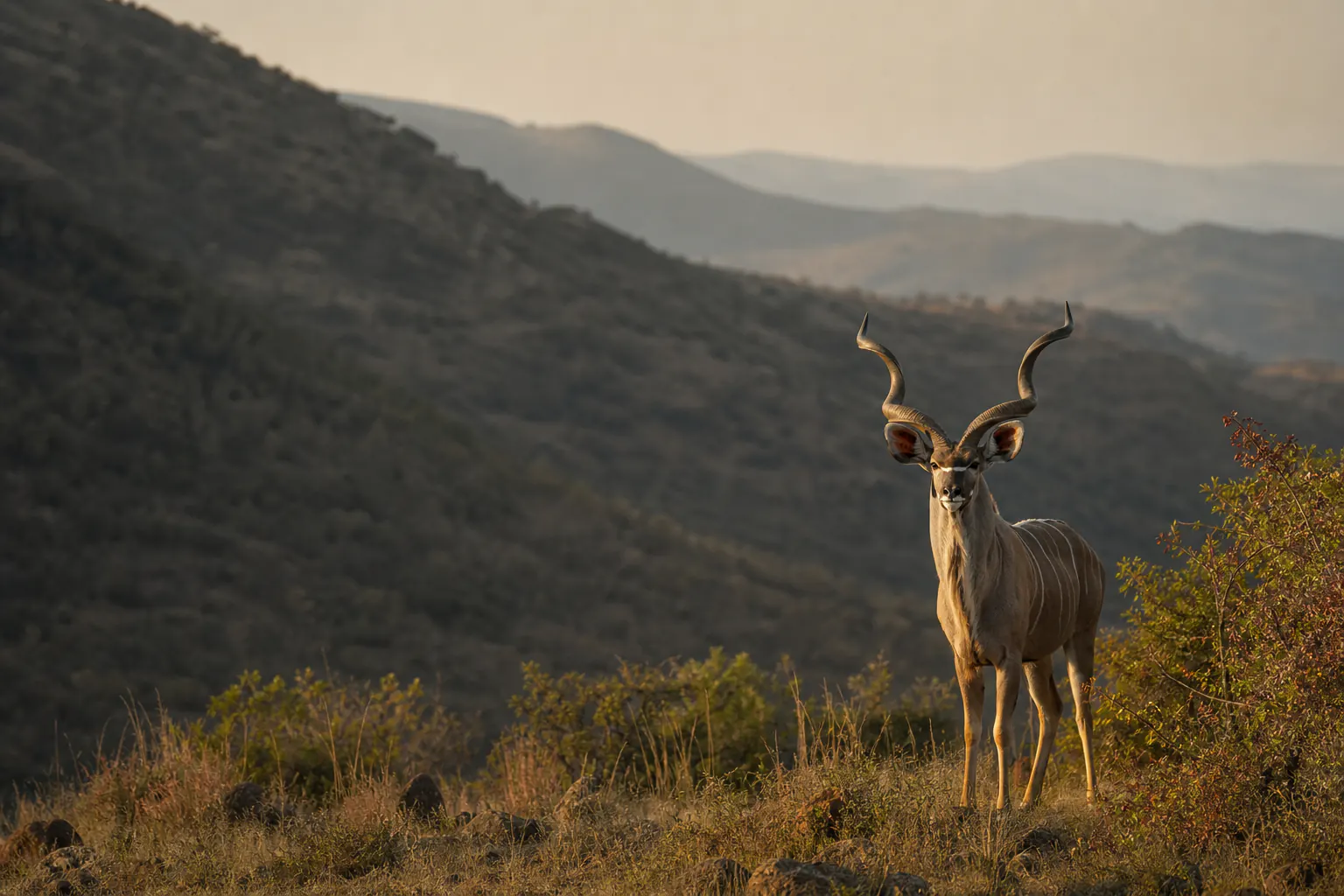
South Africa wildlife
Greater kudu (Tragelaphus strepsiceros) is part of the South African safari story, but a good sighting depends on habitat, season, patience and respectful behaviour rather than promises.
Field notes
Tragelaphus strepsiceros
Herbivore
Often visible in cooler hours near road edges, thickets and drainage lines.
Woodland, thicket, rocky slopes and dry riverbeds with good cover.
Leaves, shoots, pods and other browse from shrubs and trees.
Cloven hoofprints, clipped browse and pellet groups near cover can suggest kudu activity.
Identification
Tall antelope with vertical body stripes, large ears and, in mature males, long spiral horns. Identification is strongest when you combine body shape, movement, habitat and behaviour instead of relying on a single feature.
Nyala and bushbuck are smaller and more localized; eland are heavier and less striped. When in doubt, slow down and compare the animal with its surroundings, group size and posture before naming it.
Tragelaphus strepsiceros is used for greater kudu.
Herd and habitat
Herbivores are not background scenery. Herd structure, feeding height, alarm behaviour and movement patterns often reveal what the landscape is doing.
Leaves, shoots, pods and other browse from shrubs and trees.
Females and young often form small groups, while mature bulls may be solitary or loosely associated.
A loud bark is a classic alarm sound and can point to predators or disturbance.
Common herbivores teach visitors how food, cover, water and predator pressure shape the whole safari day.
Species focus
These notes are deliberately specific, because the best sightings usually come from watching small details well.
Vertical stripes, stillness and large ears help kudu disappear in broken light despite their size.
Mature bulls carry the famous spiral horns, while females and young are better read by body shape, ears and stripes.
A kudu bark can change a drive because it often points to disturbance in nearby cover.
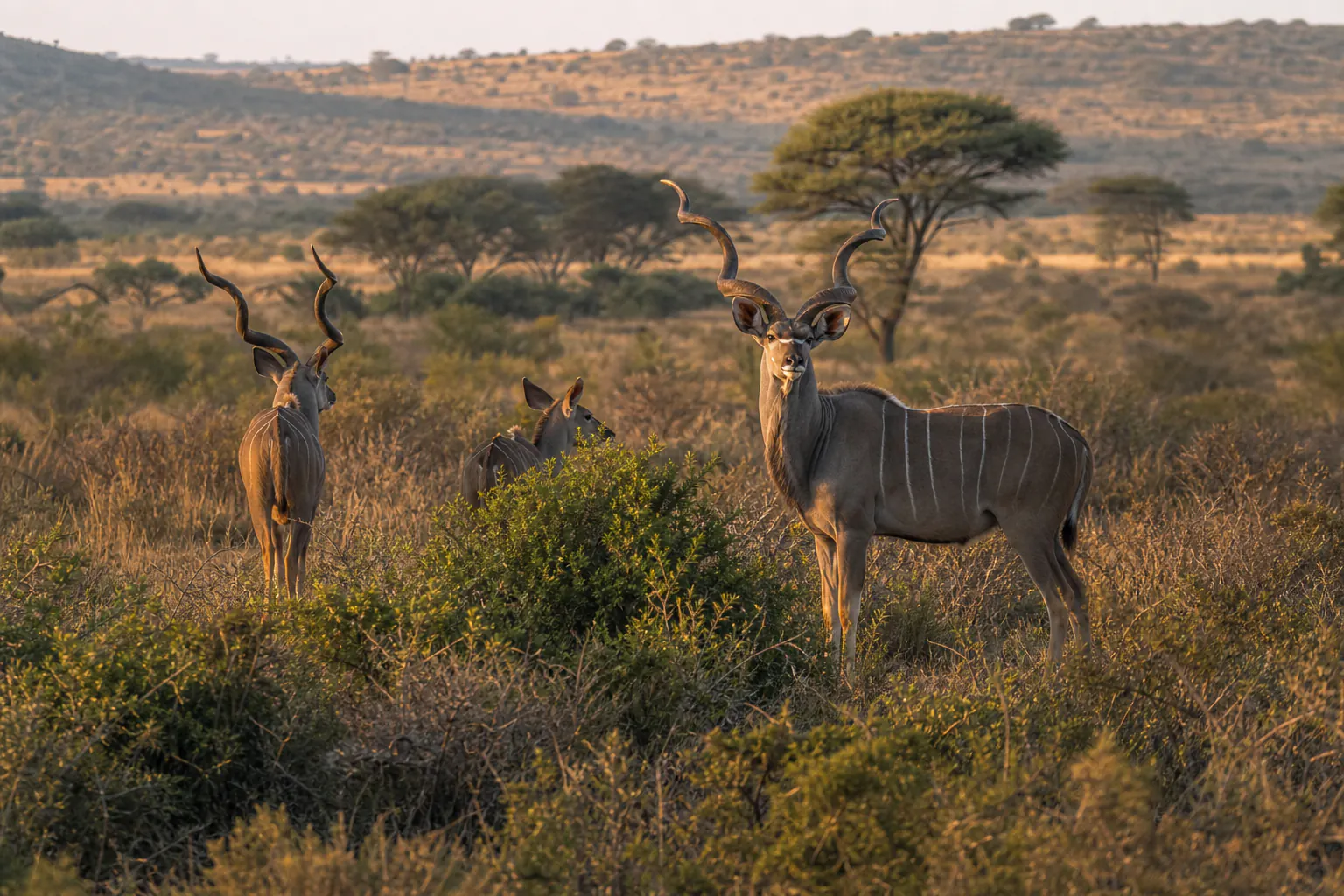
Behaviour and habitat
Kudu browse quietly, freeze in cover and slip through woodland with surprising stealth.
Leaves, shoots, pods and other browse from shrubs and trees.
Females and young often form small groups, while mature bulls may be solitary or loosely associated.
Woodland, thicket, rocky slopes and dry riverbeds with good cover. Kruger, Greater Kruger, Pilanesberg, Madikwe and many private reserves are good kudu contexts.
Fieldcraft
Good guides read the wider scene before the animal appears. Visitors can learn the same habit at a gentle level.
Cloven hoofprints, clipped browse and pellet groups near cover can suggest kudu activity.
A loud bark is a classic alarm sound and can point to predators or disturbance.
Kruger, Greater Kruger, Pilanesberg, Madikwe and many private reserves are good kudu contexts.
Responsible safari
Slow down near road edges because kudu can jump suddenly from cover.
Use woodland framing, horn curves and alert ears; avoid pushing an animal into a road crossing.
Look for who is feeding, who is watching, which animals are young and how the group reacts to sound, wind and nearby cover.
Do not feed, call, chase, crowd or block animals. A calm sighting is better than a forced photograph.
When comparing tours, ask about guide conduct, vehicle etiquette and time spent interpreting behaviour rather than chasing checklists.
Verification
IUCN Red List and SANBI species resources
2026-07-17
Tragelaphus strepsiceros is used for greater kudu.
Conservation context
Greater kudu are widespread in many safari areas, but local abundance and management still vary by reserve.
A formal conservation category is not displayed here because current global, national and regional assessments can differ by source and date. Check the IUCN Red List, SANBI species status resources and BirdLife DataZone for birds before quoting a status.
For common species, responsible travel still matters because visitor behaviour can change feeding, movement, stress and predator-prey interactions.
Official resources
Fees, gate hours, health guidance, notices and availability can change. Use these official resources for the latest operational information.
Next steps