
Scientific name
Equus quagga
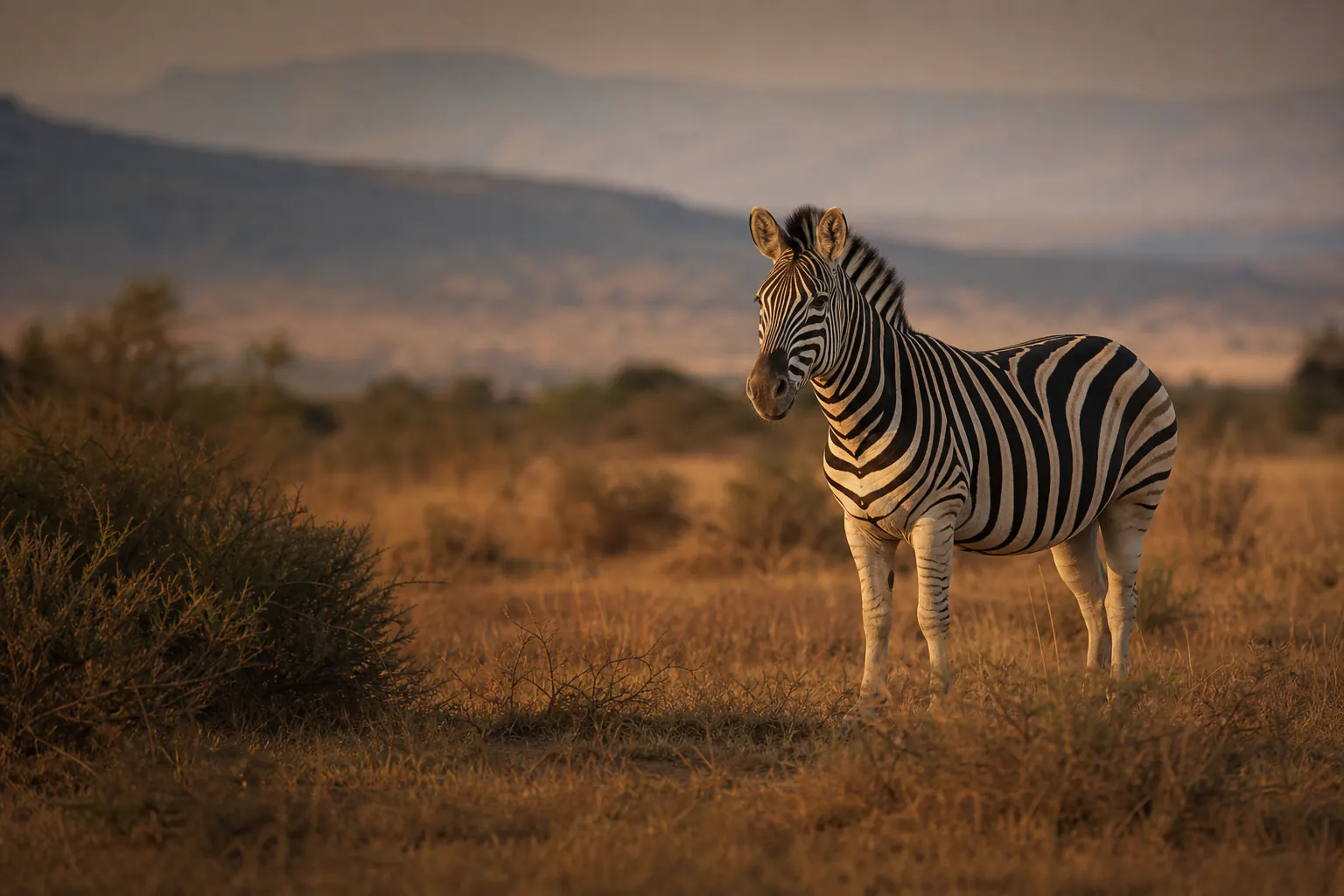
South Africa wildlife
Plains zebra (Equus quagga) is part of the South African safari story, but a good sighting depends on habitat, season, patience and respectful behaviour rather than promises.
Field notes
Equus quagga
Herbivore
Often active by day, with feeding, dust bathing, drinking and social interactions visible from roads.
Grassland, savanna and open woodland where grazing and visibility are suitable.
Mostly grasses, including coarser grazing that helps shape mixed herbivore feeding sequences.
Single hoofprints, dung piles and well-used paths through grazing areas are common signs.
Identification
Bold black and white striping, upright mane, rounded body and constant social contact in grazing groups. Identification is strongest when you combine body shape, movement, habitat and behaviour instead of relying on a single feature.
Mountain zebra have a different pattern and range; Burchell's zebra is a commonly used regional name within the plains zebra complex. When in doubt, slow down and compare the animal with its surroundings, group size and posture before naming it.
This page uses plains zebra for Equus quagga and notes that Burchell's zebra is often used in South African safari conversation.
Herd and habitat
Herbivores are not background scenery. Herd structure, feeding height, alarm behaviour and movement patterns often reveal what the landscape is doing.
Mostly grasses, including coarser grazing that helps shape mixed herbivore feeding sequences.
Stable family groups with stallions, mares and foals often mix with other grazers.
Barks and brays can draw attention to group movement or disturbance.
Common herbivores teach visitors how food, cover, water and predator pressure shape the whole safari day.
Species focus
These notes are deliberately specific, because the best sightings usually come from watching small details well.
Burchell's zebra is common safari language in South Africa, while Equus quagga is the scientific name used here for plains zebra.
Photographs work best when they show grooming, foals, ear direction or group vigilance rather than only pattern.
Zebras can process coarse grasses and help shape the feeding sequence for other grazers.
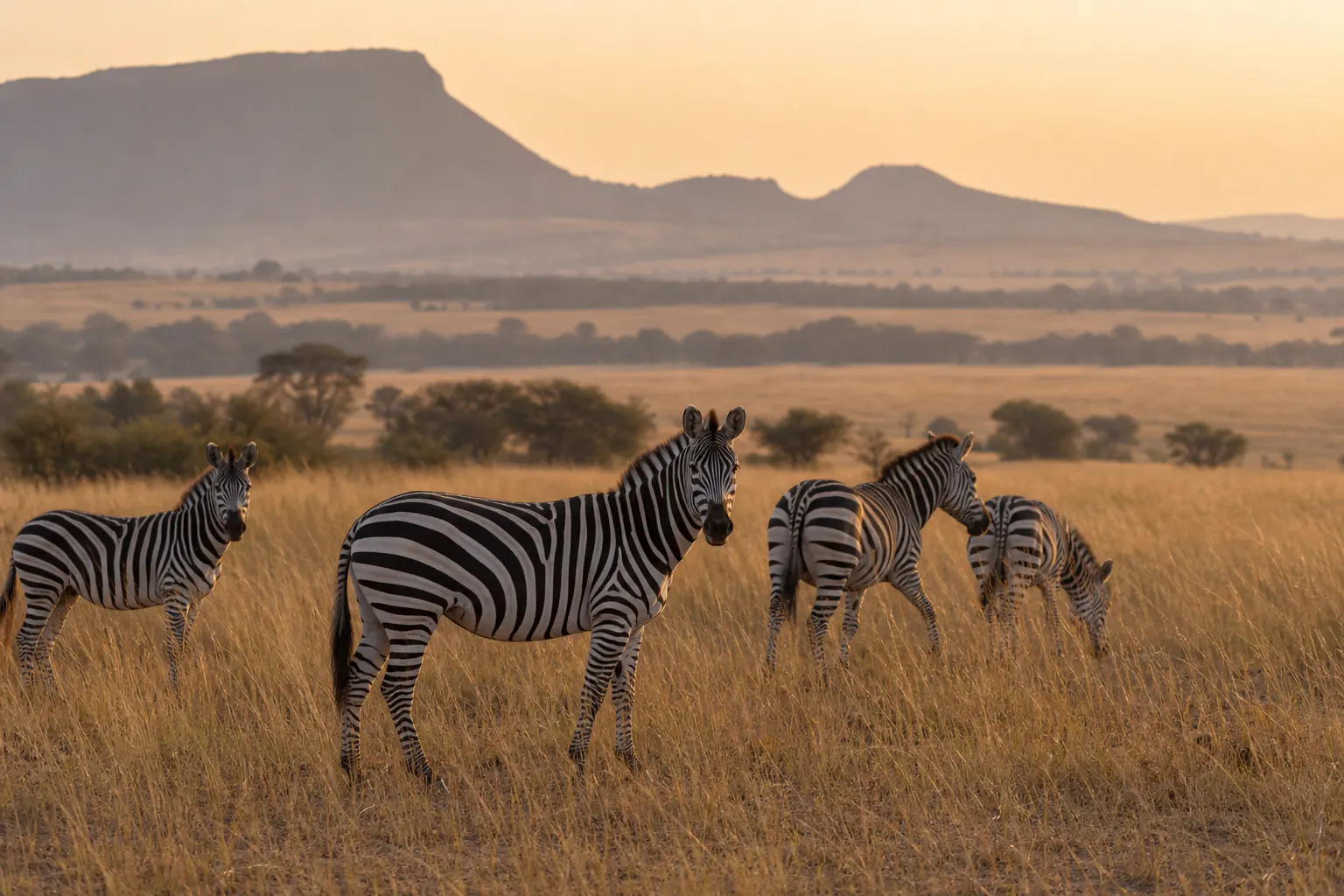
Behaviour and habitat
Plains zebras graze, groom, watch and move in family groups that may gather into larger herds.
Mostly grasses, including coarser grazing that helps shape mixed herbivore feeding sequences.
Stable family groups with stallions, mares and foals often mix with other grazers.
Grassland, savanna and open woodland where grazing and visibility are suitable. Kruger, Pilanesberg, Madikwe, Addo and many private reserves include plains zebra populations.
Fieldcraft
Good guides read the wider scene before the animal appears. Visitors can learn the same habit at a gentle level.
Single hoofprints, dung piles and well-used paths through grazing areas are common signs.
Barks and brays can draw attention to group movement or disturbance.
Kruger, Pilanesberg, Madikwe, Addo and many private reserves include plains zebra populations.
Responsible safari
Do not crowd foals or force groups to cross roads; patient stopping gives better behaviour.
Use pattern, interaction and backlighting; avoid cutting stripes awkwardly through the frame.
Look for who is feeding, who is watching, which animals are young and how the group reacts to sound, wind and nearby cover.
Do not feed, call, chase, crowd or block animals. A calm sighting is better than a forced photograph.
When comparing tours, ask about guide conduct, vehicle etiquette and time spent interpreting behaviour rather than chasing checklists.
Verification
IUCN Red List and SANBI species resources
2026-07-17
Equus quagga is used for plains zebra. Burchell's zebra remains common in South African safari speech but should be handled carefully.
Conservation context
Taxonomy and regional naming can be confusing, so check current sources when formal status or subspecies detail matters.
A formal conservation category is not displayed here because current global, national and regional assessments can differ by source and date. Check the IUCN Red List, SANBI species status resources and BirdLife DataZone for birds before quoting a status.
For common species, responsible travel still matters because visitor behaviour can change feeding, movement, stress and predator-prey interactions.
Official resources
Fees, gate hours, health guidance, notices and availability can change. Use these official resources for the latest operational information.
Next steps