
Repellent
Use an appropriate insect repellent according to professional and product guidance.
Malaria planning
Kruger is not malaria free. Risk varies by season, location, weather and individual circumstances, and travellers should seek qualified travel health advice before departure. This page supports planning but does not provide personalised medical treatment.
Health context
SANParks identifies Kruger as a malaria zone and advises visitors to follow medical guidance. CDC travel health information identifies malaria risk in parts of South Africa, including Kruger related risk areas, and advises travellers going to risk areas to follow medical instructions for prevention.
This guide does not recommend a specific prescription medicine, diagnose symptoms or replace a travel clinic. Your age, pregnancy status, medical history, medication interactions, itinerary dates and tolerance for risk all matter.
Prevention
Use an appropriate insect repellent according to professional and product guidance.
Wear long sleeves and long trousers when practical, especially around dawn, dusk and evening.
Use screened rooms, air movement and nets where relevant to your accommodation.
Risk can vary seasonally, but prevention planning should not be left to arrival day.
Ask how your camp, lodge or room setup handles mosquitoes without assuming every unit is identical.
Pack repellent, clothing layers, personal medication and health documents.
Personal risk
Parents should ask a qualified clinician about child appropriate prevention, dosage, side effects and fever plans.
Pregnant travellers or those planning pregnancy should seek medical advice before choosing a malaria risk itinerary.
Existing conditions, immune status and medication interactions can change advice.
Some prevention plans need lead time. Do not wait until departure week if you can avoid it.
Before travel
The goal is not to make the trip frightening. It is to remove uncertainty before you are tired, hot or far from your usual doctor.
Ask whether your room has screens, air movement or other mosquito management features where relevant. Do not assume all public camps, lodges or unit types are identical.
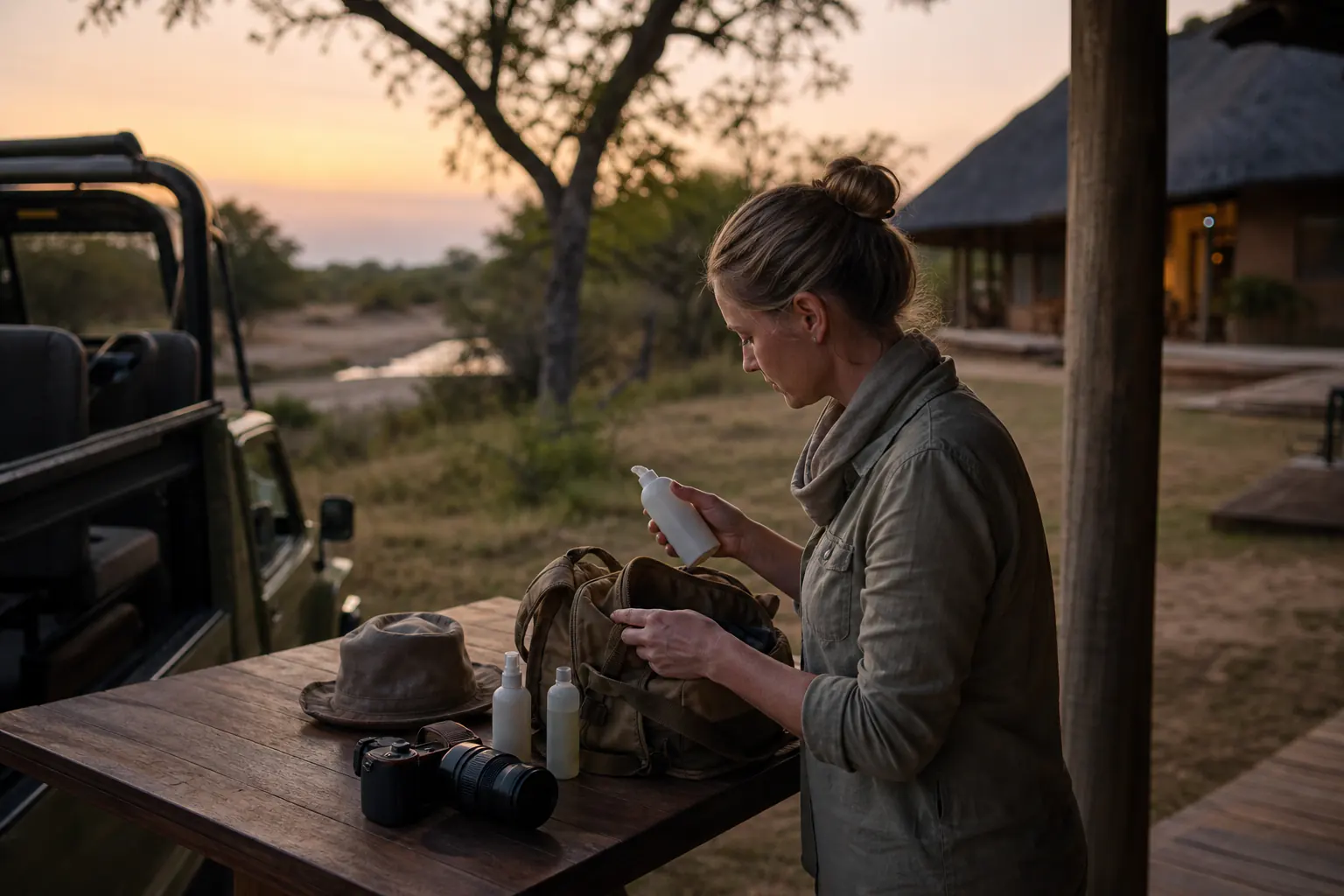
Pack long sleeves, long trousers and repellent in the day bag rather than buried in luggage. Evening camp time is when people often forget prevention.
Check medical cover, emergency transport, cancellation rules and what documentation is needed if illness changes the itinerary.
Bite prevention and prescribed medicine can reduce risk, but they do not remove every possibility of illness. Continue to take fever seriously.
After travel
CDC notes that malaria can be serious and that travellers with fever during or after time in a malaria risk area should seek immediate medical attention and tell the clinician about their travel history. Preventive medicine and bite precautions reduce risk but do not make illness impossible.
Travel insurance should cover medical care, evacuation where appropriate and itinerary disruption. Keep your itinerary and camp dates available in case a clinician asks where you travelled.
Medical attention
Seek qualified medical assessment urgently for fever or serious flu like illness during travel in a malaria risk area. Tell the clinician exactly where you have been.
Do not dismiss fever after the trip because you are back home. Share your Kruger dates and route with the clinician.
Families and pregnant travellers should have a clear fever plan before departure because delay can matter.
This website cannot diagnose symptoms. It can only help you know when professional assessment is important.
Timeline
If pregnancy, young children or medical complexity are involved, ask whether a malaria risk area is the right destination before deposits are paid.
Schedule a travel health consultation, review routine vaccines, discuss prevention options and confirm what to pack.
Use bite prevention consistently, especially in the evening. Do not relax precautions because the first few nights felt mosquito free.
Treat fever or flu like illness seriously and tell the clinician about Kruger travel, even if time has passed.
Official resources
Fees, gate hours, health guidance, notices and availability can change. Use these official resources for the latest operational information.
Next steps