
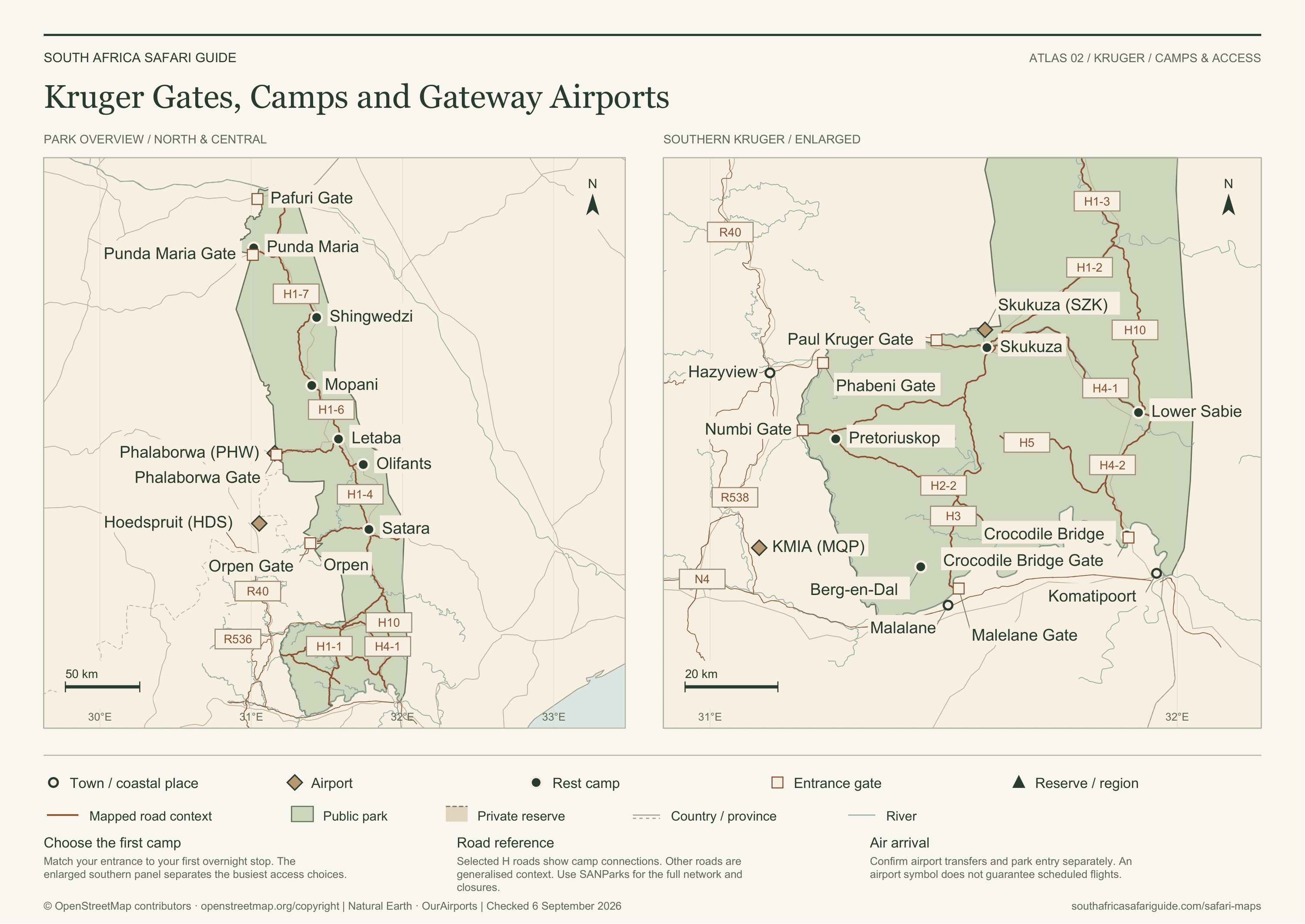
First visit, three nights
Keep one southern base. Skukuza offers service depth; Berg-en-Dal or Lower Sabie can reduce the first-day transfer when their matching gate suits your approach.
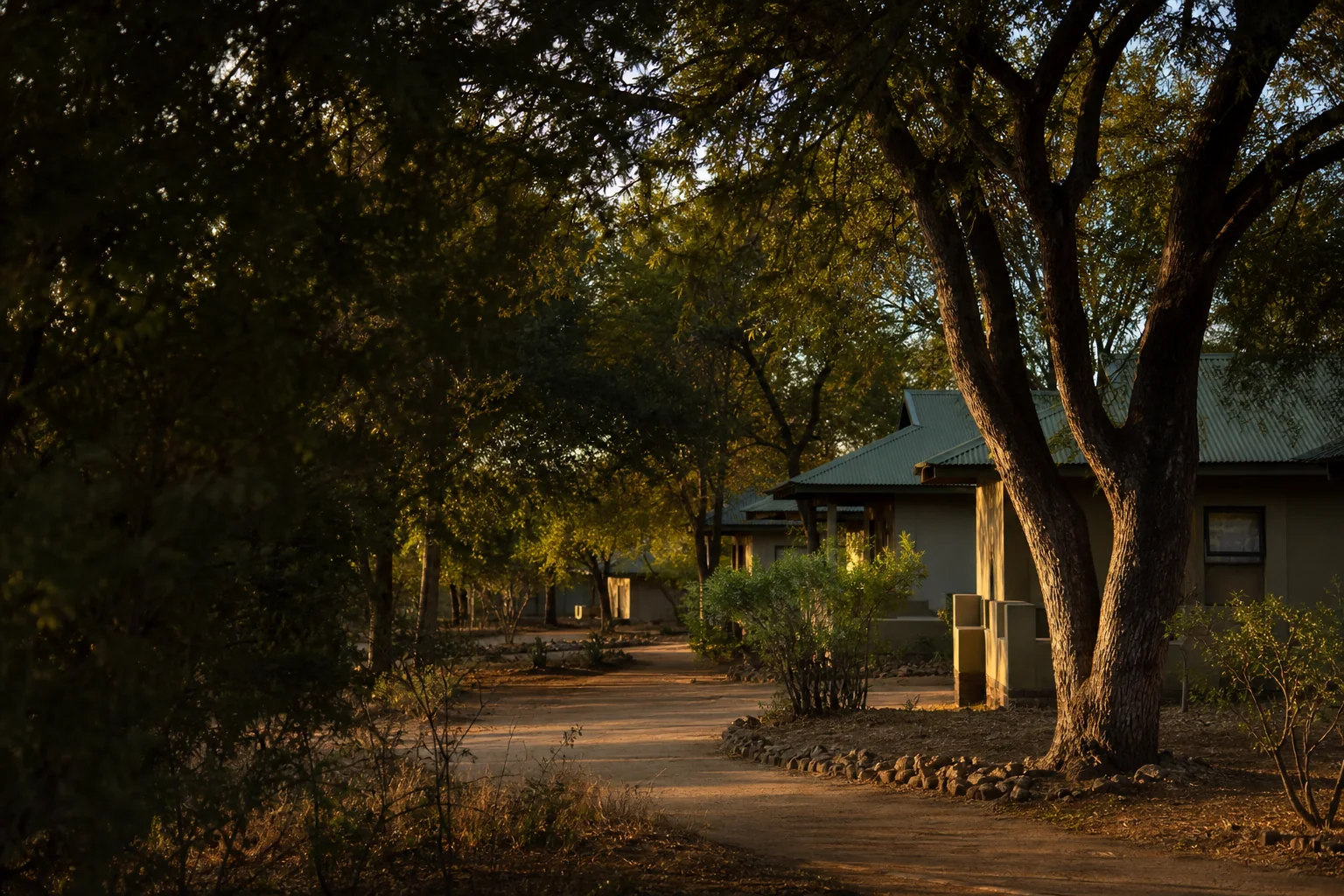
Kruger camp planning
Kruger rest camps shape every drive. Compare four useful main-camp bases by arrival direction, landscape, facilities and the amount of moving your itinerary can comfortably absorb.
Official information last checked . Confirm current operational details before travel.
Safari planning atlas
Locate nine public entrance gates, twelve principal rest camps and Lowveld airports, with an enlarged southern Kruger panel.
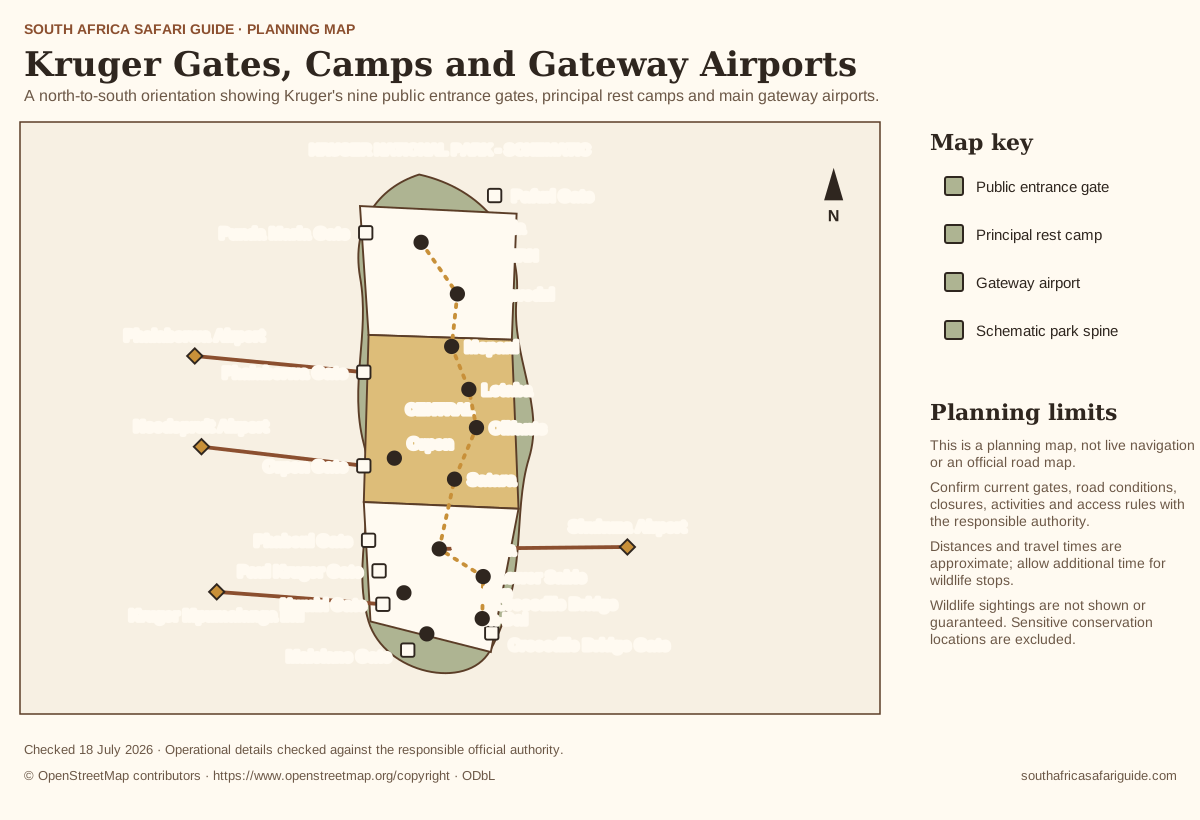
Geography: © OpenStreetMap contributors (ODbL); Natural Earth and OurAirports (public domain). Download source data.
Geographic sources checked . Generalised planning context; confirm current access before travelling.
A practical camp choice begins outside the park: where you will sleep the previous night, which gate you can reach in daylight, and how much in-park driving remains. Only then should landscape, atmosphere and facilities decide between viable bases.
Main rest camps are useful service anchors, but they are not interchangeable. Unit types and facility status can change, so treat this comparison as decision support and SANParks as the operational source.
At a glance
The fit column describes itinerary logic, not a promise of wildlife sightings.
| Camp | Area | Useful for | Natural gate pairing |
|---|---|---|---|
| Skukuza | Southern, Sabie River | First visits and broad services | Paul Kruger or Phabeni |
| Lower Sabie | South-east, Sabie River | A focused southern river base | Crocodile Bridge with ample time |
| Satara | Central open country | Longer trips reaching central Kruger | Orpen is the direct external approach |
| Berg-en-Dal | South-west, hillier country | Low-stress southern arrival | Malelane |
Match the stay
Keep one southern base. Skukuza offers service depth; Berg-en-Dal or Lower Sabie can reduce the first-day transfer when their matching gate suits your approach.
Two bases can work when the transfer creates a clear south-to-central progression. Avoid turning every second day into a packing day.
A slower two-base plan can prioritise familiar landscapes and quieter routines. A third base is optional, not a requirement.
Book the camp that safely fits the gate and arrival time. A prestigious camp is irrelevant if the transfer margin is fragile.
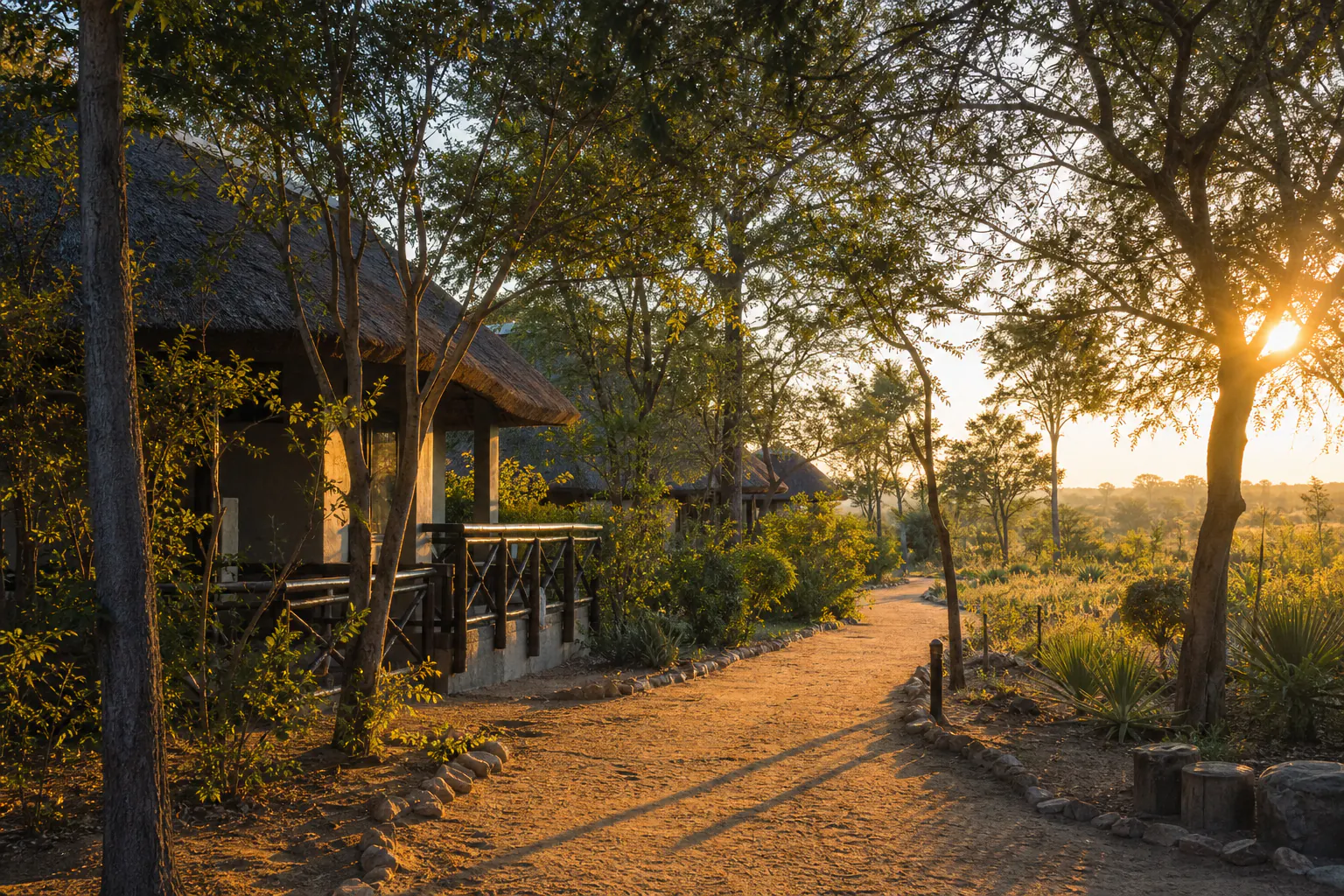
Route logic
A compact south-west to southern-central pairing for travellers arriving through Malelane and wanting a second service-rich base.
A south-east to central progression better suited to a longer stay, with a deliberately unhurried transfer day.
A simple south-to-central structure for five or more nights when central Kruger is a genuine priority.
Often the strongest option for a short or restful trip: less packing, more flexibility and no forced transfer.
Avoidable pressure
There is no universal best camp. Skukuza offers the broadest service base, Lower Sabie supports a river-focused southern stay, Satara suits a central open-country plan, and Berg-en-Dal creates an easy southern arrival from Malelane Gate.
For one to three nights, one base is usually calmer. A second base becomes more useful when it creates a clear geographic progression and the transfer day still leaves a generous gate-time margin.
No. Main rest camps generally provide a broader set of services, while smaller camp categories differ. Confirm the exact unit, facilities, opening arrangements and temporary notices on SANParks before booking.
Official resources
Fees, gate hours, health guidance, notices and availability can change. Use these official resources for the latest operational information.
Digital Kruger planning toolkit
Use a 32-page guide, 14-page printable planning pack and 11-sheet spreadsheet workbook to keep routes, camps, gates and trip decisions in one planning system.
US$19 · one-time payment · no subscription
Next steps