
Documents
- Passport or South African identity document
- Accommodation and activity confirmations
- Gate tickets or day visit confirmation where used
- Driving licence and car hire paperwork
- Travel insurance and emergency contact details
Packing list
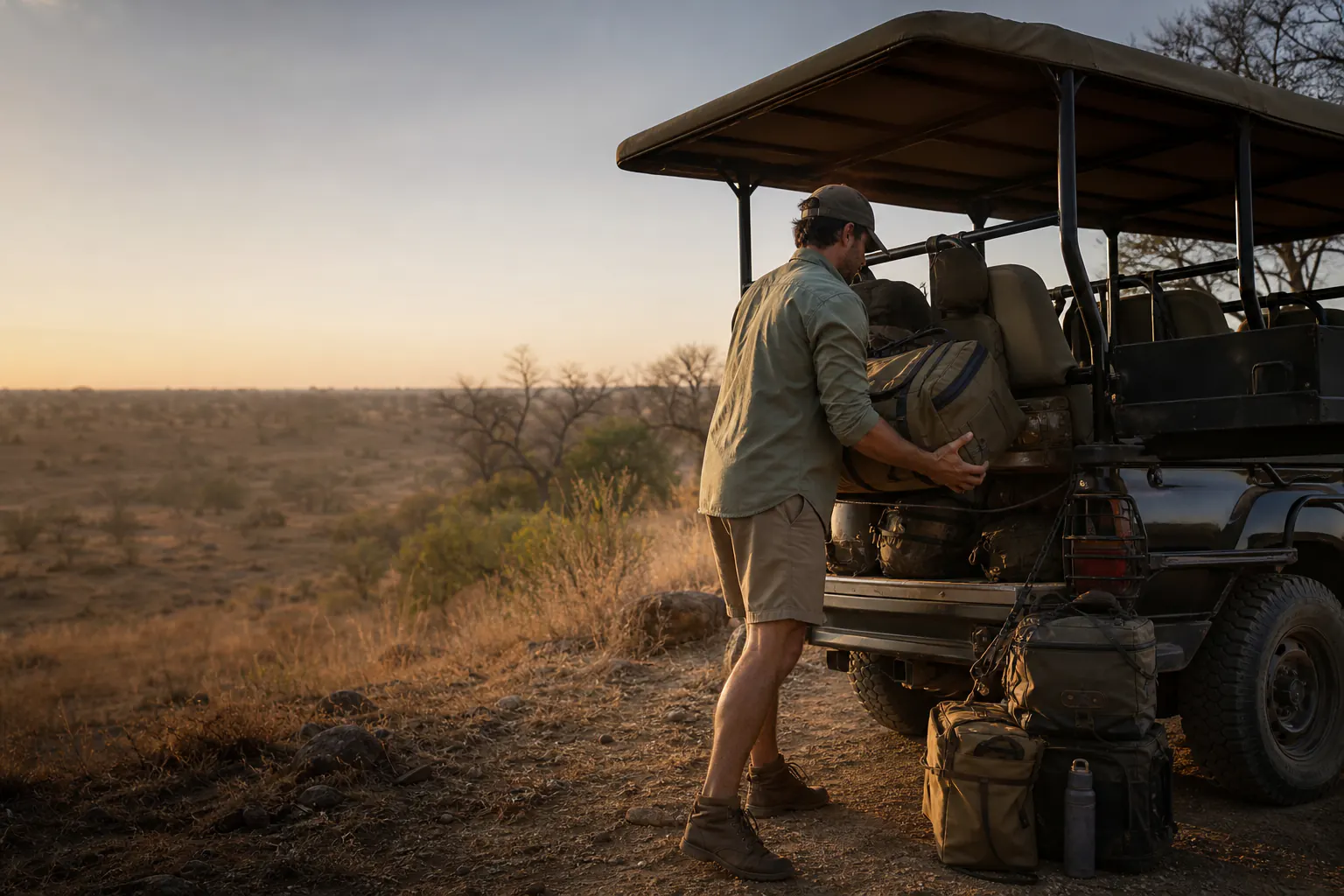
Pack for Kruger as a wildlife trip, a road trip and a health conscious outdoor holiday. The right items keep you comfortable through early starts, heat, dust, rain, camp evenings, limited shops and long quiet hours in the vehicle.
Checklist
Use this as a practical working list, then check your exact accommodation, airline and medical needs before departure.
Free printable guide
The free Safari Starter Checklist covers the first ten decisions, deposit checks, costs, questions and seasonal essentials.
Documents
Passport or South African ID, plus copies stored separately and securely.
SANParks accommodation, activity bookings, gate tickets where used, car hire and transfers.
Driving licence, international permit if required by your rental terms, rental agreement and insurance contacts.
Travel insurance, medical aid details, prescriptions and travel health notes from a qualified professional.
Rental company, accommodation, family contact and relevant park or roadside assistance numbers.
Save PDFs offline because mobile signal can be limited.
Wear
Comfortable muted colours for drives, camp walks and photography without overpacking.
Early morning and open vehicle drives can be cold even when afternoons are hot.
Light rain protection matters in wet season and during unpredictable storms.
Closed shoes for camp, picnic sites and travel days, plus sandals for camp use.
Choose secure, practical items that work in wind and open vehicles.
Useful where camp pools are available and open, especially for family rest time.
Health
Pack repellent, long sleeves for dawn and dusk, and any items recommended by your travel health professional.
Bring personal medication, copies of prescriptions and enough supply for delays. This site does not prescribe medicine.
Sunscreen, lip protection, hat, sunglasses and water bottles belong in the day bag.
Pack child specific medication, snacks, familiar comfort items, wipes, spare clothes and quiet activities.
Viewing
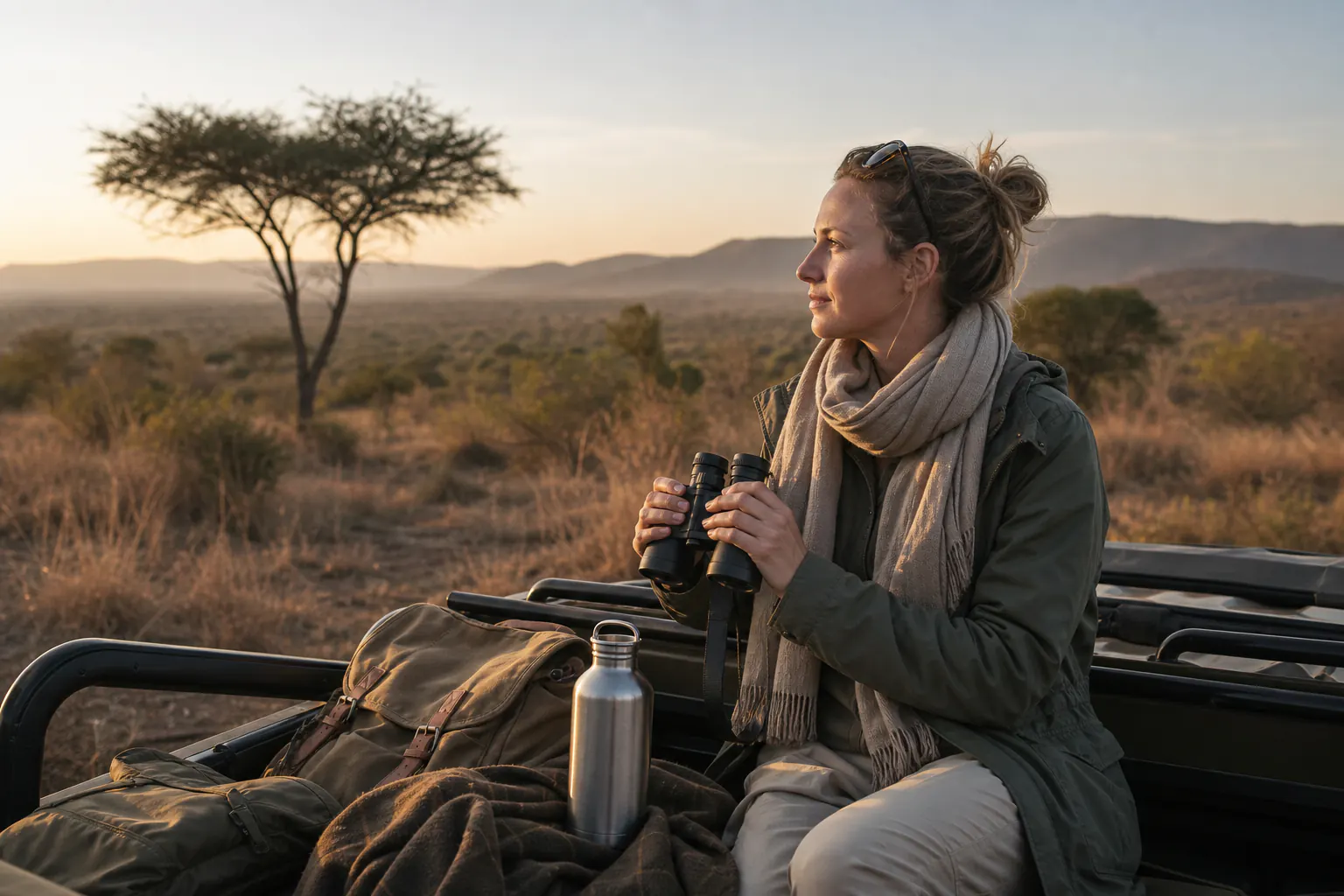
One pair per adult pair is better than one pair buried in the boot.
Memory cards, batteries, lens cloth, dust protection and a realistic plan for storage.
Power banks, car charger, wall adapters and cable spares.
Official map, offline navigation and written camp or gate notes.
Refillable bottles reduce waste and keep water visible in the vehicle.
A small cooler helps with snacks, picnic lunches and self catering supplies.
Self drive
Check spare tyre, jack, tyre pressure, fuel, lights and rental emergency process before entering.
Water, snacks, documents, map, sunscreen, repellent, medication, charging and warm layer.
Plan groceries before gate entry if self catering, and do not rely on every shop item being available.
Do not bring drones, pets, loud outdoor equipment, excess luggage or anything that encourages rule breaking.
Use reusable containers and keep all litter inside the vehicle until a proper bin is available.
Check your exact unit type with SANParks before assuming kitchen equipment, towels or braai setup.
Pack lightly
The most useful Kruger items are the ones you can reach without unpacking the boot at every stop. Keep water, binoculars, sunscreen, repellent, warm layers, camera batteries, tissues, snacks and documents in a day bag or seat pocket. Large suitcases can stay closed until camp.
Responsible packing also means reducing waste. Bring reusable bottles, avoid loose plastic that can blow from the car, and store food securely. Wildlife should never associate vehicles, camps or picnic sites with food.
Official resources
Fees, gate hours, health guidance, notices and availability can change. Use these official resources for the latest operational information.
Next steps