
Scientific name
Panthera pardus
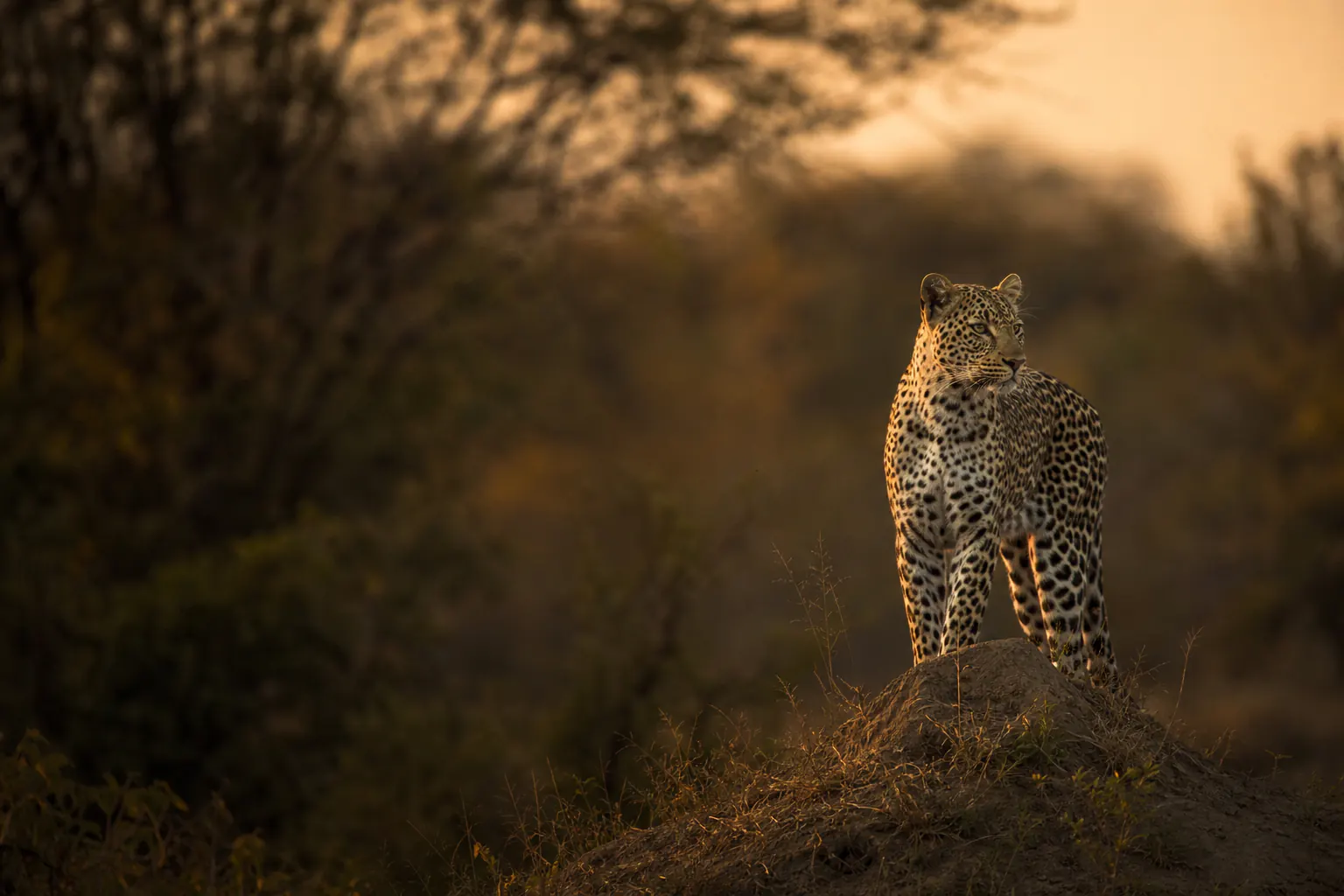
South Africa wildlife
African leopard (Panthera pardus) is part of the South African safari story, but a good sighting depends on habitat, season, patience and respectful behaviour rather than promises.
Field notes
Panthera pardus
Large mammal
Often most active in low light and at night, though shaded daytime sightings happen where leopards feel secure.
Riverine woodland, rocky koppies, thickets and mixed bush where cover and prey meet.
Mostly small to medium prey, from antelope to hares and birds, with carcasses sometimes cached in trees or dense cover.
Rounded pugmarks, usually without claw marks, are smaller than lion tracks and often follow roads, drainage lines or sandy riverbeds.
Identification
A rosette patterned cat with a long tail, powerful shoulders and a habit of dissolving into shade and riverine cover. Identification is strongest when you combine body shape, movement, habitat and behaviour instead of relying on a single feature.
Cheetah have solid spots, tear marks and a lighter build; young lions lack the leopard's rosette pattern. When in doubt, slow down and compare the animal with its surroundings, group size and posture before naming it.
Panthera pardus is used for the species. Subspecies treatment should not be simplified in visitor copy.
Big Five planning
Read this as a planning page as much as an animal guide. The goal is to recognise behaviour, give the sighting space and understand why guides may slow down, hold back or leave before a crowd builds.
A rosette patterned cat with a long tail, powerful shoulders and a habit of dissolving into shade and riverine cover.
Strong sightings often depend on vehicle spacing, quiet voices and allowing the animal to choose its own movement.
Leopard status and management differ by area, so use current SANBI and IUCN references and avoid treating sightings as guaranteed.
Use this animal as a reason to choose good guiding and enough time in the field, not as a promised item on a checklist.
Species focus
These notes are deliberately specific, because the best sightings usually come from watching small details well.
Leopards often reveal themselves through a tail loop, ear edge, rosette pattern or alarm calls before the whole body is visible.
A calm leopard may keep resting if vehicles remain quiet and leave a route out of cover.
Branches and shadows are part of the leopard's ecology, not flaws to solve by crowding.
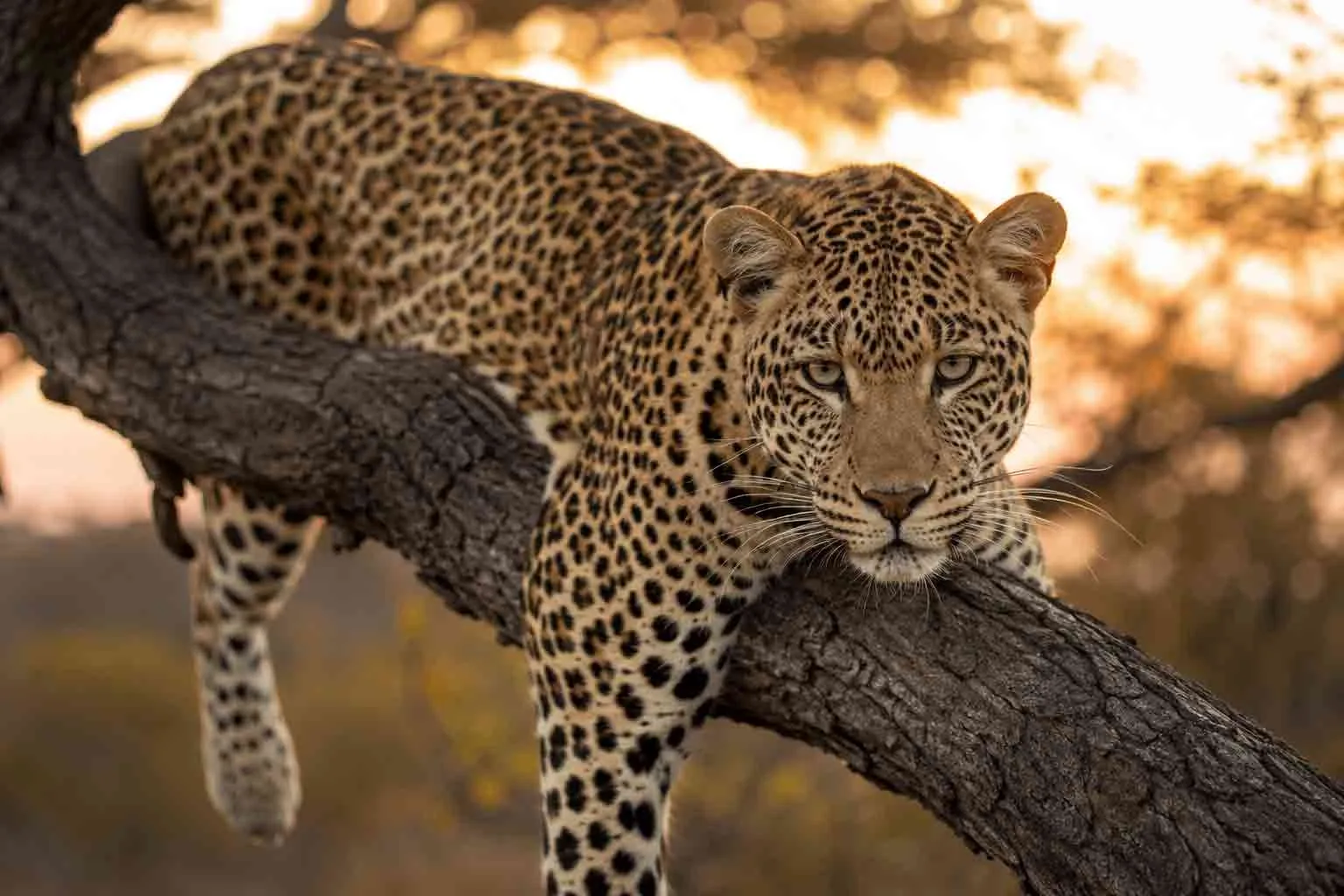
Behaviour and habitat
Leopards move quietly, rest in cover and often use trees, drainage lines and rocky areas to avoid pressure from lions and hyenas.
Mostly small to medium prey, from antelope to hares and birds, with carcasses sometimes cached in trees or dense cover.
Solitary, with overlapping territories and brief contact for mating or between mothers and cubs.
Riverine woodland, rocky koppies, thickets and mixed bush where cover and prey meet. Greater Kruger and Sabi Sands are strongly associated with leopard viewing, while Kruger and other reserves require patience and careful scanning.
Fieldcraft
Good guides read the wider scene before the animal appears. Visitors can learn the same habit at a gentle level.
Rounded pugmarks, usually without claw marks, are smaller than lion tracks and often follow roads, drainage lines or sandy riverbeds.
The rasping saw-like territorial call is distinctive; alarm calls from impala, kudu, squirrels and birds can be equally useful.
Greater Kruger and Sabi Sands are strongly associated with leopard viewing, while Kruger and other reserves require patience and careful scanning.
Responsible safari
Do not follow too closely, block escape routes or pressure cub sightings. Quiet vehicles and patient guides produce better behaviour.
Watch for dappled light and obstructing branches; a wider environmental frame often works better than forcing a tight portrait.
Look for the moment before the obvious photograph, such as a change in posture, a contact call, a shift in shade or the way other animals react.
Do not feed, call, chase, crowd or block animals. A calm sighting is better than a forced photograph.
When comparing tours, ask about guide conduct, vehicle etiquette and time spent interpreting behaviour rather than chasing checklists.
Verification
IUCN Red List and SANBI species resources
2026-07-17
Panthera pardus is used for the species. Subspecies treatment should not be simplified in visitor copy.
Conservation context
Leopard status and management differ by area, so use current SANBI and IUCN references and avoid treating sightings as guaranteed.
A formal conservation category is not displayed here because current global, national and regional assessments can differ by source and date. Check the IUCN Red List, SANBI species status resources and BirdLife DataZone for birds before quoting a status.
For common species, responsible travel still matters because visitor behaviour can change feeding, movement, stress and predator-prey interactions.
Official resources
Fees, gate hours, health guidance, notices and availability can change. Use these official resources for the latest operational information.
Next steps