
Scientific name
Hippopotamus amphibius
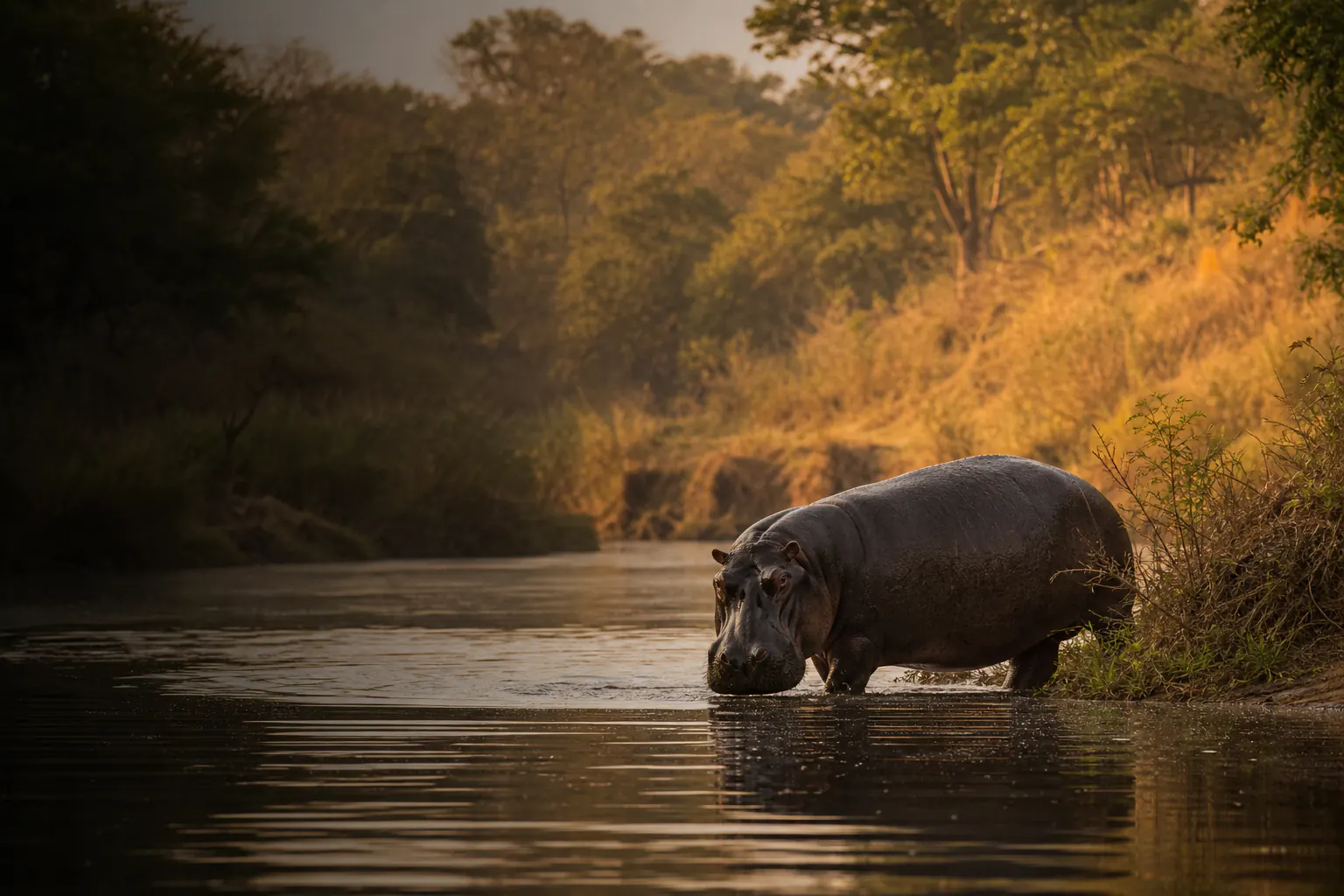
South Africa wildlife
Hippopotamus (Hippopotamus amphibius) is part of the South African safari story, but a good sighting depends on habitat, season, patience and respectful behaviour rather than promises.
Field notes
Hippopotamus amphibius
Aquatic wildlife
Daytime viewing is usually water based; grazing happens mostly after dark and should not be approached.
Rivers, dams, wetlands and deep pools with nearby grazing.
Mainly grasses grazed on land, despite spending much of the day in water.
Large round footprints, pathways from water to grazing and dung spraying around banks can indicate use.
Identification
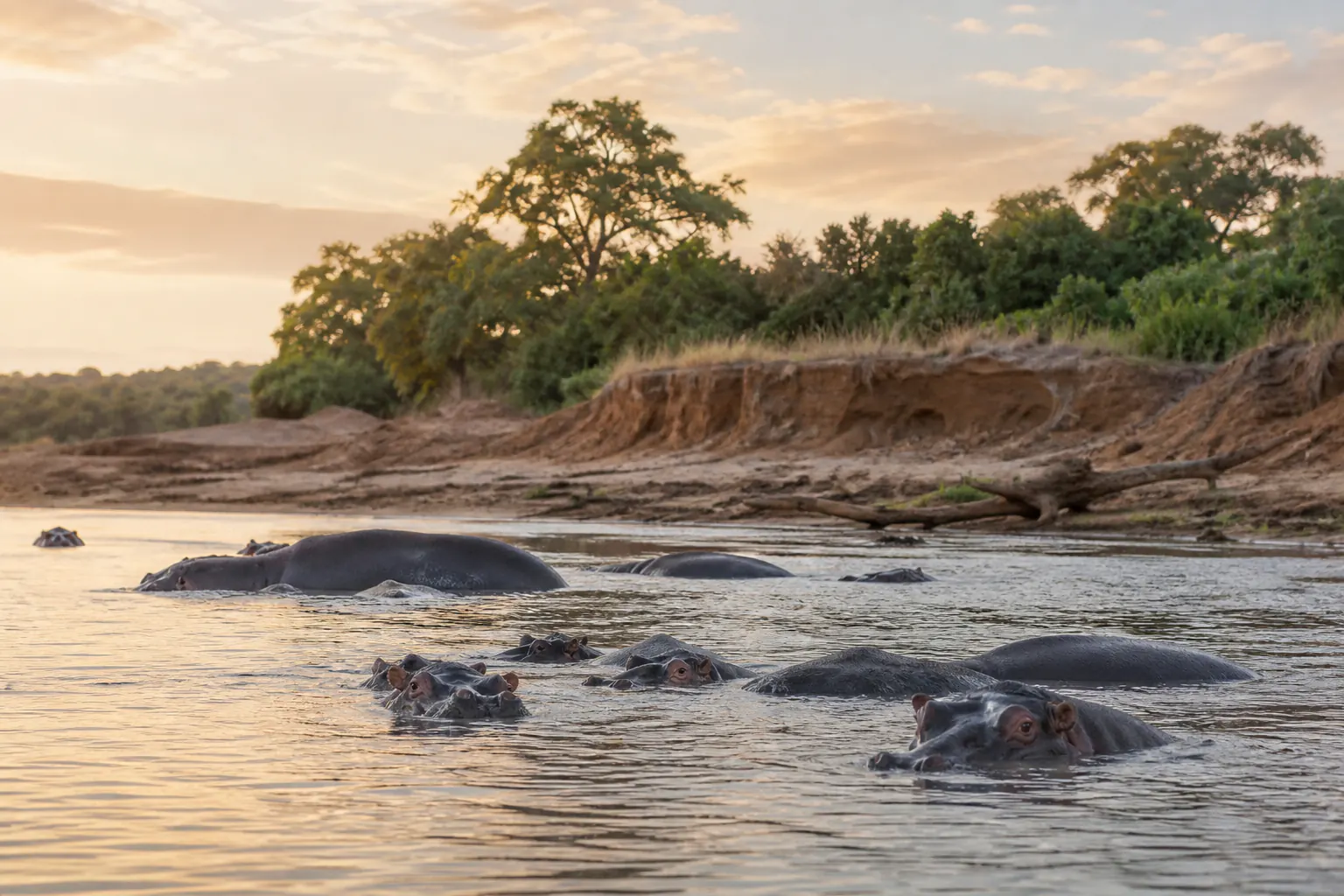
Large rounded bodies in water, nostrils and eyes above the surface, yawning displays and loud river sounds. Identification is strongest when you combine body shape, movement, habitat and behaviour instead of relying on a single feature.
Only distant boulders or floating logs confuse first timers; movement, ears and nostrils reveal the animal. When in doubt, slow down and compare the animal with its surroundings, group size and posture before naming it.
Hippopotamus amphibius is used for hippopotamus.
River safety
Water sightings need patience and distance. Rivers, dams and wetlands concentrate animals, but they also create safety boundaries visitors must respect.
Daytime viewing is usually water based; grazing happens mostly after dark and should not be approached.
Never approach water edges on foot without qualified guidance and never stand between hippos and water.
Large round footprints, pathways from water to grazing and dung spraying around banks can indicate use.
Stay at official viewpoints, inside vehicles or with qualified boat guidance. Never step closer just because the animal is still.
Species focus
These notes are deliberately specific, because the best sightings usually come from watching small details well.
Hippos use water and mud to rest and regulate heat, often showing only eyes, ears and nostrils.
They leave water to graze, creating routes that should never be blocked by people, vehicles or boats.
View from official places and never stand near unfenced water edges for a lower angle.
Behaviour and habitat
Hippos spend hot daylight hours in water or mud, then leave to graze after dark where conditions allow.
Mainly grasses grazed on land, despite spending much of the day in water.
Groups gather in pools and river sections, with territorial behaviour strongest around water.
Rivers, dams, wetlands and deep pools with nearby grazing. Kruger rivers, iSimangaliso wetlands and other protected waterways can offer hippo viewing from safe viewpoints.
Fieldcraft
Good guides read the wider scene before the animal appears. Visitors can learn the same habit at a gentle level.
Large round footprints, pathways from water to grazing and dung spraying around banks can indicate use.
Deep honks, grunts and wheezes are among the most recognizable wetland sounds.
Kruger rivers, iSimangaliso wetlands and other protected waterways can offer hippo viewing from safe viewpoints.
Responsible safari
Never approach water edges on foot without qualified guidance and never stand between hippos and water.
Use reflections, yawns and river context, but stay at official viewpoints or inside the vehicle.
Look for water access, basking banks, grazing paths, sounds and the way animals move between land and water.
Do not feed, call, chase, crowd or block animals. A calm sighting is better than a forced photograph.
When comparing tours, ask about guide conduct, vehicle etiquette and time spent interpreting behaviour rather than chasing checklists.
Verification
IUCN Red List and SANBI species resources
2026-07-17
Hippopotamus amphibius is used for hippopotamus.
Conservation context
Hippo conservation links water systems, grazing pressure and human safety; use current area guidance rather than casual assumptions.
A formal conservation category is not displayed here because current global, national and regional assessments can differ by source and date. Check the IUCN Red List, SANBI species status resources and BirdLife DataZone for birds before quoting a status.
For common species, responsible travel still matters because visitor behaviour can change feeding, movement, stress and predator-prey interactions.
Official resources
Fees, gate hours, health guidance, notices and availability can change. Use these official resources for the latest operational information.
Next steps