
Scientific name
Crocodylus niloticus
South Africa wildlife
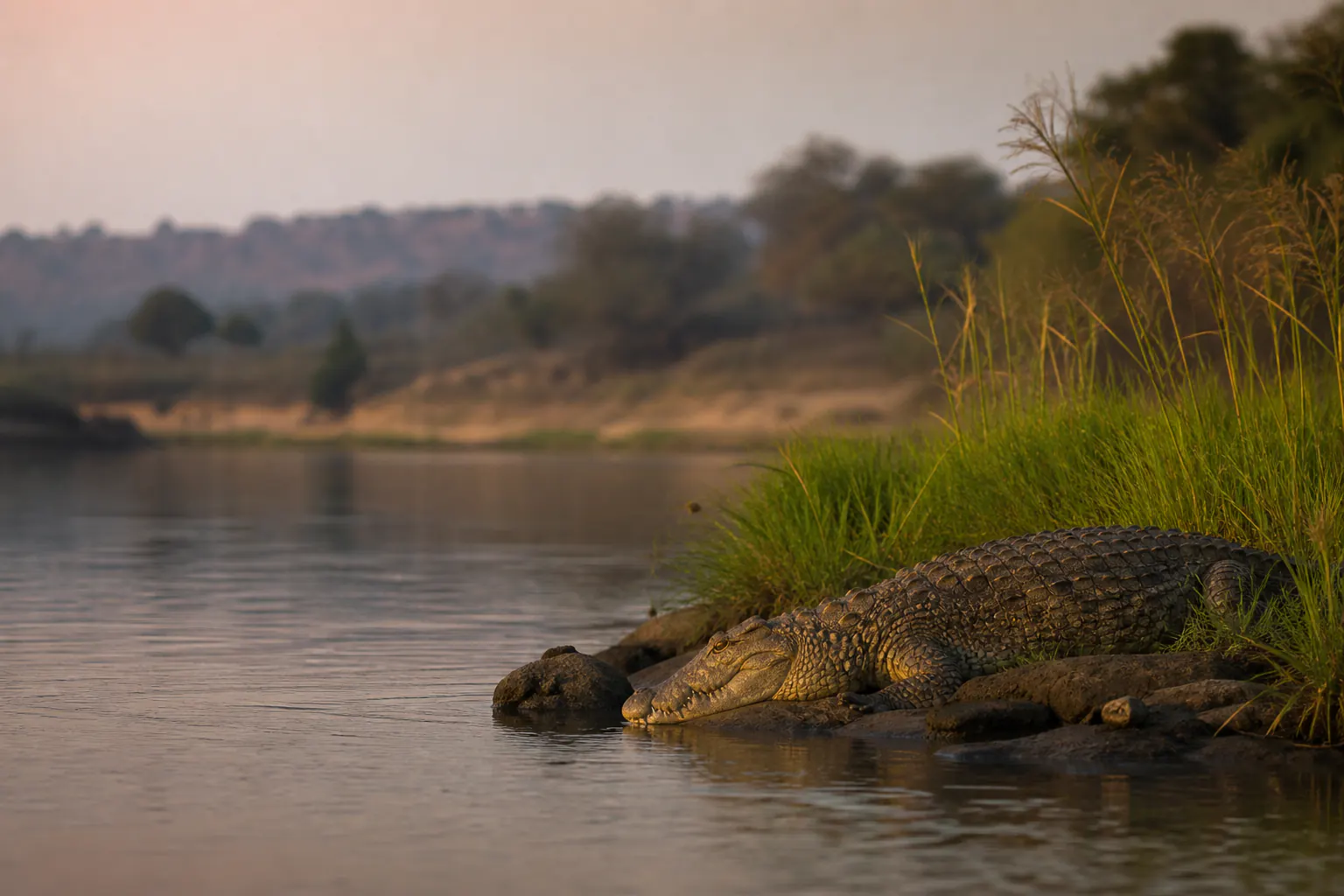
Nile crocodile (Crocodylus niloticus) is part of the South African safari story, but a good sighting depends on habitat, season, patience and respectful behaviour rather than promises.
Field notes
Crocodylus niloticus
Aquatic wildlife
Basking is easier to see in sun; hunting behaviour is often hidden and should not be approached.
Rivers, dams, floodplains, lakes and wetlands with basking banks and prey movement.
Fish, birds, mammals and carrion depending on size, opportunity and habitat.
Tail drags, claw marks and slide paths on mud or sand can show movement between water and banks.
Identification
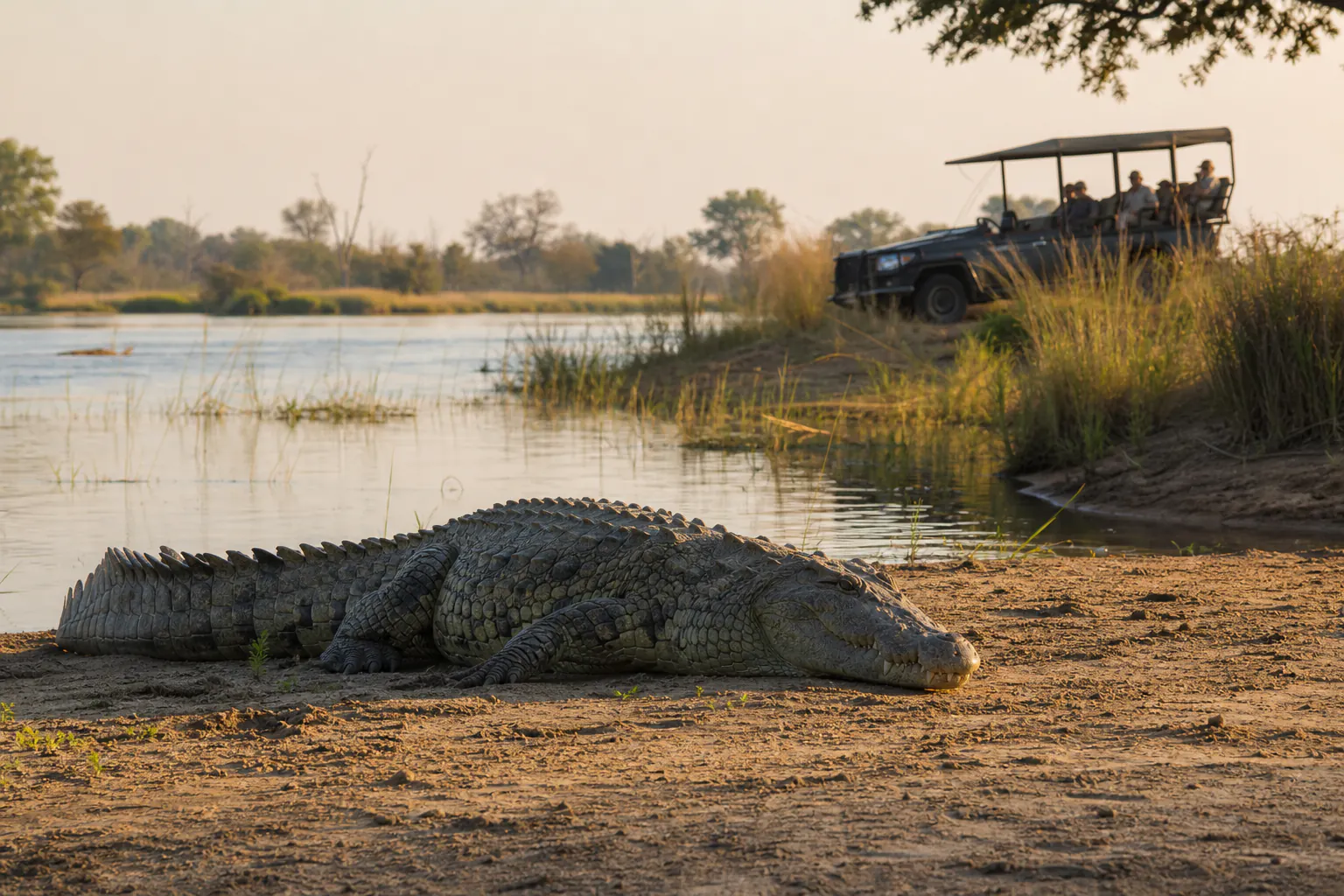
A low armored body, ridged back, long tail and stillness on sandbanks or just below the water surface. Identification is strongest when you combine body shape, movement, habitat and behaviour instead of relying on a single feature.
Monitor lizards are much smaller and more agile on land; floating logs can be deceptive until eyes, snout and tail line appear. When in doubt, slow down and compare the animal with its surroundings, group size and posture before naming it.
Crocodylus niloticus is used for Nile crocodile.
River safety
Water sightings need patience and distance. Rivers, dams and wetlands concentrate animals, but they also create safety boundaries visitors must respect.
Basking is easier to see in sun; hunting behaviour is often hidden and should not be approached.
Keep well back from water edges, obey warning signs and never assume shallow or still water is safe.
Tail drags, claw marks and slide paths on mud or sand can show movement between water and banks.
Stay at official viewpoints, inside vehicles or with qualified boat guidance. Never step closer just because the animal is still.
Species focus
These notes are deliberately specific, because the best sightings usually come from watching small details well.
Basking is part of temperature regulation, which is why crocodiles may look inactive on exposed banks.
Still water, channels and bank edges are hunting habitat. Never treat quiet water as empty water.
Nesting behaviour is seasonal and sensitive, so the guide keeps it general and avoids practical nest-finding detail.
Behaviour and habitat
Nile crocodiles bask to regulate temperature, wait near water edges and respond quickly when prey or disturbance is close.
Fish, birds, mammals and carrion depending on size, opportunity and habitat.
Mostly solitary in hunting posture, though multiple crocodiles may gather at productive basking or feeding sites.
Rivers, dams, floodplains, lakes and wetlands with basking banks and prey movement. Kruger river crossings and iSimangaliso wetlands are useful contexts for crocodile viewing.
Fieldcraft
Good guides read the wider scene before the animal appears. Visitors can learn the same habit at a gentle level.
Tail drags, claw marks and slide paths on mud or sand can show movement between water and banks.
Usually quiet to visitors, though hatchling and breeding sounds exist outside normal safari observation.
Kruger river crossings and iSimangaliso wetlands are useful contexts for crocodile viewing.
Responsible safari
Keep well back from water edges, obey warning signs and never assume shallow or still water is safe.
Use a long lens, reflections and scale clues; do not move closer to make a stationary animal more dramatic.
Look for water access, basking banks, grazing paths, sounds and the way animals move between land and water.
Do not feed, call, chase, crowd or block animals. A calm sighting is better than a forced photograph.
When comparing tours, ask about guide conduct, vehicle etiquette and time spent interpreting behaviour rather than chasing checklists.
Verification
IUCN Red List and SANBI species resources
2026-07-17
Crocodylus niloticus is used for Nile crocodile.
Conservation context
Crocodiles are key aquatic predators, and local health can reflect river condition and human wildlife conflict.
A formal conservation category is not displayed here because current global, national and regional assessments can differ by source and date. Check the IUCN Red List, SANBI species status resources and BirdLife DataZone for birds before quoting a status.
For common species, responsible travel still matters because visitor behaviour can change feeding, movement, stress and predator-prey interactions.
Official resources
Fees, gate hours, health guidance, notices and availability can change. Use these official resources for the latest operational information.
Next steps