
Scientific name
Coracias caudatus
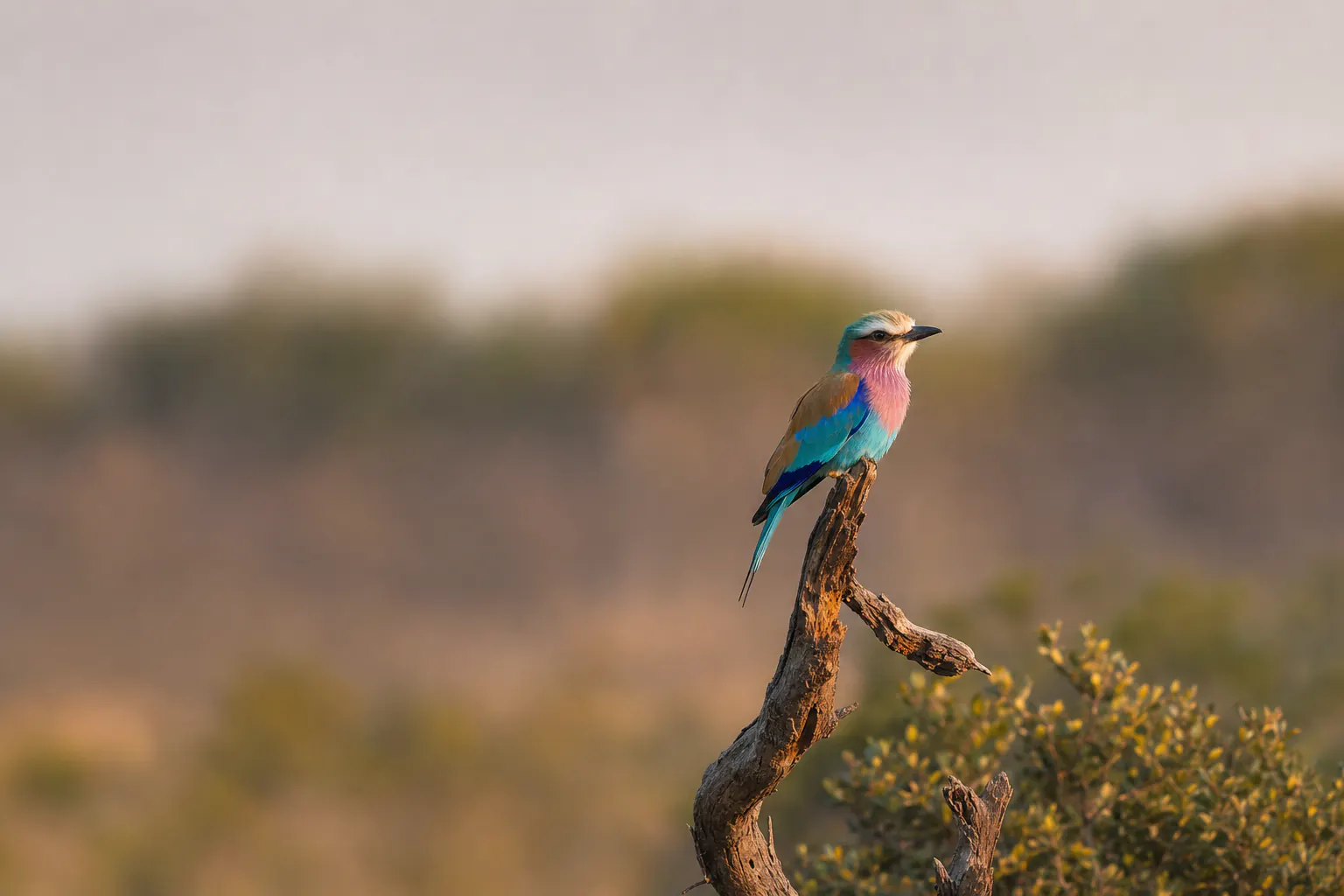
South Africa wildlife
Lilac breasted roller (Coracias caudatus) is part of the South African safari story, but a good sighting depends on habitat, season, patience and respectful behaviour rather than promises.
Field notes
Coracias caudatus
Bird
Day active and especially photogenic in clear light after rain or against clean backgrounds.
Open woodland, savanna edges, clearings and roadside perch lines.
Insects and small animals taken from the ground after watchful perching.
Tracks are not useful for normal visitors; perches, flight paths and feeding drops are better clues.
Identification
A bright roller with lilac breast, turquoise wings and a habit of perching visibly on roadside branches. Identification is strongest when you combine body shape, movement, habitat and behaviour instead of relying on a single feature.
European roller and other rollers differ by season, color balance and range; check a current bird guide for formal separation. When in doubt, slow down and compare the animal with its surroundings, group size and posture before naming it.
Coracias caudatus is used for lilac breasted roller. This guide does not call it South Africa's national bird.
Birding context
Birding rewards slower driving and clean observation. Perches, calls, flight lines and feeding behaviour often matter more than a quick colour impression.
A bright roller with lilac breast, turquoise wings and a habit of perching visibly on roadside branches.
Rollers scan from exposed perches, drop to the ground for prey and flash color in flight.
Harsh calls may be heard, but color and perch posture usually reveal the bird first.
Stop without blocking roads and do not flush birds repeatedly for flight photographs.
Species focus
These notes are deliberately specific, because the best sightings usually come from watching small details well.
Look beyond colour to the sturdy bill, perch posture, turquoise wing flash and lilac breast.
Stop neatly, avoid repeated flushing and let the bird return to feeding or scanning.
It is beloved by safari visitors, but this guide does not describe it as South Africa's national bird.
Behaviour and habitat
Rollers scan from exposed perches, drop to the ground for prey and flash color in flight.
Insects and small animals taken from the ground after watchful perching.
Often seen singly or in pairs, especially around territories and suitable perches.
Open woodland, savanna edges, clearings and roadside perch lines. Kruger, Greater Kruger, Madikwe, Pilanesberg and many bushveld reserves offer good roller sightings.
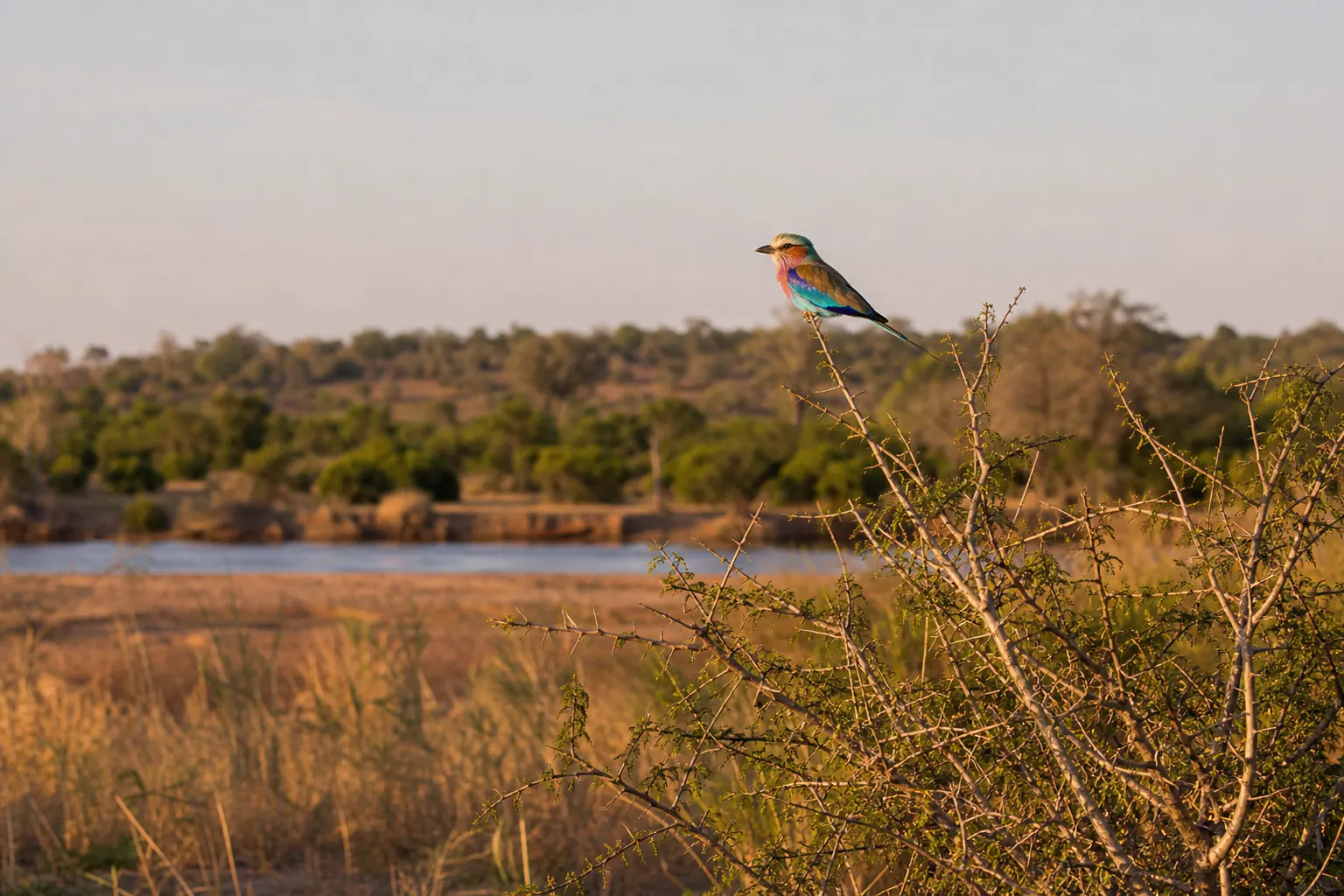
Fieldcraft
Good guides read the wider scene before the animal appears. Visitors can learn the same habit at a gentle level.
Tracks are not useful for normal visitors; perches, flight paths and feeding drops are better clues.
Harsh calls may be heard, but color and perch posture usually reveal the bird first.
Kruger, Greater Kruger, Madikwe, Pilanesberg and many bushveld reserves offer good roller sightings.
Responsible safari
Stop without blocking roads and do not flush birds repeatedly for flight photographs.
Use clean backgrounds, catchlight and wing color in takeoff without crowding the perch.
Look for posture, bill shape, tail shape, flight pattern, light angle and whether the bird is being repeatedly flushed.
Do not feed, call, chase, crowd or block animals. A calm sighting is better than a forced photograph.
When comparing tours, ask about guide conduct, vehicle etiquette and time spent interpreting behaviour rather than chasing checklists.
Verification
BirdLife DataZone and SANBI species resources
2026-07-17
Coracias caudatus is used for lilac breasted roller. This guide does not call it South Africa's national bird.
Conservation context
Bird status should be checked with BirdLife and current regional lists when formal assessment matters.
A formal conservation category is not displayed here because current global, national and regional assessments can differ by source and date. Check the IUCN Red List, SANBI species status resources and BirdLife DataZone for birds before quoting a status.
For common species, responsible travel still matters because visitor behaviour can change feeding, movement, stress and predator-prey interactions.
Official resources
Fees, gate hours, health guidance, notices and availability can change. Use these official resources for the latest operational information.
Next steps