
Scientific name
Bucorvus leadbeateri
South Africa wildlife
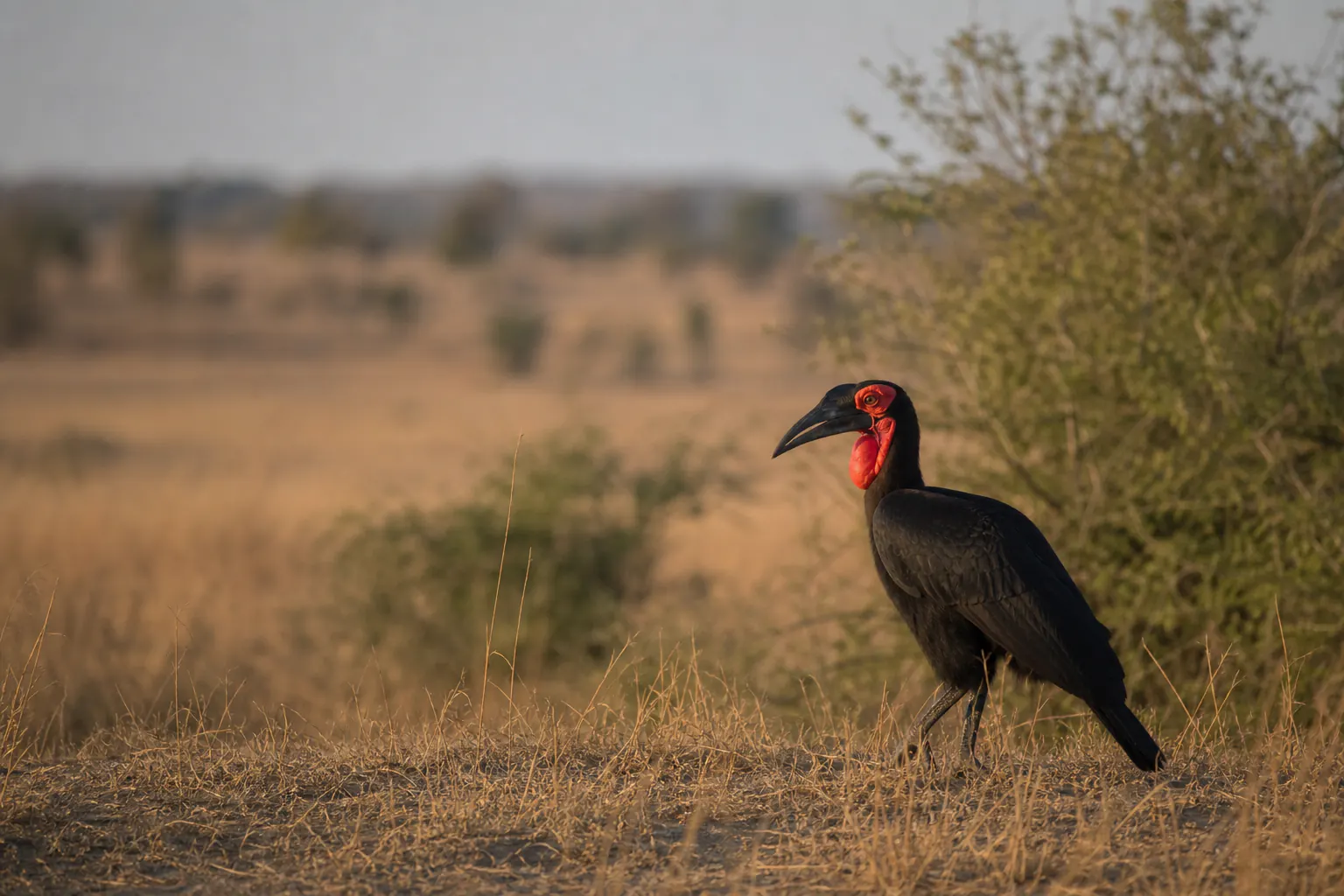
Southern ground hornbill (Bucorvus leadbeateri) is part of the South African safari story, but a good sighting depends on habitat, season, patience and respectful behaviour rather than promises.
Field notes
Bucorvus leadbeateri
Bird
Day active, often walking roadsides or open areas in the morning.
Savanna, open woodland and large protected landscapes with suitable nesting trees and foraging range.
Insects, reptiles, amphibians, small mammals, birds and other ground prey taken while walking.
Large bird footprints and foraging marks may occur, though sightings and calls are more useful.
Identification
Large black ground walking birds with red facial skin, heavy bills and deep booming calls. Identification is strongest when you combine body shape, movement, habitat and behaviour instead of relying on a single feature.
No common South African safari bird combines the same size, ground walking habit and red facial skin. When in doubt, slow down and compare the animal with its surroundings, group size and posture before naming it.
Bucorvus leadbeateri is used for southern ground hornbill.
Birding context
Birding rewards slower driving and clean observation. Perches, calls, flight lines and feeding behaviour often matter more than a quick colour impression.
Large black ground walking birds with red facial skin, heavy bills and deep booming calls.
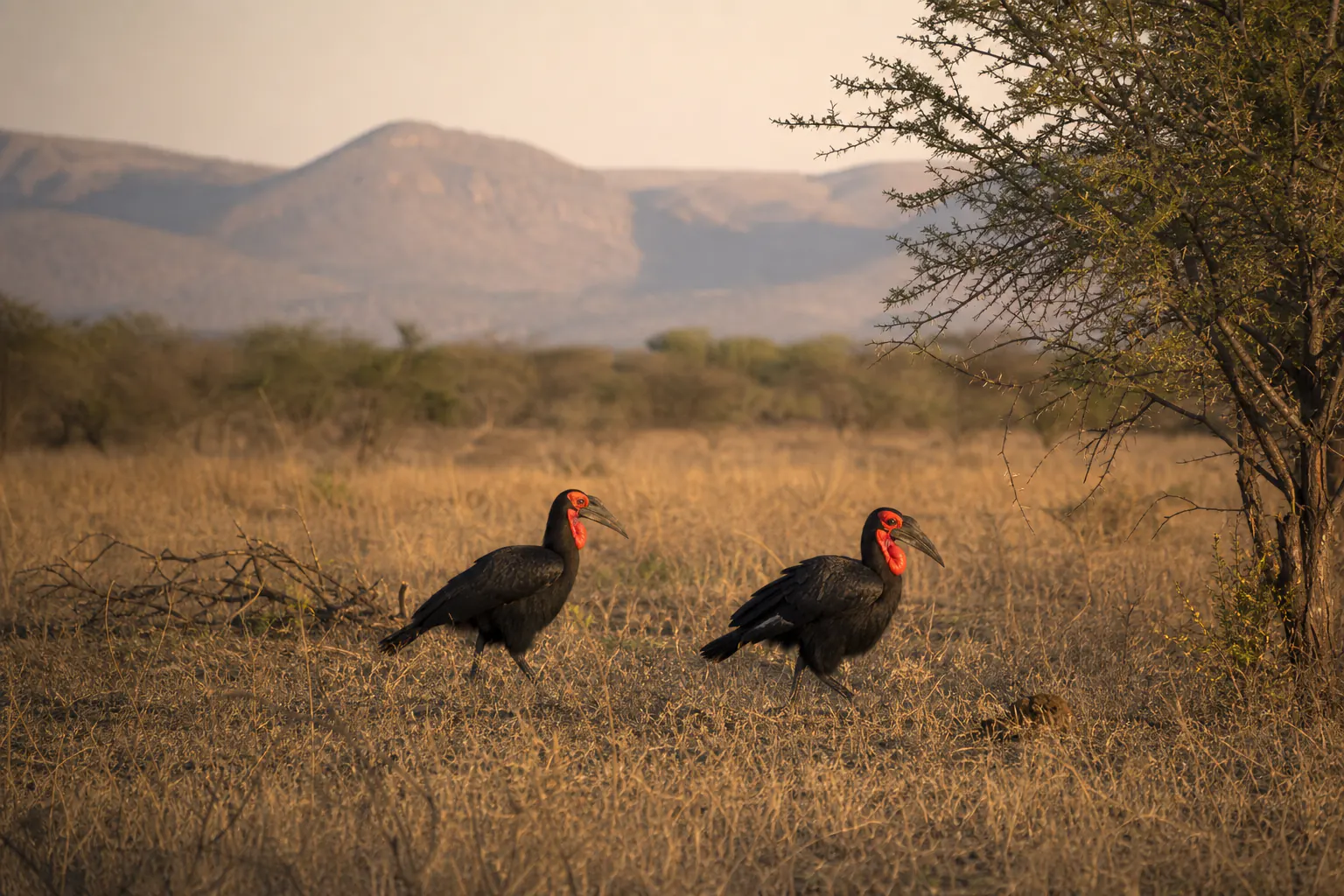
Ground hornbills move slowly in family groups, searching for prey and maintaining strong social bonds.
Deep booming calls can carry in the morning and are one of the signature sounds of the bush.
Do not chase groups down roads or approach nests; slow breeding makes disturbance especially costly.
Species focus
These notes are deliberately specific, because the best sightings usually come from watching small details well.
Adults have red facial skin, and females can show a blue throat patch. Use a bird guide for careful sexing in the field.
Family groups, large territories and slow breeding make disturbance and habitat loss especially serious.
Let groups walk naturally, do not herd them with a vehicle and avoid stopping so close that feeding changes.
Behaviour and habitat
Ground hornbills move slowly in family groups, searching for prey and maintaining strong social bonds.
Insects, reptiles, amphibians, small mammals, birds and other ground prey taken while walking.
Cooperative family groups are central, with slow breeding and long dependence of young birds.
Savanna, open woodland and large protected landscapes with suitable nesting trees and foraging range. Kruger and some private reserves are important South African viewing contexts, but sightings should be treated as special.
Fieldcraft
Good guides read the wider scene before the animal appears. Visitors can learn the same habit at a gentle level.
Large bird footprints and foraging marks may occur, though sightings and calls are more useful.
Deep booming calls can carry in the morning and are one of the signature sounds of the bush.
Kruger and some private reserves are important South African viewing contexts, but sightings should be treated as special.
Responsible safari
Do not chase groups down roads or approach nests; slow breeding makes disturbance especially costly.
Use longer lenses and patient framing that keeps the group moving naturally.
Look for posture, bill shape, tail shape, flight pattern, light angle and whether the bird is being repeatedly flushed.
Avoid live locations, geotags and background clues for sensitive species. The welfare of the animal and security of the reserve come first.
When comparing tours, ask about guide conduct, vehicle etiquette and time spent interpreting behaviour rather than chasing checklists.
Verification
BirdLife DataZone and South African species recovery planning sources
2026-07-17
Bucorvus leadbeateri is used for southern ground hornbill.
Conservation context
Southern ground hornbills have serious conservation concern in South Africa. Use BirdLife, SANBI and official project sources for current status.
Global IUCN status shown as Vulnerable with stronger regional concern in South Africa. BirdLife records the species as globally threatened and notes regional Endangered assessments in southern parts of the range. South African sources describe high regional concern, slow breeding and active conservation work. Source checked 2026-07-17.
For sensitive species, responsible travel also means not publishing detailed sightings, den sites, nest locations, rhino positions or operational security clues.
Official resources
Fees, gate hours, health guidance, notices and availability can change. Use these official resources for the latest operational information.
Next steps