
Scientific name
Ceratotherium simum
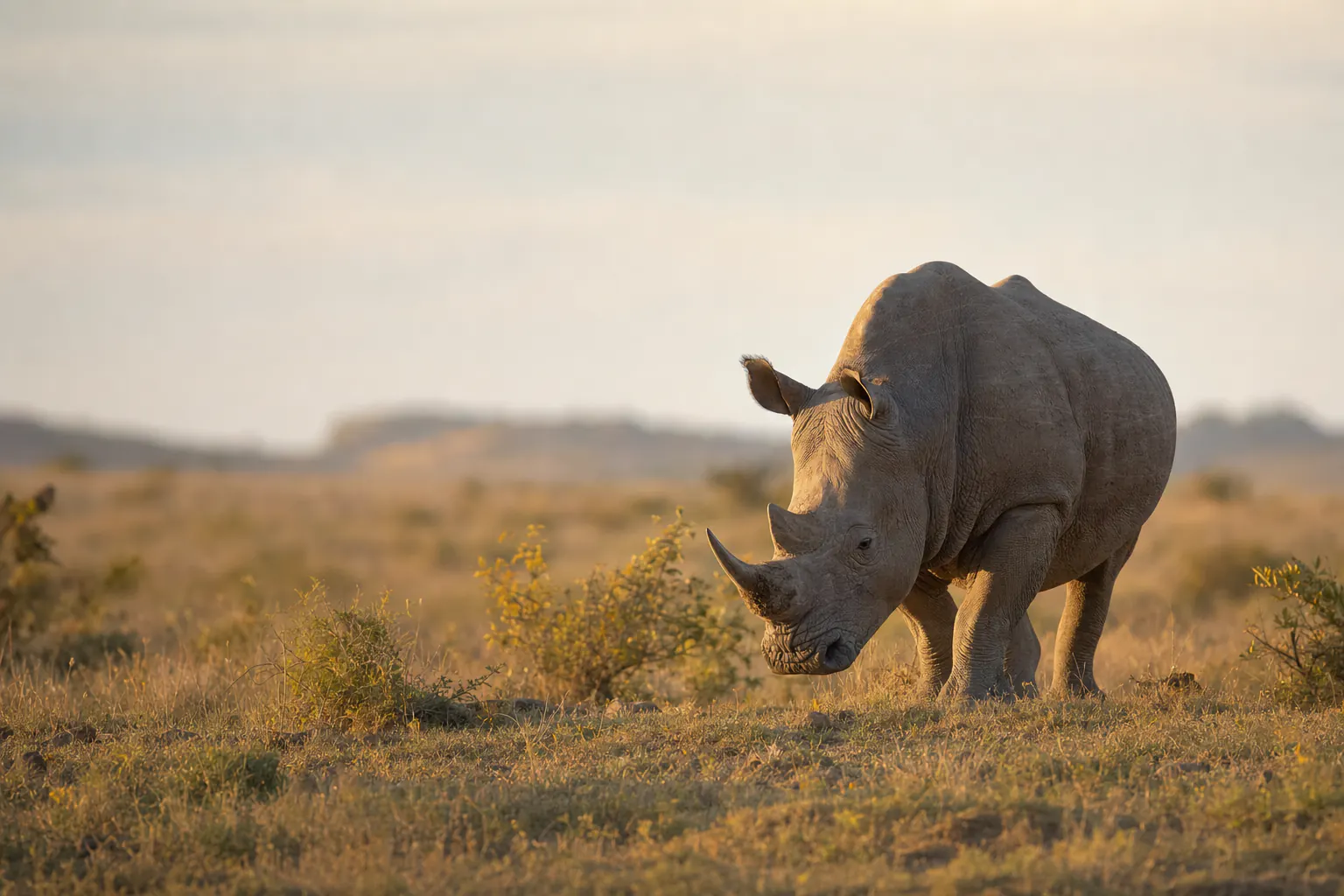
South Africa wildlife
White rhinoceros (Ceratotherium simum) is part of the South African safari story, but a good sighting depends on habitat, season, patience and respectful behaviour rather than promises.
Field notes
Ceratotherium simum
Large mammal
Often seen grazing in cooler periods or resting during heat, with movement affected by security, water and local habitat.
Open grassland, savanna edges and grazing lawns inside protected areas, with exact locations intentionally not detailed here.
Primarily grasses, cropped with the wide square mouth that helps separate them from black rhino.
Large three toed tracks, cropped grass and dung middens may be visible, but visitors should not use public platforms to broadcast fresh signs.
Identification
A large square lipped grazer with a long head, pronounced shoulder hump and generally broad, low feeding posture. Identification is strongest when you combine body shape, movement, habitat and behaviour instead of relying on a single feature.
Black rhino are generally more hooked lipped, browser shaped and compact in posture; do not rely on horn size. When in doubt, slow down and compare the animal with its surroundings, group size and posture before naming it.
Ceratotherium simum is used for white rhinoceros. Conservation wording should separate global, national and security-sensitive local context.
Big Five planning
Read this as a planning page as much as an animal guide. The goal is to recognise behaviour, give the sighting space and understand why guides may slow down, hold back or leave before a crowd builds.
A large square lipped grazer with a long head, pronounced shoulder hump and generally broad, low feeding posture.
Strong sightings often depend on vehicle spacing, quiet voices and allowing the animal to choose its own movement.
Rhino conservation changes quickly and is security sensitive, so use current SANBI and IUCN sources and avoid old population claims.
Use this animal as a reason to choose good guiding and enough time in the field, not as a promised item on a checklist.
Species focus
These notes are deliberately specific, because the best sightings usually come from watching small details well.
The broad mouth, low head and shoulder hump suit grass feeding and help separate white rhino from black rhino.
Do not post real time locations, route clues, water points or recent sightings. A delayed, non-geotagged image is safer.
White rhinos can appear placid, but respectful distance and quiet vehicle positioning remain essential.
Behaviour and habitat
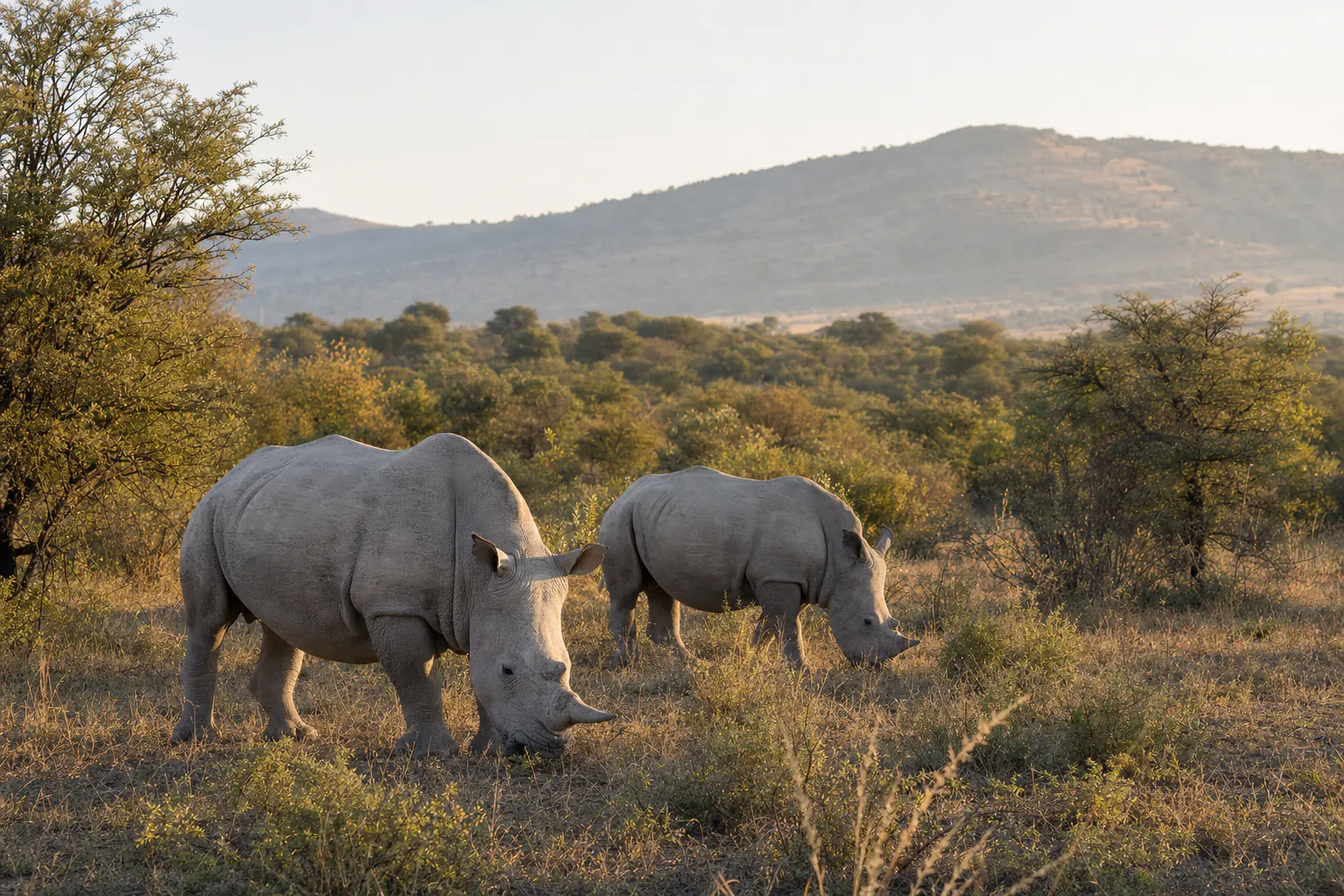
White rhinos are often calm grazers, but their size and limited tolerance for pressure demand respectful distance.
Primarily grasses, cropped with the wide square mouth that helps separate them from black rhino.
Females may be seen with calves or in loose groups; adult males are more territorial and may mark with dung middens.
Open grassland, savanna edges and grazing lawns inside protected areas, with exact locations intentionally not detailed here. South African reserves play an important role in rhino conservation, but public guides should not publish current sensitive sighting locations.
Fieldcraft
Good guides read the wider scene before the animal appears. Visitors can learn the same habit at a gentle level.
Large three toed tracks, cropped grass and dung middens may be visible, but visitors should not use public platforms to broadcast fresh signs.
Snorts, huffs and calf contact sounds can occur, though quiet observation is the responsible default.
South African reserves play an important role in rhino conservation, but public guides should not publish current sensitive sighting locations.
Responsible safari
Never share live rhino locations, never approach on foot without qualified guidance and do not pressure guides for sensitive detail.
Avoid geotagging, delay posting and frame respectfully without revealing exact place clues.
Look for the moment before the obvious photograph, such as a change in posture, a contact call, a shift in shade or the way other animals react.
Avoid live locations, geotags and background clues for sensitive species. The welfare of the animal and security of the reserve come first.
When comparing tours, ask about guide conduct, vehicle etiquette and time spent interpreting behaviour rather than chasing checklists.
Verification
IUCN Red List and SANBI species resources
2026-07-17
Ceratotherium simum is used for white rhinoceros. Conservation wording should separate global, national and security-sensitive local context.
Conservation context
Rhino conservation changes quickly and is security sensitive, so use current SANBI and IUCN sources and avoid old population claims.
A formal conservation category is not displayed here because current global, national and regional assessments can differ by source and date. Check the IUCN Red List, SANBI species status resources and BirdLife DataZone for birds before quoting a status.
For sensitive species, responsible travel also means not publishing detailed sightings, den sites, nest locations, rhino positions or operational security clues.
Official resources
Fees, gate hours, health guidance, notices and availability can change. Use these official resources for the latest operational information.
Next steps