
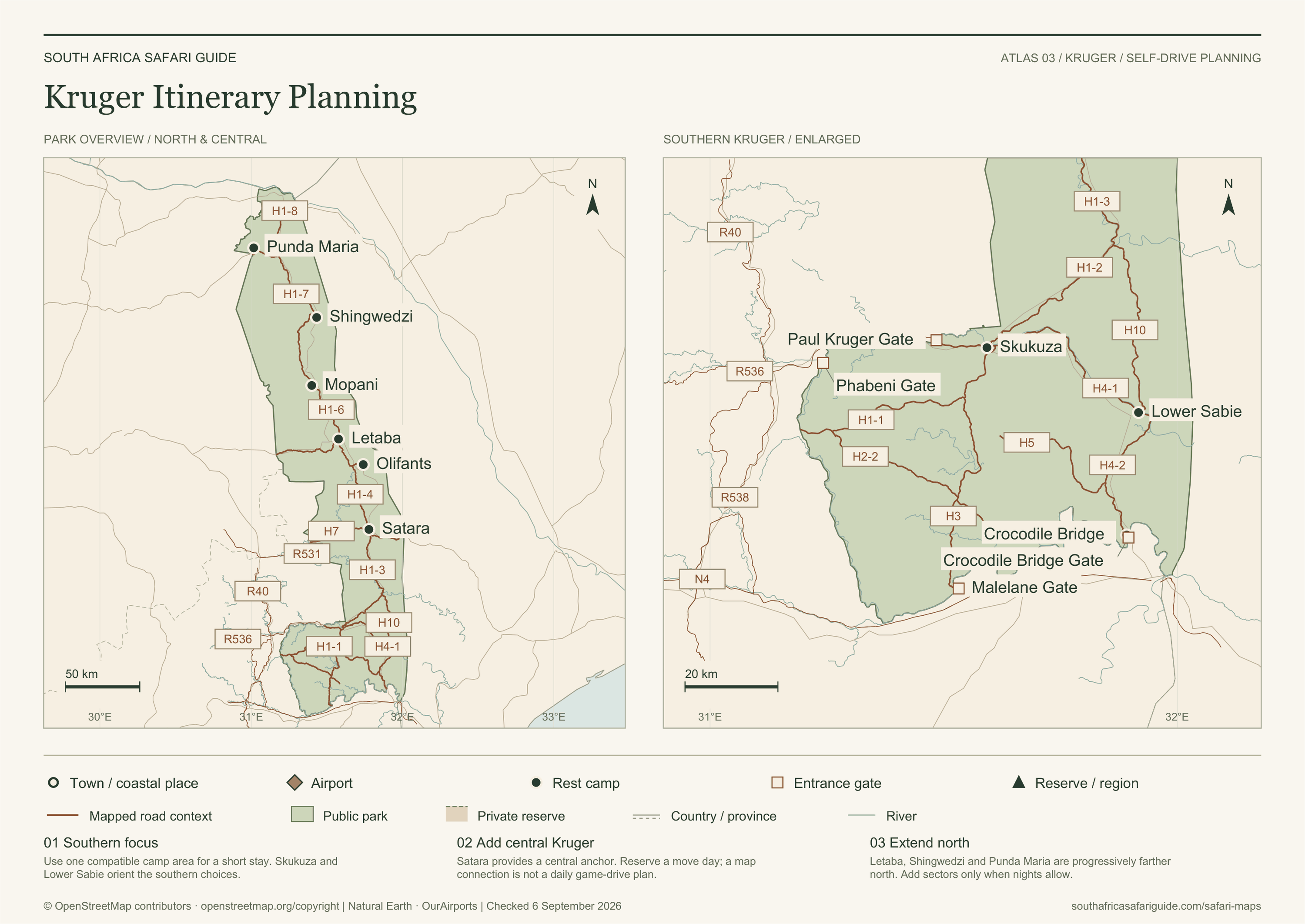
Morning rhythm
Leave early with water, layers, camera gear and a simple route. The first two hours are for patient watching, not constant camp to camp movement.
Five day itinerary
Five days gives Kruger enough room for two bases without turning the trip into a race. The key is choosing camps that belong together and treating the move between them as a slow safari day, not a transfer sprint.
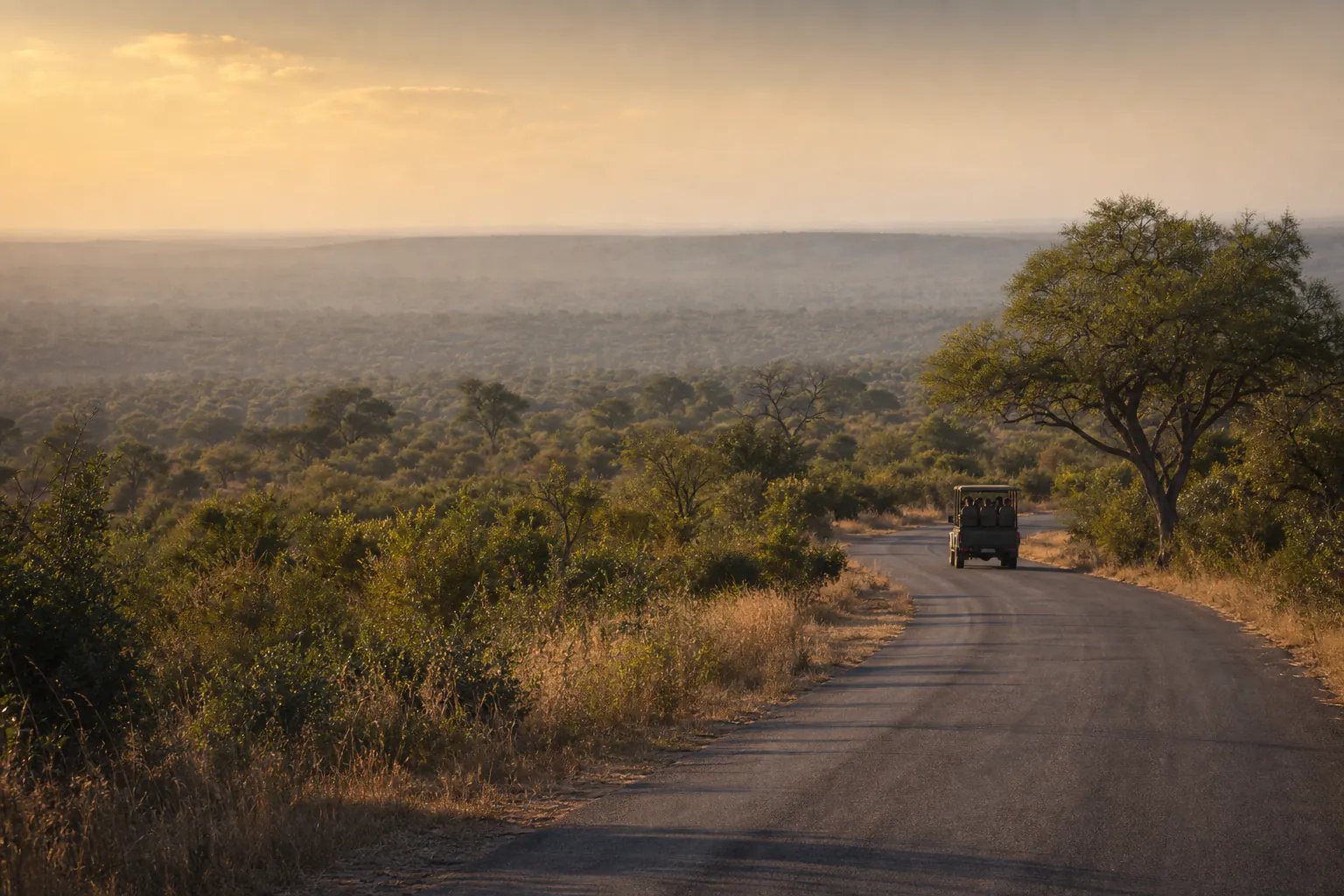
Safari planning atlas
A geographic overview and enlarged southern map for choosing compatible Kruger camp anchors and a realistic north-to-south trip structure.
Geography: © OpenStreetMap contributors (ODbL); Natural Earth and OurAirports (public domain). Download source data.
Geographic sources checked . Generalised planning context; confirm current access before travelling.
Route design
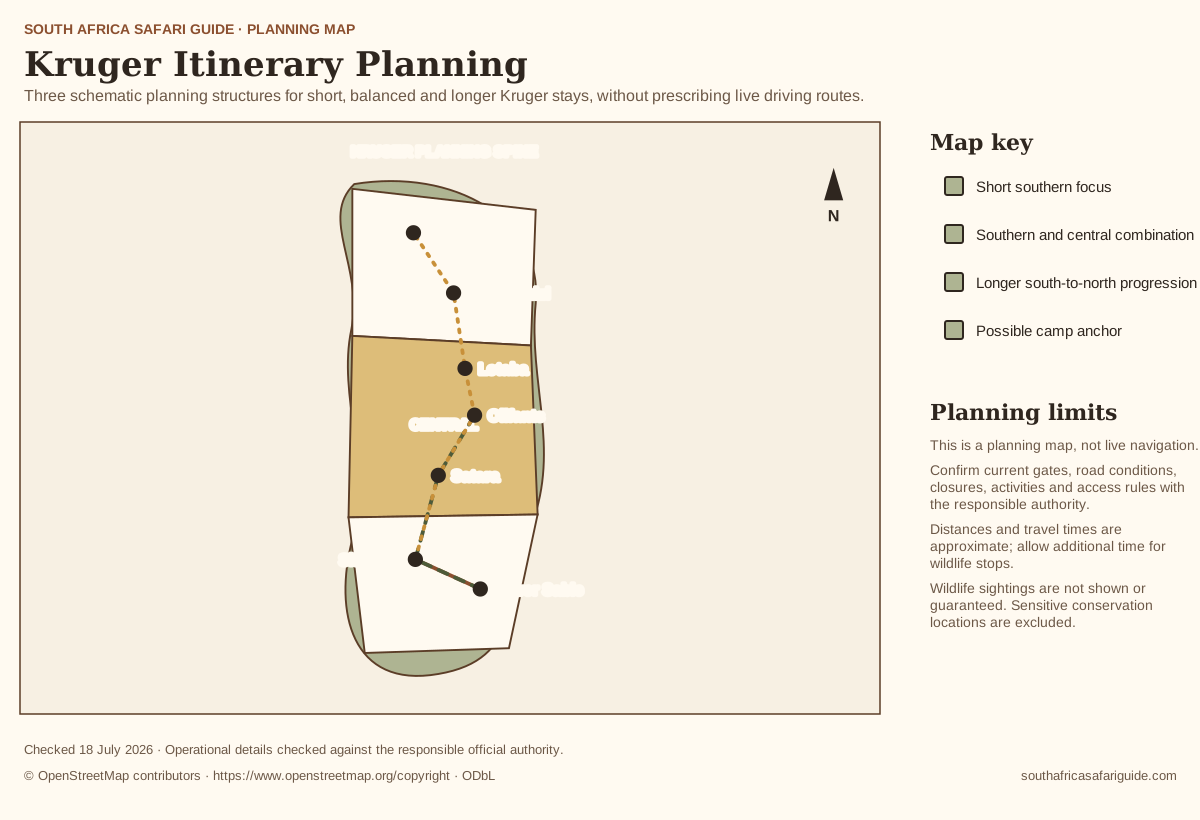
A five day itinerary can work as southern plus southern, southern plus central, or central focused with one move. Avoid choosing camps simply because their names are famous. The first gate, camp availability, daylight and travel time should decide the pattern.
A sensible first trip might use a southern base for convenience and a central base for a different landscape rhythm. Families may prefer two nearby southern bases or one camp for the whole stay.
Day by day
| Day | Focus | Notes |
|---|---|---|
| Day one | Arrival and short afternoon loop | Enter through the right gate and keep the first drive modest. |
| Day two | Full safari day from base one | Early drive, midday rest and slower late afternoon loop. |
| Day three | Move to base two | Use the camp change as a wildlife route with a picnic or camp stop. |
| Day four | Full safari day from base two | Repeat productive roads and consider a guided activity. |
| Day five | Short morning and departure | Exit without building a long detour into the final day. |
Day rhythm
A five day trip works when every day has a job and none of those jobs is simply driving as far as possible.
Choose the gate that gives you the shortest sensible route to base one. Keep the first afternoon close to camp and use it to settle into park speed.
Leave early with water, layers, camera gear and a simple route. The first two hours are for patient watching, not constant camp to camp movement.
Heat, laundry, lunch, fuel, naps and notes belong in the middle of the day. Rest protects the quality of the next drive.
Use shorter loops that return with margin. Late light is valuable, but it should not push you toward gate stress.
Refuel before the camp change day and keep a simple lunch plan. A hungry move day easily becomes a rushed move day.
The final morning should be short and deliberate. Exit through the gate that supports onward travel instead of adding one last distant road.
Trip styles
Keep both bases linked by official travel time logic and refuel before the move.
Use shorter loops, predictable meals and camp rest time. One base may beat two if children tire easily.
Repeat promising roads in good light and avoid moving every morning.
Add one early or sunset drive rather than overloading every day with activities.
Move day
Pack most luggage the night before, refuel early if needed and keep binoculars, documents, water and snacks inside the cabin.
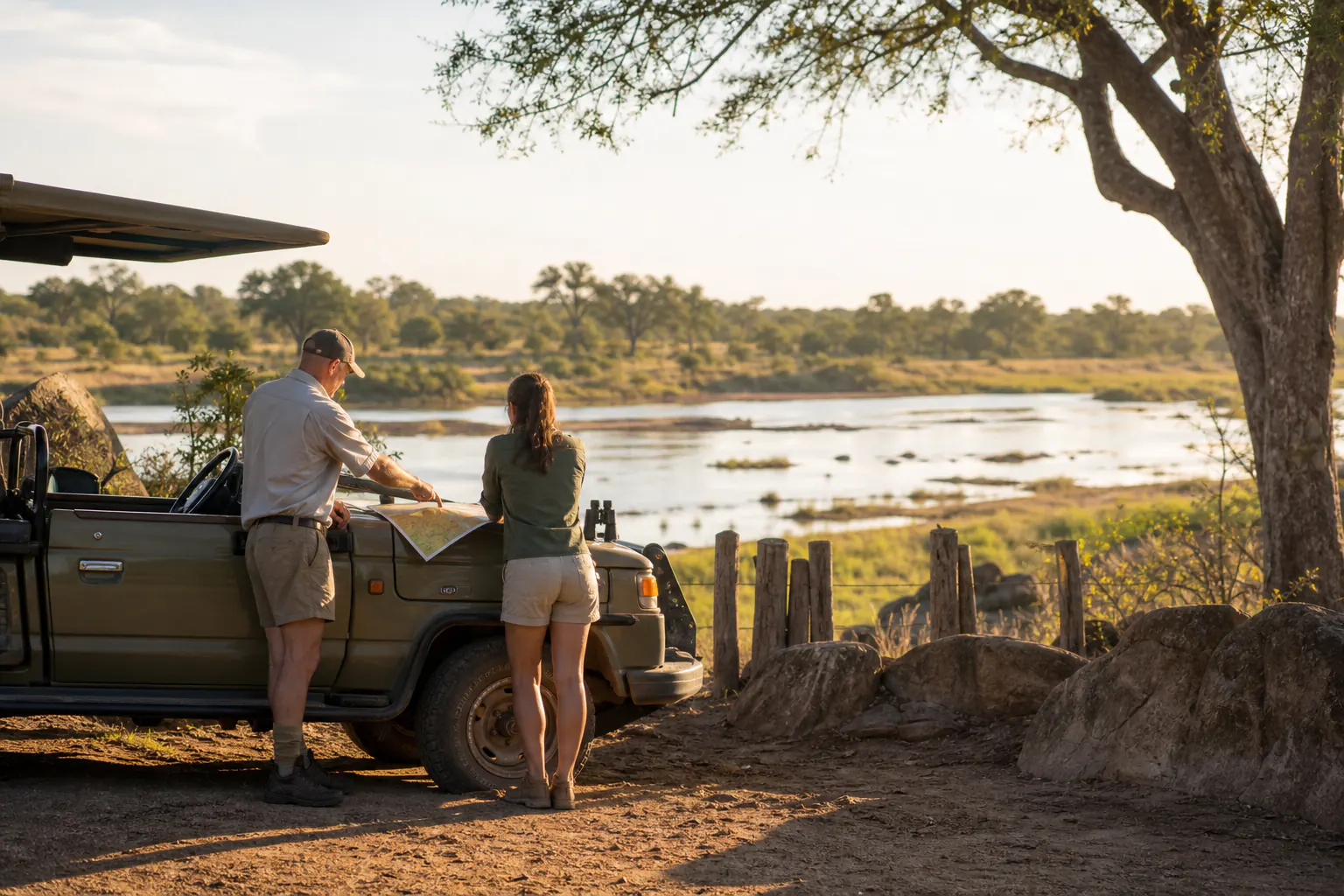
Do not add every possible loop between camps. Pick one route that gives you wildlife time while still reaching reception calmly.
Plan a camp or picnic stop for toilets, lunch and stretching. This matters even more with children.
After checking in, take a short local loop or rest. The second base needs a gentle start before the full day that follows.
Booking order
Seasonal adjustments
In hotter months, build longer midday rests and make the first drive of the day count. In wetter periods, keep more tar road options in mind and check official notices before assuming every gravel route is sensible. During school holidays and long weekends, expect busier gates, camps and popular sightings.
The five day structure should stay stable even when details change. Arrival, one full day, camp change, one full day and departure gives you a reliable frame. The exact roads can flex around weather, wildlife reports, family energy and SANParks operational updates.
Official resources
Fees, gate hours, health guidance, notices and availability can change. Use these official resources for the latest operational information.
Next steps