
Self drive may suit you
You enjoy independent decisions, can sit quietly for long periods, read maps carefully, accept slow sightings and are comfortable turning back when time runs short.
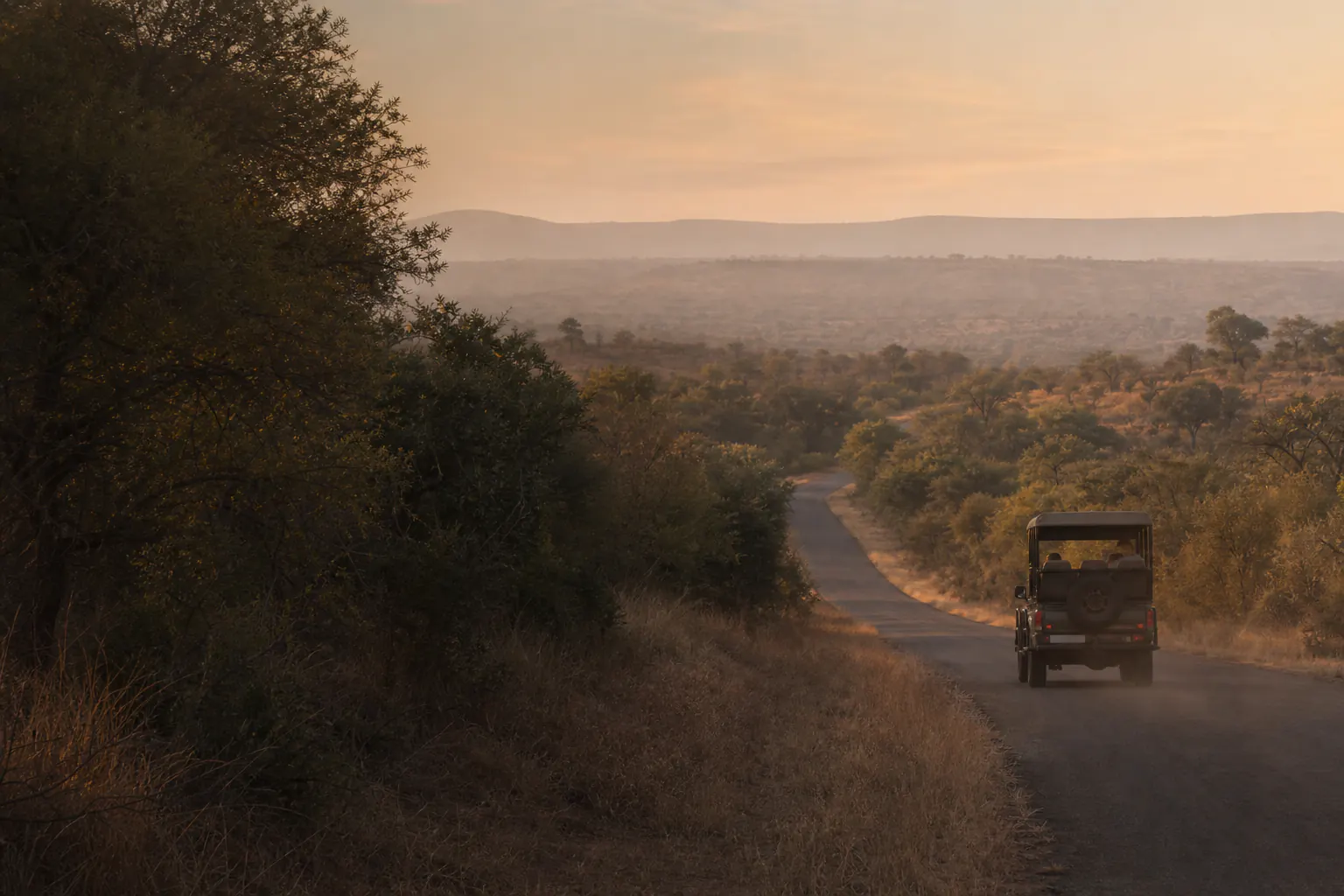
Self drive Kruger
A Kruger self drive safari means entering through an official gate, driving public tourist roads in your own or rented vehicle, and making every route, rest stop and timing decision inside SANParks rules. It can be deeply rewarding, but it is not casual road tripping.
The core answer
Self drive visitors choose their own roads and pace, stop at sightings, rest at camps or picnic sites, and return to camp or exit before the official gate deadline. The freedom is the appeal. The responsibility is that you must understand park distances, speed limits, animal behaviour, fuel range, heat, fatigue and the fact that mobile signal can be limited.
You do not need a specialist safari vehicle for public tourist roads in normal conditions. A comfortable, roadworthy vehicle with good visibility, working air conditioning, a spare tyre, enough fuel and enough space for supplies is usually more valuable than unnecessary height or size. Gravel roads require patience, and some roads may not suit caravans or larger vehicles.
Decision panel
You enjoy independent decisions, can sit quietly for long periods, read maps carefully, accept slow sightings and are comfortable turning back when time runs short.
You want interpretation, are nervous around elephants or buffalo, dislike navigation, have very limited time or want someone else to manage the rhythm.
Staying inside the park makes early and late light easier, but you still need to reach your booked camp before gate closing and report to reception.
Day entry can be affected by capacity on busy dates. Use a compact route and do not rely on being able to cover distant camps.
Road reality
Legal speed limits are lower than normal roads. Sightings, dust, animals, bends and bridges make even short distances slower than map apps suggest.
Refuel when convenient rather than waiting for the tank to feel urgent. Services and availability can change, so check official notices and ask at camps.
Carry drinking water, simple food, snacks and a cooler if self catering. Camps and picnic sites help, but route plans should not depend on every facility being perfect.
Use an official map, downloaded navigation and simple written route notes. Signal may drop, and a screen cannot replace judgement at a junction.
Know rental company contacts, SANParks emergency routes, roadside assistance guidance and how to stay safely in the vehicle while waiting.
Leave the vehicle only where permitted. Camps, picnic sites and designated get out points are part of the route plan, not afterthoughts.
Pacing
Use official travel time guidance as a floor, then add wildlife, breaks and daylight.
| Question | Planning answer | Related guide |
|---|---|---|
| Which gate fits arrival daylight | Choose the gate that supports the first camp without a race after entry. | Entrance gates |
| How far to drive after entry | Keep arrival day compact and leave margin for registration, photos and slow traffic. | Three day itinerary |
| Where to sleep | Select camps that reduce backtracking and give morning route choices. | Rest camps |
| What to pack in the car | Water, food, map, charging, documents, medicine and warm or rain layers. | Packing list |
Etiquette
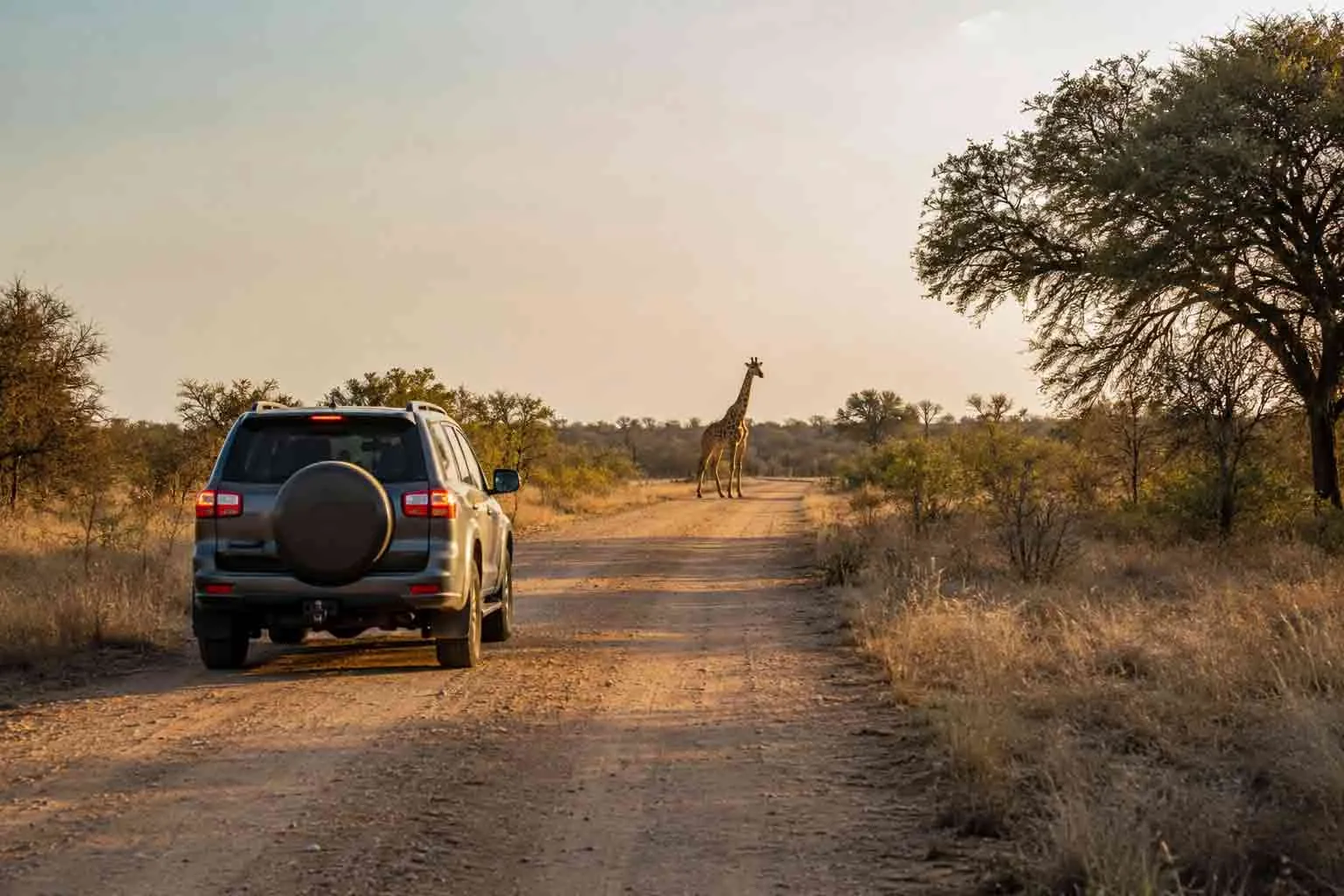
The animal always controls the sighting. Stop with room for other vehicles to pass, keep voices low, avoid blocking the road, never pressure wildlife for a better photograph and move on when your position is no longer respectful. Do not feed animals, call them, clap, lean out, open doors or publish sensitive rhino locations.
Elephants and buffalo deserve extra space. If an elephant is feeding near the road, wait calmly or reverse slowly when safe. Never squeeze between herd members. If a buffalo stands in the road, stay in the vehicle, avoid sudden movement and let it choose the next move. The best self drivers are patient enough to do less.
First day
Reach the gate with documents ready, complete formalities, confirm gate and camp times, then drive directly toward the first camp area rather than chasing distant sightings.
After check in, choose one short afternoon loop near camp. Learn the road rhythm before attempting longer loops.
Impala, birds, tracks, dung and alarm calls teach you how the bush works. Do not make the first day a Big Five race.
Check fuel, water, tomorrow gate time and route options while the day is still fresh.
Booking options
Choose an airport based on the first gate, reserve or accommodation area rather than choosing solely by rental price. Confirm the complete onward route before comparing collection options.
Compare current rental options after checking collection hours, deposit requirements, insurance conditions, mileage limits, luggage capacity and the distance to your first Greater Kruger destination.
Some links are paid links. We may earn a commission at no extra cost to you.
Compare current rental options after confirming the route to your first gate or accommodation, collection hours, insurance conditions, deposit, mileage rules and one-way fees.
Some links are paid links. We may earn a commission at no extra cost to you.
Official resources
Fees, gate hours, health guidance, notices and availability can change. Use these official resources for the latest operational information.
Digital Kruger planning toolkit
Use a 32-page guide, 14-page printable planning pack and 11-sheet spreadsheet workbook to keep routes, camps, gates and trip decisions in one planning system.
US$19 · one-time payment · no subscription
Next steps