
Scientific name
Crocuta crocuta
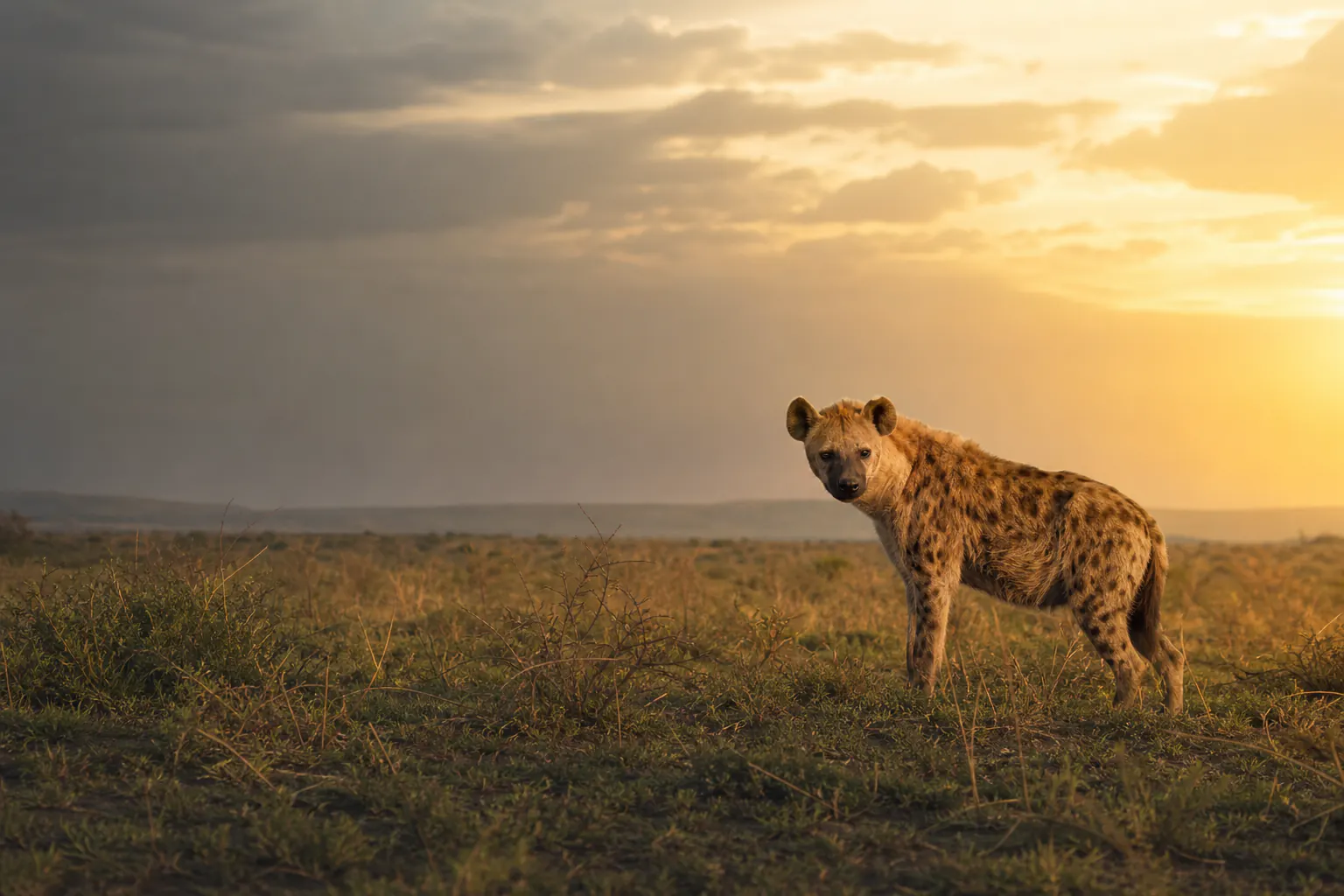
South Africa wildlife
Spotted hyena (Crocuta crocuta) is part of the South African safari story, but a good sighting depends on habitat, season, patience and respectful behaviour rather than promises.
Field notes
Crocuta crocuta
Predator
Often active at night and early morning; daytime sightings may involve dens or resting animals.
Savanna, woodland and open areas with prey, cover and access to denning opportunities.
They hunt and scavenge, processing carcasses efficiently with powerful jaws and opportunistic judgement.
Dog-like prints with prominent claws, a larger front foot and sometimes bone fragments or scat near roads.
Identification
A sloping back, powerful neck, rounded ears, spotted coat and confident movement around roads, dens or carcasses. Identification is strongest when you combine body shape, movement, habitat and behaviour instead of relying on a single feature.
Brown hyena is shaggier and more associated with arid regions; wild dogs are patterned and pack shaped. When in doubt, slow down and compare the animal with its surroundings, group size and posture before naming it.
Crocuta crocuta is used for spotted hyena. The guide avoids the old scavenger-only myth.
Predator ecology
Predator viewing improves when you read relationships rather than chase drama. Tracks, alarm calls, prey behaviour and competition with other carnivores often explain the sighting.
They hunt and scavenge, processing carcasses efficiently with powerful jaws and opportunistic judgement.
Brown hyena is shaggier and more associated with arid regions; wild dogs are patterned and pack shaped.
Often active at night and early morning; daytime sightings may involve dens or resting animals.
Do not crowd resting, hunting, denning or cub sightings. A good guide may leave while the sighting still feels exciting.
Species focus
These notes are deliberately specific, because the best sightings usually come from watching small details well.
Spotted hyena society is complex and female led, with rank shaping access, cub survival and clan interactions.
Hyenas hunt effectively as well as scavenge, so avoid reducing them to cleanup animals.
Whooping calls can carry through the night, while den viewing should remain quiet and unhurried.
Behaviour and habitat
Spotted hyenas are intelligent predators and scavengers with complex clan hierarchies and strong nocturnal activity.
They hunt and scavenge, processing carcasses efficiently with powerful jaws and opportunistic judgement.
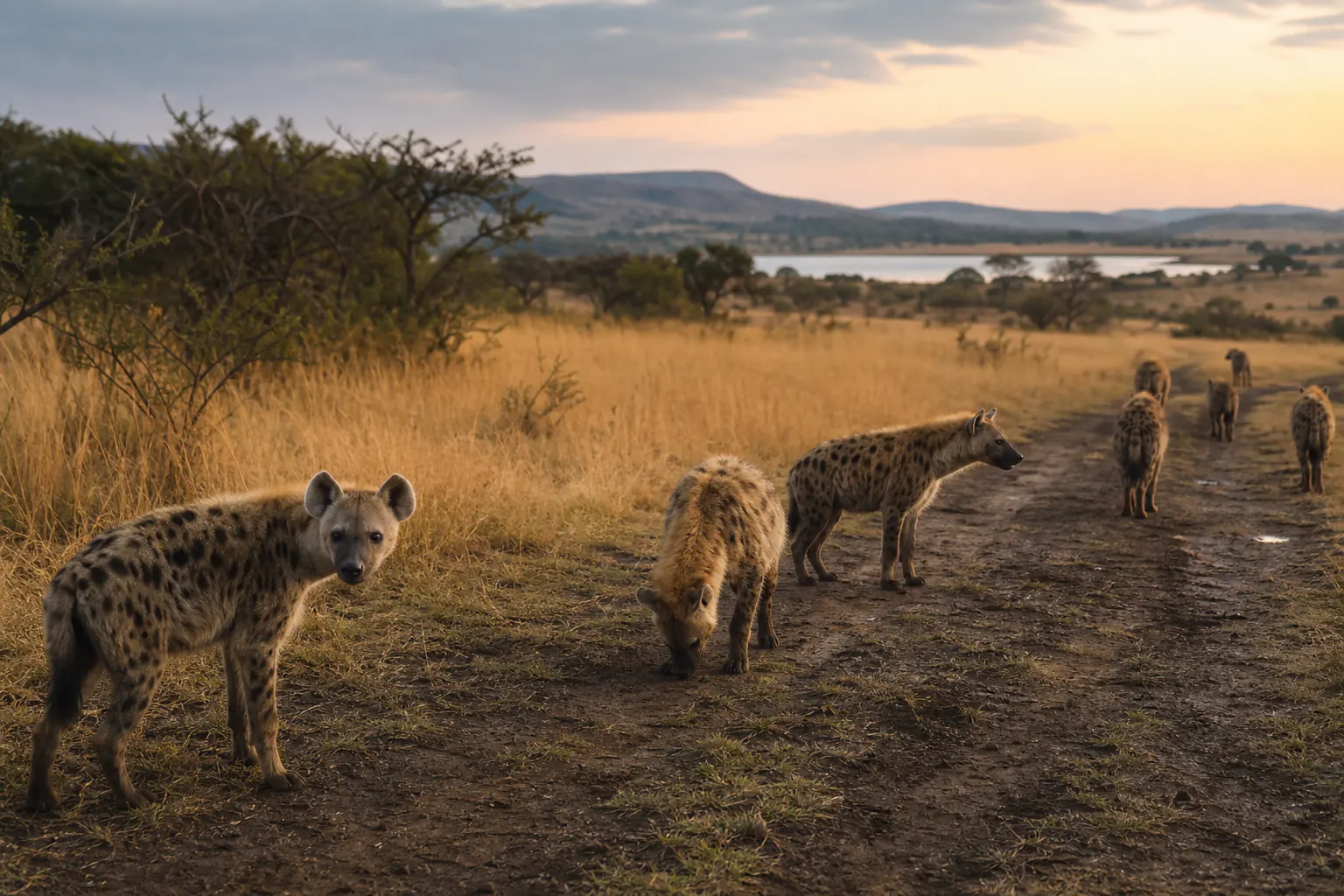
Clans can be large and structured, with den sites, dominance relationships and frequent vocal communication.
Savanna, woodland and open areas with prey, cover and access to denning opportunities. Kruger and many savanna reserves offer hyena encounters, especially on early drives, late drives and near denning areas.
Fieldcraft
Good guides read the wider scene before the animal appears. Visitors can learn the same habit at a gentle level.
Dog-like prints with prominent claws, a larger front foot and sometimes bone fragments or scat near roads.
Whoops, giggles and growls can carry at night and often shape the soundscape around camps.
Kruger and many savanna reserves offer hyena encounters, especially on early drives, late drives and near denning areas.
Responsible safari
Keep food secured in camps, respect park rules and do not lure or feed animals for photographs.
Low light, den etiquette and behaviour shots are key; avoid approaching pups too closely.
Look for direction of travel, scanning posture, resting cover and whether the animal is being pressured by other predators or vehicles.
Do not feed, call, chase, crowd or block animals. A calm sighting is better than a forced photograph.
When comparing tours, ask about guide conduct, vehicle etiquette and time spent interpreting behaviour rather than chasing checklists.
Verification
IUCN Red List and SANBI species resources
2026-07-17
Crocuta crocuta is used for spotted hyena. The guide avoids the old scavenger-only myth.
Conservation context
Hyenas are often misunderstood; current official sources help separate ecological role from old myths.
A formal conservation category is not displayed here because current global, national and regional assessments can differ by source and date. Check the IUCN Red List, SANBI species status resources and BirdLife DataZone for birds before quoting a status.
For common species, responsible travel still matters because visitor behaviour can change feeding, movement, stress and predator-prey interactions.
Official resources
Fees, gate hours, health guidance, notices and availability can change. Use these official resources for the latest operational information.
Next steps