
Scientific name
Lycaon pictus
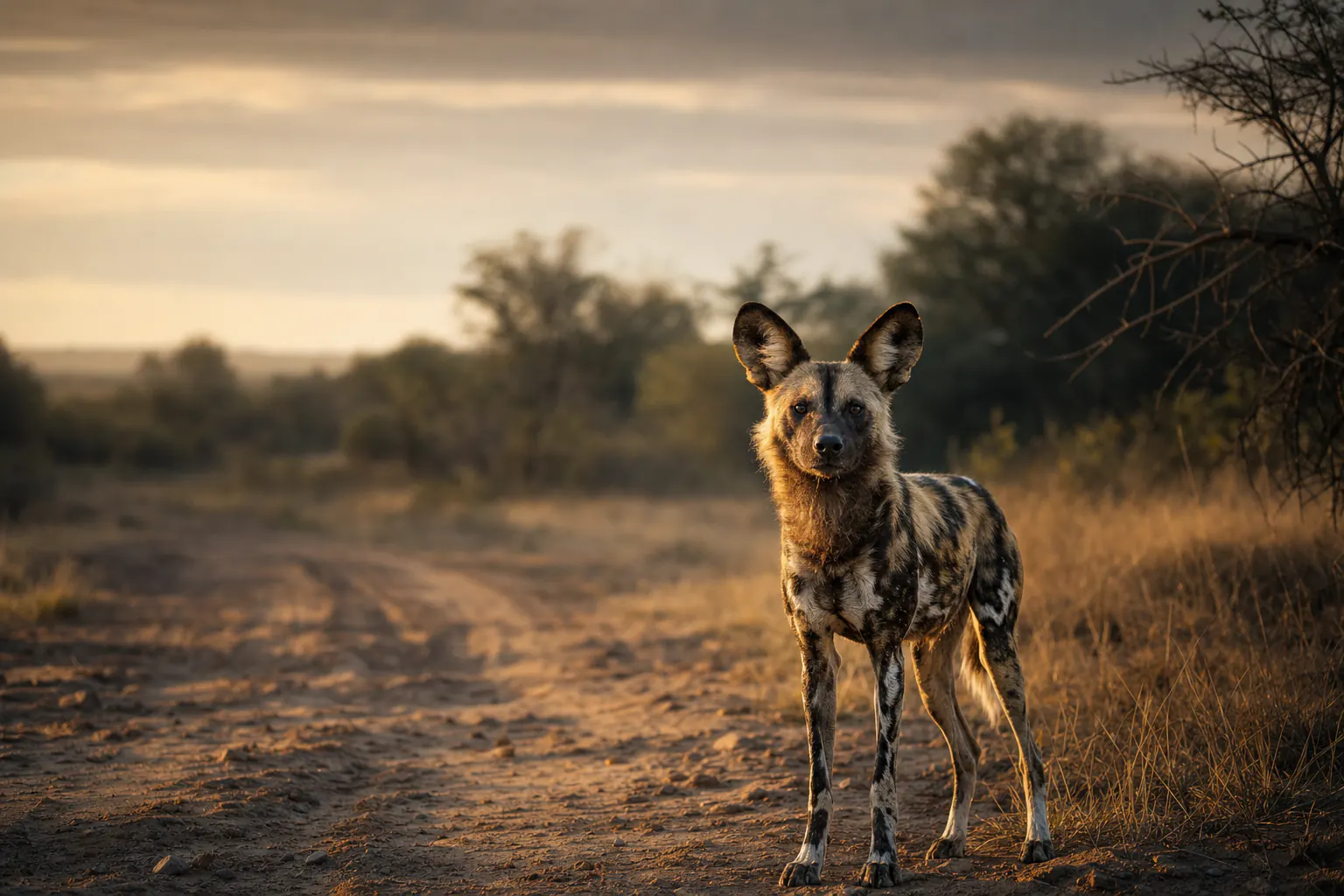
South Africa wildlife
African wild dog (Lycaon pictus) is part of the South African safari story, but a good sighting depends on habitat, season, patience and respectful behaviour rather than promises.
Field notes
Lycaon pictus
Predator
Most active around dawn and late afternoon, with explosive movement after rest periods.
Large protected landscapes, open woodland and savanna where packs can range widely.
Mostly medium antelope and other prey taken through stamina, teamwork and speed.
Dog-like tracks with claw marks, many prints together and fast directional movement can suggest a pack.
Identification
Painted coats, rounded ears, long legs and rapid pack movement that can make a sighting feel electric. Identification is strongest when you combine body shape, movement, habitat and behaviour instead of relying on a single feature.
Spotted hyenas are heavier, less patterned and move differently; jackals are much smaller. When in doubt, slow down and compare the animal with its surroundings, group size and posture before naming it.
Lycaon pictus is used for African wild dog. Pack, den and disease context should stay broad and non-operational.
Predator ecology
Predator viewing improves when you read relationships rather than chase drama. Tracks, alarm calls, prey behaviour and competition with other carnivores often explain the sighting.
Mostly medium antelope and other prey taken through stamina, teamwork and speed.
Spotted hyenas are heavier, less patterned and move differently; jackals are much smaller.
Most active around dawn and late afternoon, with explosive movement after rest periods.
Do not crowd resting, hunting, denning or cub sightings. A good guide may leave while the sighting still feels exciting.
Species focus
These notes are deliberately specific, because the best sightings usually come from watching small details well.
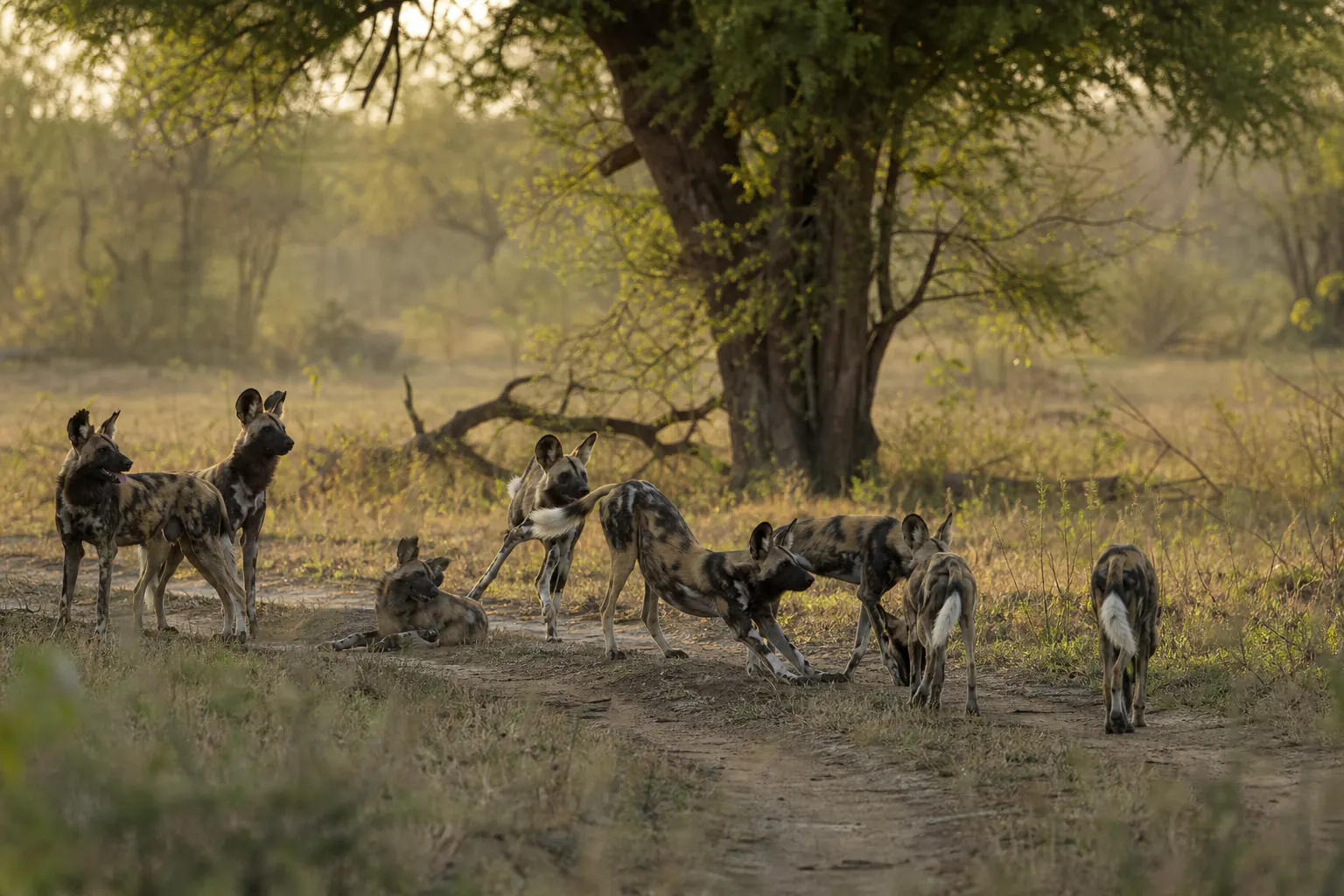
Every coat pattern is individual, and the group greeting can be as memorable as the hunt itself.
Packs range widely, move quickly and can vanish from an area for days without anything being wrong.
Fragmentation, disease, road risk and conflict make pack survival more fragile than a brief exciting sighting suggests.
Behaviour and habitat
Wild dogs are highly social endurance hunters, often greeting intensely before moving as a coordinated pack.
Mostly medium antelope and other prey taken through stamina, teamwork and speed.
Pack structure is central, with cooperative breeding, strong bonds and pups that can anchor seasonal denning periods.
Large protected landscapes, open woodland and savanna where packs can range widely. Kruger, Madikwe and some private reserves are important contexts, but packs roam far and sightings are never routine.
Fieldcraft
Good guides read the wider scene before the animal appears. Visitors can learn the same habit at a gentle level.
Dog-like tracks with claw marks, many prints together and fast directional movement can suggest a pack.
High twittering contact calls and excited greetings are distinctive when heard, but sightings are often brief.
Kruger, Madikwe and some private reserves are important contexts, but packs roam far and sightings are never routine.
Responsible safari
Do not crowd dens, block pack movement or publish sensitive den locations.
Use fast settings and wider framing because packs change direction quickly and interactions matter more than portraits.
Look for direction of travel, scanning posture, resting cover and whether the animal is being pressured by other predators or vehicles.
Avoid live locations, geotags and background clues for sensitive species. The welfare of the animal and security of the reserve come first.
When comparing tours, ask about guide conduct, vehicle etiquette and time spent interpreting behaviour rather than chasing checklists.
Verification
IUCN Red List and SANBI species resources
2026-07-17
Lycaon pictus is used for African wild dog. Pack, den and disease context should stay broad and non-operational.
Conservation context
Wild dogs are conservation dependent in many landscapes, so use current IUCN and SANBI sources and protect sensitive den information.
A formal conservation category is not displayed here because current global, national and regional assessments can differ by source and date. Check the IUCN Red List, SANBI species status resources and BirdLife DataZone for birds before quoting a status.
For sensitive species, responsible travel also means not publishing detailed sightings, den sites, nest locations, rhino positions or operational security clues.
Official resources
Fees, gate hours, health guidance, notices and availability can change. Use these official resources for the latest operational information.
Next steps