
Scientific name
Acinonyx jubatus
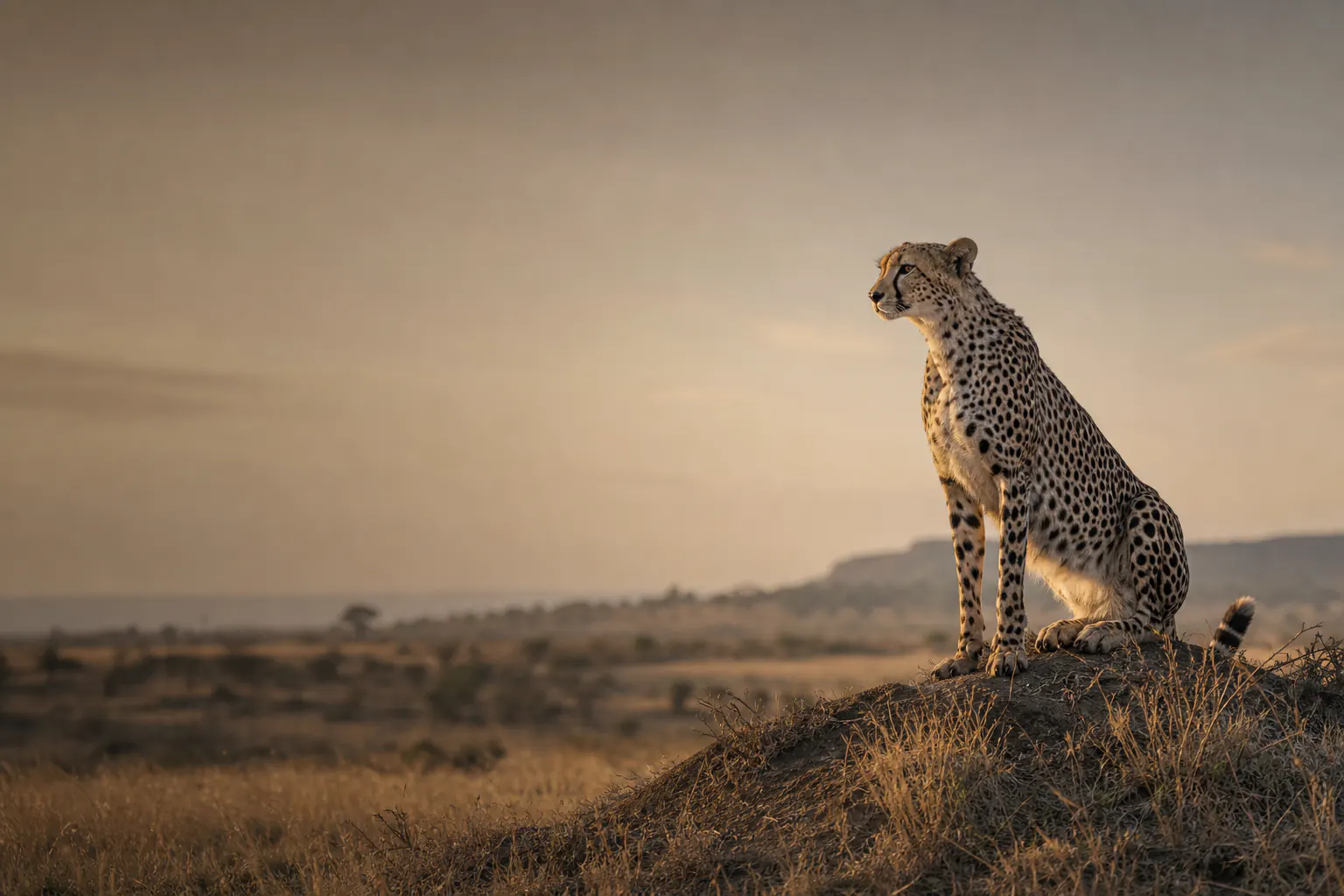
South Africa wildlife
Cheetah (Acinonyx jubatus) is part of the South African safari story, but a good sighting depends on habitat, season, patience and respectful behaviour rather than promises.
Field notes
Acinonyx jubatus
Predator
More daylight oriented than lions and leopards, with cooler morning and late afternoon movement often productive.
Open savanna, plains and lightly wooded areas where visibility helps both hunting and avoiding larger predators.
Mostly small to medium antelope and other quick prey taken by pursuit rather than ambush.
Cat-like tracks may show claw marks more often than other big cats because cheetah claws are less retractile.
Identification
A slim spotted cat with tear marks from the eyes, long legs, a small head and a deep chest built for speed. Identification is strongest when you combine body shape, movement, habitat and behaviour instead of relying on a single feature.
Leopards are heavier and rosetted; servals are much smaller with very long legs and a different pattern. When in doubt, slow down and compare the animal with its surroundings, group size and posture before naming it.
Acinonyx jubatus is used for cheetah. Avoid unverified speed or hunting success figures.
Predator ecology
Predator viewing improves when you read relationships rather than chase drama. Tracks, alarm calls, prey behaviour and competition with other carnivores often explain the sighting.
Mostly small to medium antelope and other quick prey taken by pursuit rather than ambush.
Leopards are heavier and rosetted; servals are much smaller with very long legs and a different pattern.
More daylight oriented than lions and leopards, with cooler morning and late afternoon movement often productive.
Do not crowd resting, hunting, denning or cub sightings. A good guide may leave while the sighting still feels exciting.
Species focus
These notes are deliberately specific, because the best sightings usually come from watching small details well.
Long legs, a small head, tear marks and a flexible spine suit fast daylight pursuit across visible ground.
Females with cubs and male coalitions use space differently, and both can be vulnerable to larger predators.
Cheetah spots are solid, the body is lighter and the animal is usually less tied to dense cover than leopard.
Behaviour and habitat
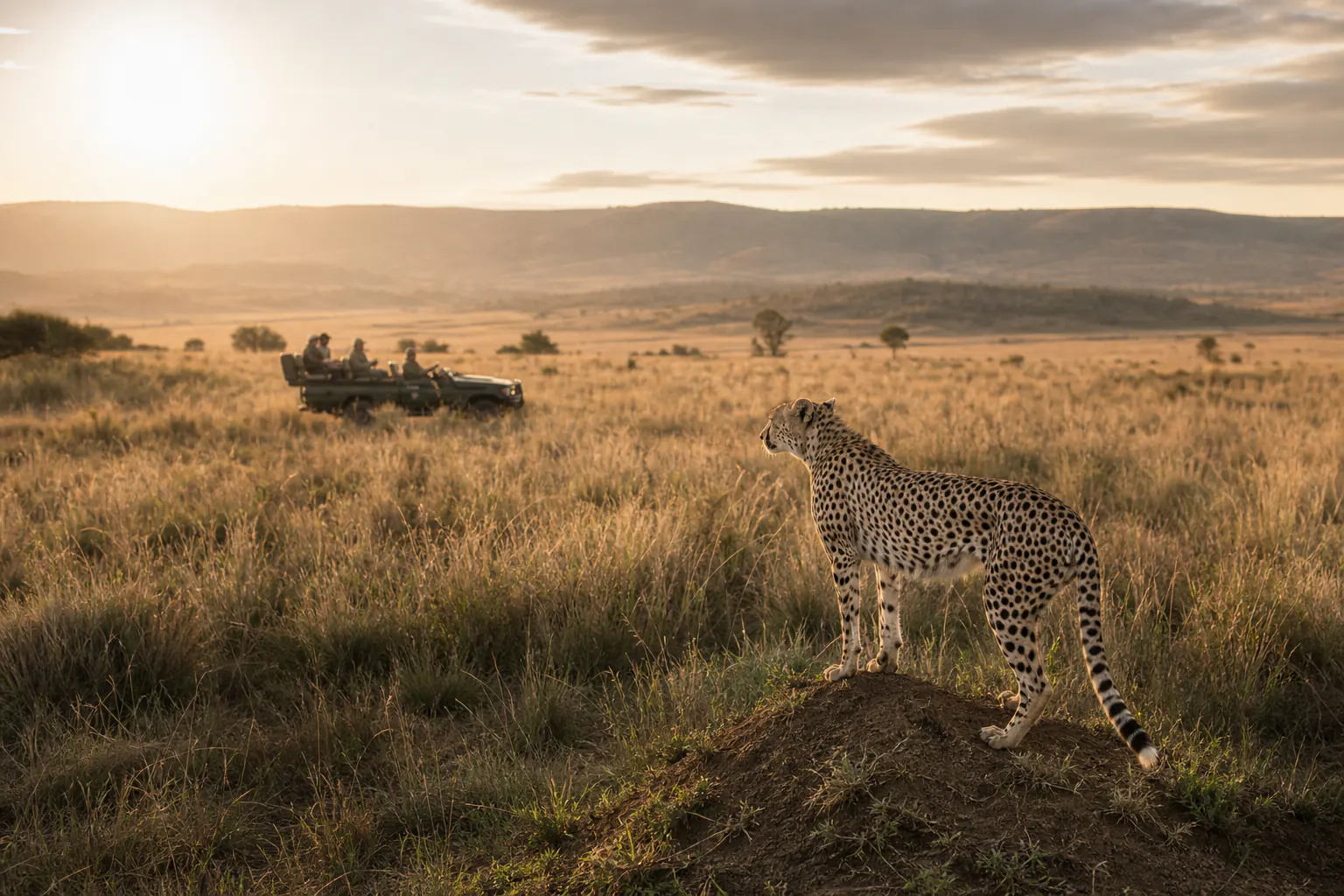
Cheetahs scan from open ground, termite mounds or low rises, then use short explosive chases when conditions suit them.
Mostly small to medium antelope and other quick prey taken by pursuit rather than ambush.
Females are often solitary with cubs; males may be solitary or form coalitions.
Open savanna, plains and lightly wooded areas where visibility helps both hunting and avoiding larger predators. Cheetah occur in selected reserves such as Kruger, Madikwe and some private reserves, but sightings are naturally less routine than common herbivores.
Fieldcraft
Good guides read the wider scene before the animal appears. Visitors can learn the same habit at a gentle level.
Cat-like tracks may show claw marks more often than other big cats because cheetah claws are less retractile.
Chirps, purrs and contact calls can occur, but most safari detection comes from posture and scanning open ground.
Cheetah occur in selected reserves such as Kruger, Madikwe and some private reserves, but sightings are naturally less routine than common herbivores.
Responsible safari
Keep a respectful vehicle distance and never force a hunting cat to change direction or abandon cover.
Leave space ahead of the animal, keep shutter speed high for movement and avoid blocking a hunting line.
Look for direction of travel, scanning posture, resting cover and whether the animal is being pressured by other predators or vehicles.
Do not feed, call, chase, crowd or block animals. A calm sighting is better than a forced photograph.
When comparing tours, ask about guide conduct, vehicle etiquette and time spent interpreting behaviour rather than chasing checklists.
Verification
IUCN Red List and SANBI species resources
2026-07-17
Acinonyx jubatus is used for cheetah. Avoid unverified speed or hunting success figures.
Conservation context
Cheetah conservation depends on connected habitat and careful reserve management; check IUCN and SANBI for current assessment context.
A formal conservation category is not displayed here because current global, national and regional assessments can differ by source and date. Check the IUCN Red List, SANBI species status resources and BirdLife DataZone for birds before quoting a status.
For common species, responsible travel still matters because visitor behaviour can change feeding, movement, stress and predator-prey interactions.
Official resources
Fees, gate hours, health guidance, notices and availability can change. Use these official resources for the latest operational information.
Next steps