
Do not depend on one famous road
Weather, traffic and animal movement change daily. Have nearby alternatives.
Three day itinerary
Three days in Kruger should focus on one compact area or two closely linked bases at most. Do not try to see the whole park. The win is a calm arrival, one excellent full safari day and a departure that does not undo the trip.
Safari planning atlas
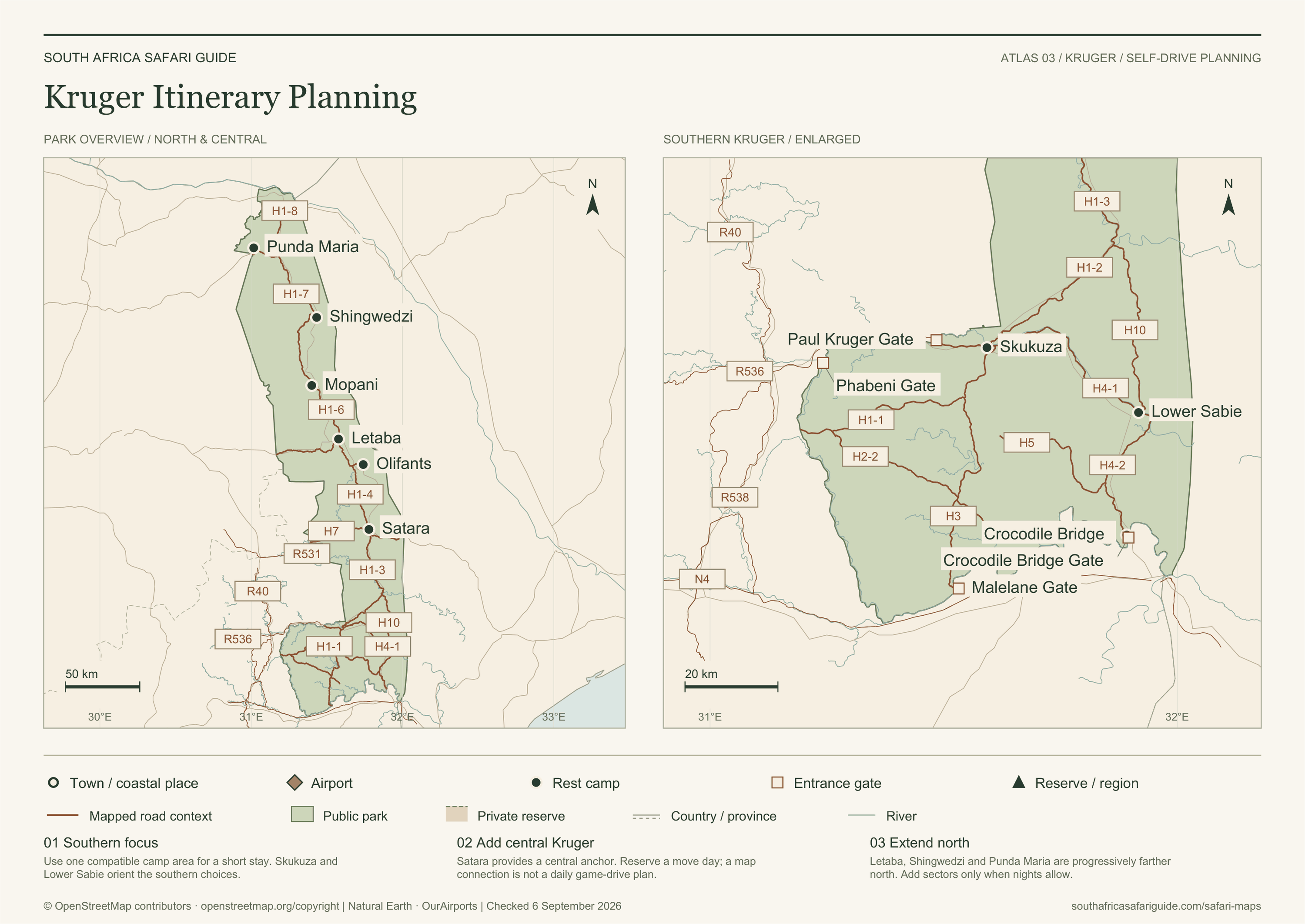
A geographic overview and enlarged southern map for choosing compatible Kruger camp anchors and a realistic north-to-south trip structure.
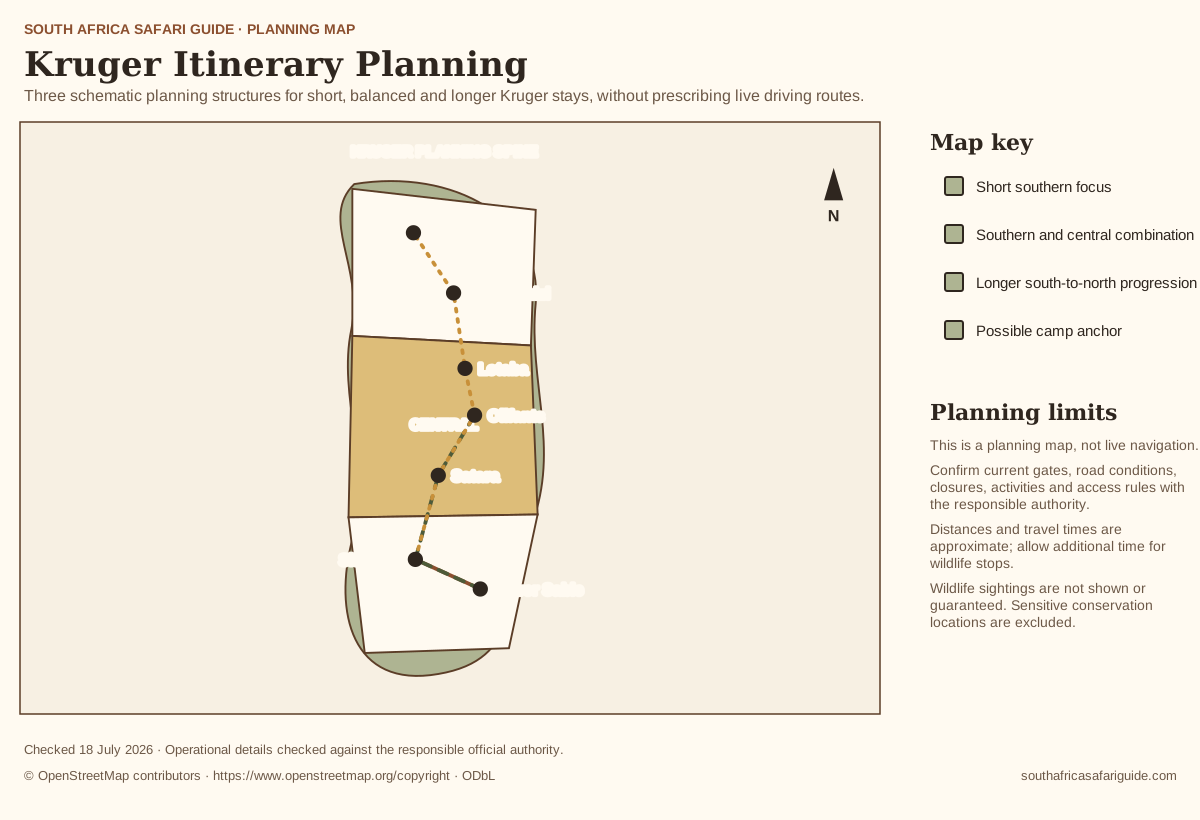
Geography: © OpenStreetMap contributors (ODbL); Natural Earth and OurAirports (public domain). Download source data.
Geographic sources checked . Generalised planning context; confirm current access before travelling.
Short stay logic
For most first time visitors, a three day Kruger itinerary works best in the south or southern central park because access, camps and route choices are close enough to protect wildlife time. Choose the gate that fits the first base, not the gate that looks famous.
Book accommodation before polishing the route. Once the camp is confirmed, build morning and afternoon loops that start and end comfortably within gate and camp timing.
Day by day
| Day | Plan | Planning notes |
|---|---|---|
| Day one | Arrive early, enter through the logical gate, check in and take a short afternoon loop. | Avoid long internal transfers and buy supplies before settling in. |
| Day two | Use the full day for an early morning drive, midday rest and slower afternoon route. | Consider one guided activity if available and suitable. |
| Day three | Take a short dawn loop, breakfast, refuel and exit through the gate that supports onward travel. | Do not drive deeper into the park before departure. |
Adjustments
Use one base, repeat nearby roads and build confidence rather than distance.
Add a SANParks morning or sunset drive, or book a private guide for the full middle day.
Shorten loops, protect pool or rest time where available and keep snacks, water and bathroom stops predictable.
Restraint
Northern Kruger deserves its own trip or at least a longer itinerary.
Every move costs packing, reception, uncertainty and wildlife time.
Weather, traffic and animal movement change daily. Have nearby alternatives.
Kruger is not malaria free. Seek qualified travel health advice before departure.
Flexibility
A short Kruger trip should not collapse if rain, heat or tiredness changes one drive. Use camp time, hides where accessible, shorter tar loops and patient scanning from safe viewpoints. Wildlife does not disappear in weather, but visibility, road comfort and family patience can change quickly.
If the middle day starts slowly, resist the urge to compensate with a huge afternoon route. A calm final hour near camp is usually better than a tense return in fading light. Short itineraries work when they protect the mood of the trip as well as the sighting list.
Official resources
Fees, gate hours, health guidance, notices and availability can change. Use these official resources for the latest operational information.
Next steps